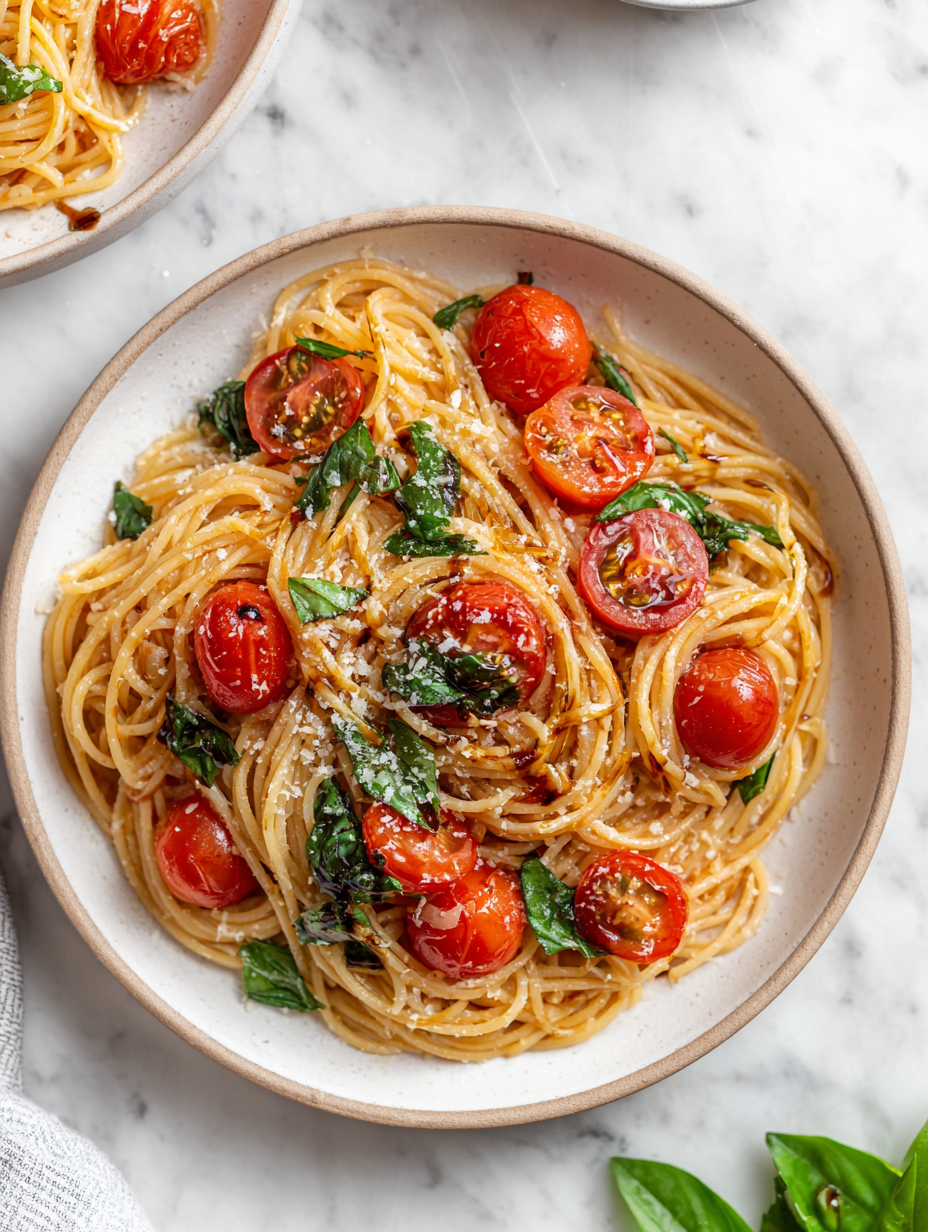
Start by chopping your ripe tomatoes into rough chunks—juicy and slightly squishy is perfect for a rustic sauce. Set them aside.
Bring a large pot of salted water to a rolling boil. Add your pasta and cook until just past al dente, about 8-10 minutes. Drain and set aside, reserving a cup of pasta water.
While the pasta cooks, heat the olive oil in a large skillet over medium heat. When shimmering, add the chopped garlic and sauté for about 30-45 seconds until fragrant and golden, but not browned.
Add the chopped tomatoes to the skillet, stirring well to coat them in the garlic oil. Reduce the heat to medium-low and let simmer gently, stirring occasionally, until the tomatoes break down and release their juices—about 10-15 minutes. The sauce should become glossy and slightly thickened.
Season the sauce generously with salt and pepper, and add a pinch of red pepper flakes if you like a bit of heat. Tear or chop your basil leaves and stir most of them into the sauce, saving a few for garnish.
Once the sauce is fragrant and thickened, add the drained pasta directly into the skillet. Toss everything together over low heat, adding a splash of reserved pasta water if the sauce feels too thick or sticky. Cook for another 2 minutes to let flavors meld.
Finish by drizzling a little extra virgin olive oil over the pasta, tossing gently, and garnishing with the remaining basil leaves. The sauce should be vibrant, slightly chunky, with a glossy finish and fresh aroma.