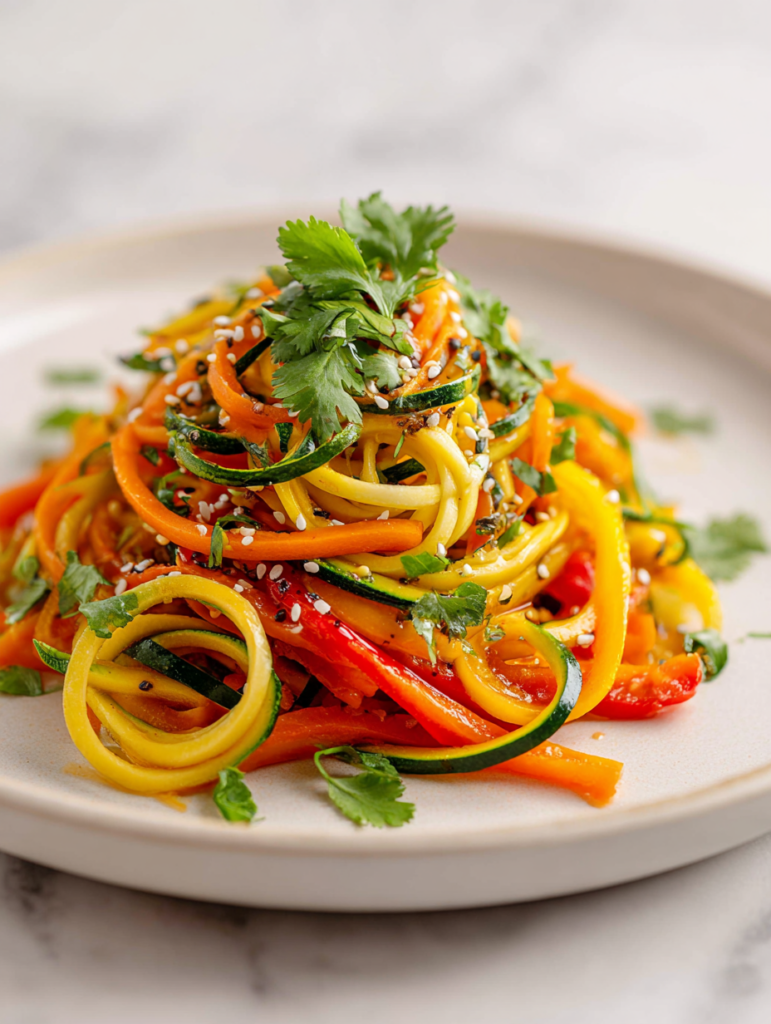
Vegan vegetable noodles are my go-to when I want something quick that still feels special. The real magic happens when I focus on balancing textures—crisp carrots, tender zucchini, and chewy rice noodles all in one bite. It’s about turning a simple stir-fry into a sensory adventure, where each chew surprises you with its own personality.
I’ve messed around with different veggie combos over the years, but I keep coming back to this mix because it’s so forgiving and versatile. Plus, the way the flavors meld with just a splash of soy and a squeeze of lime keeps me coming back for more. It’s a dish that feels like a little celebration of everyday ingredients, elevated by the way they all come together.
Focusing on the art of balancing textures—crisp, tender, and chewy—in vegan vegetable noodles, turning a simple dish into a sensory adventure.
The story behind this recipe
- This recipe was born out of a lazy weekend craving for something fresh but without the hassle of a complicated sauce or heavy ingredients. I remembered the first time I tried veggie noodles at a tiny street stall in Bangkok—crisp, vibrant, and almost addictive. Since then, I’ve been chasing that simplicity and brightness in my own kitchen.
- Over the years, I’ve played with different veggie combos, but I kept coming back to this one because it’s forgiving and endlessly adaptable. It’s a dish that celebrates the raw crunch of carrots, the tender bite of zucchini, and the chewy silkiness of rice noodles—all balanced with just a splash of soy and a squeeze of lime. It’s honest, quick, and honest-to-goodness satisfying.
- heading: The story behind this recipe
Ingredient breakdown: key components
- Carrots: I love the crunch of fresh carrots, their sweetness contrasts beautifully with the savory sauce, but feel free to swap in daikon for a milder, more delicate bite.
- Zucchini: Its tender, slightly watery texture soaks up flavors well, and I prefer spiralized, but cucumber can work if you want a cooler, crisper element.
- Rice noodles: They are chewy and absorb the sauce, making every bite satisfying. Brown rice or soba noodles can be substitutes if you prefer a different texture.
- Soy sauce: It adds that umami punch and saltiness, but coconut aminos are a gentle, sweeter alternative if you want to avoid soy or gluten.
- Lime: Brightens the dish with a zingy citrus note, and a splash of rice vinegar can give a similar tang if lime isn’t available.
- Garlic and ginger: These give the dish warmth and depth, but shallots or turmeric can be used for a different aromatic profile.
- Sesame oil: It’s nutty and fragrant, tying everything together, but a neutral oil works fine if you want a lighter, less aromatic finish.
Spotlight on key ingredients
Carrots and Zucchini:
- Carrots: I love the crunch of fresh carrots, their sweetness contrasts beautifully with the savory sauce, but feel free to swap in daikon for a milder, more delicate bite.
- Zucchini: Its tender, slightly watery texture soaks up flavors well, and I prefer spiralized, but cucumber can work if you want a cooler, crisper element.
Notes for ingredient swaps
- Vegetables: Carrots work great for crunch and sweetness, but daikon radish offers a milder, more watery bite. Zucchini can be swapped for cucumber if you prefer a cooler, crisper texture. Bell peppers add color and sweetness if you want a different flavor profile.
- Noodles: Rice noodles are chewy and absorb flavors well; soba noodles give a nuttier taste, while spiralized sweet potato can add a slightly sweet, denser bite. Shirataki noodles are low-calorie, but tend to be less chewy.
- Soy sauce: Traditional soy adds umami and saltiness, but coconut aminos or tamari are good gluten-free or soy-free options, with a slightly different, milder flavor. Liquid aminos can also work as a direct substitute.
- Acid: Lime brightens the dish with citrus, but lemon juice offers a similar zing. A splash of rice vinegar can add tang without overpowering the other flavors. Apple cider vinegar is a milder alternative.
- Oil: Sesame oil lends nuttiness and aroma, but toasted walnut or hazelnut oil can add unique flavor notes. Neutral oils like avocado or sunflower work if you want a more subtle finish.
- Aromatics: Garlic and ginger are classic, but shallots or turmeric can introduce different aromatic qualities and warmth to the dish. Fresh herbs like cilantro or basil can replace scallions for a different fresh note.
- Additional flavor: A dash of chili oil or hot sauce can spice things up, or omit for a milder dish. For smoky depth, a pinch of smoked paprika can be stirred in at the end.
Equipment & Tools
- Spiralizer: To create uniform veggie noodles.
- Wok or deep skillet: For quick, high-heat stir-frying.
- Large pot: To cook rice noodles efficiently.
- Tongs: To toss and combine ingredients without breaking noodles.
Step-by-step guide to vegan veggie noodles
- Equipment & Tools: Gather a spiralizer for veggies, a large wok or deep skillet for stir-frying, a boiling pot for noodles, and tongs for tossing.
- Prepare noodles: Bring a large pot of water to 100°C (212°F). Cook rice noodles according to package, usually 4-6 minutes, until just tender. Drain and set aside.
- Spiralize veggies: Use the spiralizer to turn carrots and zucchini into noodles. Keep separate for even cooking and texture control.
- Heat wok: Place over medium-high heat, about 200°C (392°F). Add a splash of sesame or neutral oil. When shimmering, add minced garlic and ginger. Sauté for 30 seconds until fragrant.
- Cook vegetables: Add carrots first, stir-fry for 2 minutes until they start to soften and turn slightly golden. Toss in zucchini, cook another 1-2 minutes until just tender but still crisp. Check for vibrant color and a slight crackle.
- Combine noodles: Add drained rice noodles to the wok. Toss everything together for 1-2 minutes, letting flavors meld and noodles heat through. They should be glossy and slightly sticky, with a fragrant aroma.
- Add sauce: Pour in soy sauce or substitute, lime juice, and a dash of sesame oil. Toss well to coat evenly. The mixture should shimmer and smell savory with bright citrus notes.
- Final taste: Adjust seasoning with more soy or lime if needed. If noodles stick or appear dry, splash a tiny bit of warm water and toss again. Remove from heat when noodles are heated through, and veggies are crisp-tender.
- Rest & Plate: Serve immediately, garnished with chopped scallions or sesame seeds if desired. Rest for 1-2 minutes for flavors to settle before serving.
Serve immediately for the best texture. Garnish with scallions or seeds if desired. Let sit for a minute to allow flavors to meld before digging in.
How to Know It’s Done
- Noodles should be glossy, slightly sticky, and fragrant.
- Vegetables remain crisp but tender, with vibrant color.
- Sauce is evenly coated, with a balanced aroma of soy, lime, and garlic.
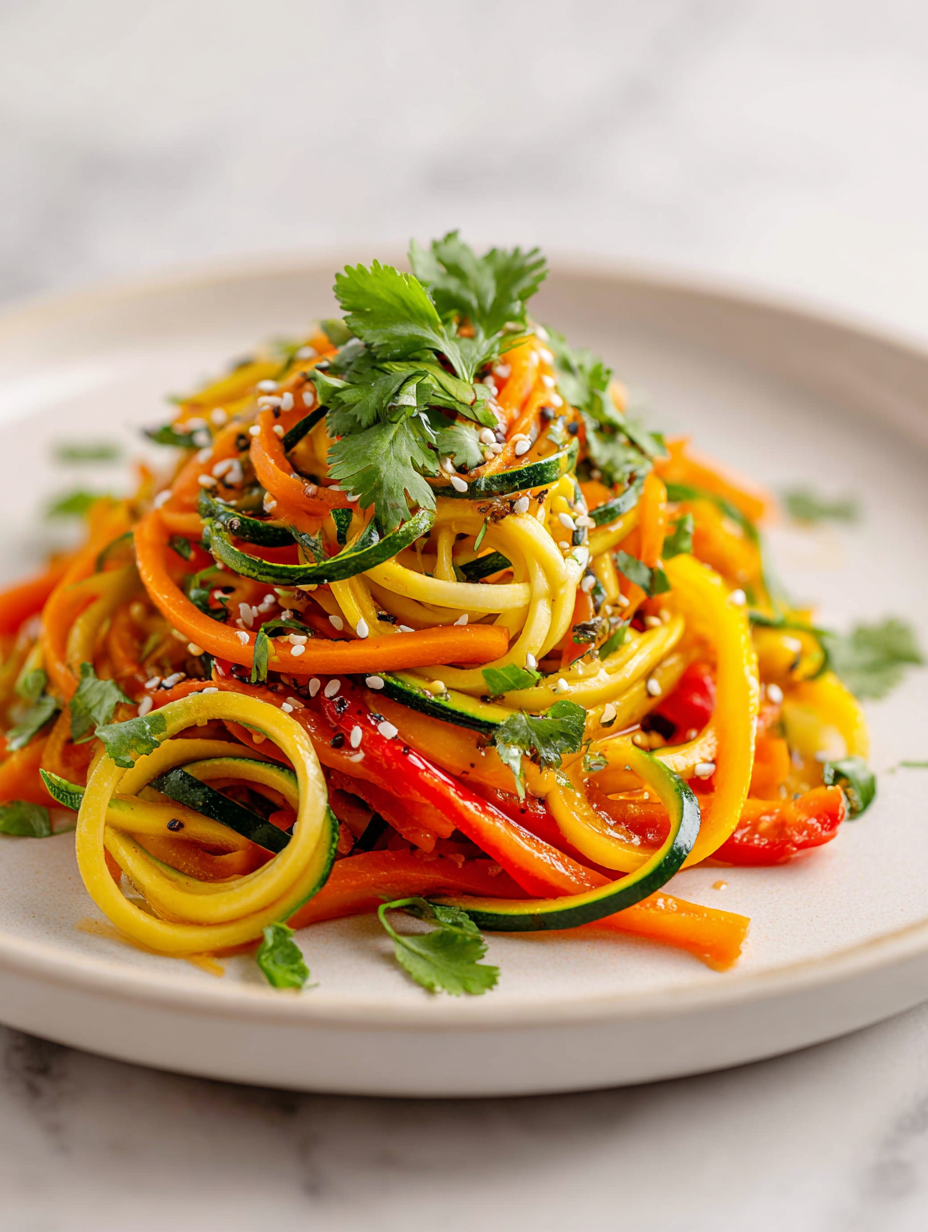
Vegan Vegetable Noodles
Ingredients
Equipment
Method
- Gather your spiralizer, wok, large pot, and tongs. Spiralize the carrots and zucchini into noodles, keeping them separate for even cooking.
- Bring a large pot of water to a rolling boil. Cook the rice noodles according to package instructions, usually 4-6 minutes, until just tender. Drain and set aside.
- Preheat your wok over medium-high heat until hot, and add a tablespoon of sesame oil. When shimmering, add the minced garlic and grated ginger, sautéing for about 30 seconds until fragrant and aromatic.
- Add the spiralized carrots first, stir-frying for about 2 minutes until they start to soften and develop a slight golden edge with a gentle crackle.
- Next, toss in the zucchini noodles and cook for another 1-2 minutes, just until they turn tender but still retain their bright color and crunch.
- Add the drained rice noodles to the wok. Toss everything together for 1-2 minutes, allowing the noodles to absorb the flavors and heat through, turning glossy and fragrant.
- Pour in the soy sauce and squeeze fresh lime juice over the mixture. Toss again quickly to evenly coat all ingredients, ensuring the sauce glistens and aroma brightens.
- Check the seasoning and adjust with more soy or lime if desired. Remove from heat once everything is heated through, the noodles are glossy, and the veggies remain crisp.
- Serve immediately in bowls, garnished with optional scallions or sesame seeds for extra flavor. Enjoy the vibrant textures and fresh, zesty taste!
Quick tips for perfect noodles
- Use a sharp spiralizer: A sharp blade makes veggie noodles more uniform and less mushy, giving you better texture.
- Preheat your wok: Make sure it’s hot enough (about 200°C/392°F) before adding oil and ingredients for quick searing.
- Cook veggies in stages: Add carrots first for a bit of crunch, then zucchini—this prevents over-softening and keeps textures lively.
- Toss noodles quickly: Add drained noodles to the hot wok and toss for just 1-2 minutes; overcooking makes them sticky and dull.
- Finish with a squeeze: Right before serving, squeeze lime or lemon to brighten flavors and add a fresh zing.
- Adjust heat as needed: If veggies start to brown or burn, lower the heat slightly and add a splash of water to deglaze.
- Serve immediately: Veggie noodles are best when fresh; if you need to hold, keep warm in a low oven (about 80°C/176°F) and toss again before serving.
Common mistakes and how to fix them
- FORGOT to check noodle doneness → Overcooked noodles turn mushy; test early for perfect bite.
- DUMPED sauce ingredients too early → Wait for aroma and slight simmer before adding sauce for depth.
- OVER-TORCHED vegetables → Stir frequently; if veggies brown too much, lower heat and add a splash of water.
- MISSED resting time → Let noodles sit 1 minute after cooking to absorb flavors and set texture.
Quick fixes and pantry swaps
- When noodles stick, splash a little warm water and toss gently to loosen.
- If sauce is bland, add a dash more soy or a squeeze of lime for brightness.
- Splash with sesame oil at the end for extra nuttiness and aroma.
- Patch overcooked vegetables by quickly stir-frying with fresh veggies to restore crunch.
- Shield delicate zucchini with a slightly lower heat to prevent mushiness.
Prep, store, and reheat tips
- Prep the spiralized vegetables and cooked noodles a day ahead; store separately in airtight containers in the fridge for up to 24 hours. Keep crispness by wrapping veggies in paper towels to absorb excess moisture.
- The sauce can be made up to 2 days in advance; refrigerate in a sealed jar. The flavors meld and intensify overnight, but smell for any sour notes before use.
- Reheat noodles gently in a skillet over low heat with a splash of water or broth, stirring until steaming hot—about 3-4 minutes. Veggies are best added fresh for maximum crunch, but can be briefly stir-fried if needed.
- For leftovers, store in an airtight container for 1-2 days. Expect some veggie softness and slightly muted flavors—refresh with a squeeze of lime or a splash of soy when reheating.
- Avoid freezing, as the texture of fresh veggies and noodles can become mushy upon thawing. Best enjoyed fresh or within the first 24 hours for optimal sensory quality.
Top questions about vegan vegetable noodles
1. Can I use a regular peeler instead of a spiralizer?
Use a julienne peeler or spiralizer to get thin, even noodles. It’s quick and gives a nice, tender bite.
2. Can I make these noodles with a peeler instead of spiralizer?
Yes, but the noodles will be thicker and chewier. Adjust cooking time slightly to avoid mushiness.
3. Can I substitute other types of noodles?
Absolutely. Soba or rice noodles work well, but adjust cooking time as they have different textures.
4. How do I prepare dried noodles for stir-frying?
Yes, if you prefer a softer texture, soak dried noodles in hot water first, then stir-fry briefly.
5. How do I keep the vegetables from getting soggy?
Keep the veggies crisp by stir-frying over high heat and adding them in stages. Don’t overcook.
6. How can I prevent the dish from becoming greasy?
Use a light hand with the oil and don’t overcrowd the pan. This helps veggies stay tender and crisp.
7. Can I spice up this recipe?
Yes, for extra flavor, add a dash of chili flakes or hot sauce during cooking or at the end.
8. How long can I store leftovers?
The dish is best served immediately for optimal crunch and freshness, but leftovers keep for a day or two.
9. How do I reheat the noodles without losing texture?
Reheat in a hot skillet with a splash of water or broth, stirring until steaming and hot.
10. Can I freeze leftovers?
Yes, you can freeze cooked noodles for a short time, but expect some textural changes when thawed.
Focusing on texture balance in vegan veggie noodles turns a simple meal into a tactile feast. The crunch, chew, and tenderness all come together, making each bite a small celebration of fresh ingredients. This dish is perfect for when you want something quick but still crave that satisfying mouthfeel.
In the end, it’s about those little moments—crisp veggies, fragrant sauce, and a splash of lime—that make it feel fresh and alive. It’s a simple reminder that even everyday ingredients can surprise you when you pay attention to how they feel and taste together.