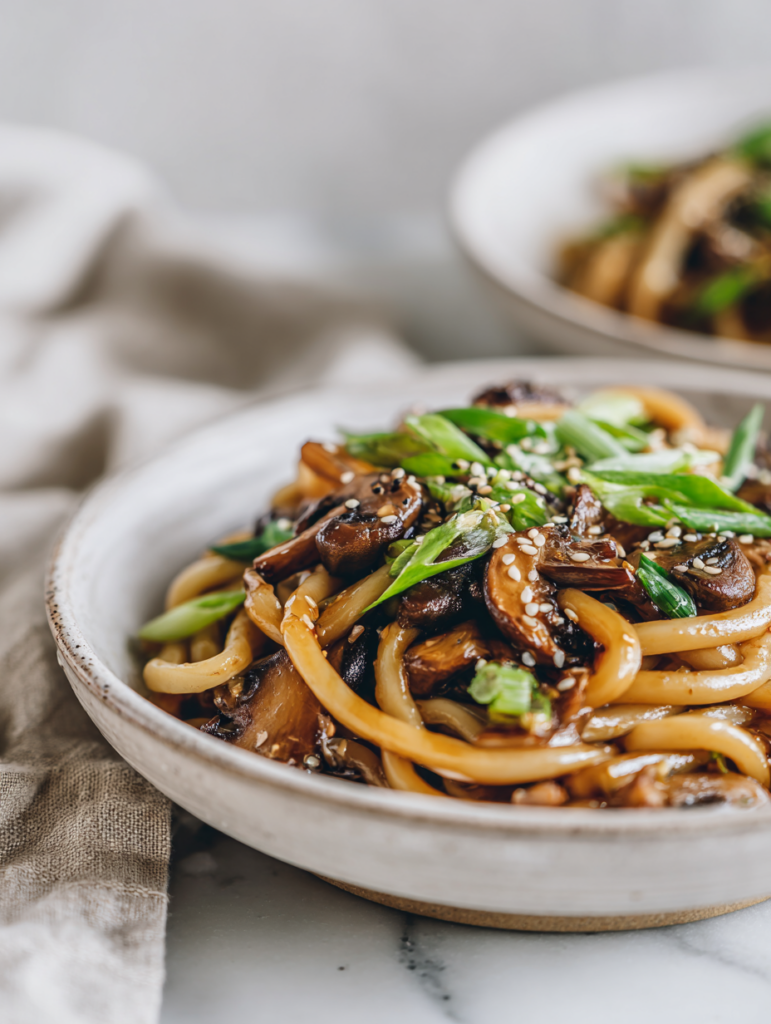
When I first started making vegan udon, I didn’t realize how much the noodle texture could make or break the dish. It’s not just about boiling and tossing—there’s a tactile dance involved in getting those noodles just right. Chewy, springy, and perfectly coated in sauce—that’s what I chase every time.
Honestly, I’ve had my fair share of disappointing bowls where the noodles turned to mush or were limp and lifeless. The secret is in the timing, the boiling water, and a quick shock in ice. Once you nail that, every bite feels like a small celebration of texture and flavor. It’s simple, but it’s all in the details.
Focusing on the often-overlooked importance of proper noodle texture and how it can make or break a vegan udon dish, emphasizing the tactile pleasure of perfectly chewy, springy noodles and how each step in the process influences that experience.
The story behind this recipe
- This recipe was born out of a rainy weekend craving something warm, comforting, but still fresh and vibrant. I wanted to create a dish that’s quick enough for a weeknight but still feels like a treat, with that perfect chewy bite of udon that’s often overlooked. The idea was to keep it simple but elevate the texture and flavor with just a few thoughtful touches.
- I remember the first time I made vegan udon, I was frustrated by the noodles turning to mush. It took a few tries—adjusting boiling times, shocking the noodles in ice, and finding the right sauce balance—to get that springy, chewiness I craved. Now, it’s become a go-to for busy days when I need something nourishing but satisfying. Every time I cook it, I think about how a little patience with the noodles transforms the whole bowl into something memorable.
- heading: ‘The story behind this recipe’
Ingredient breakdown
- Udon noodles: I prefer fresh, chewy udon for that authentic bite—look for ones with a slightly glossy surface. If you only find dried, soak them in hot water before boiling to soften. Your noodles will thank you with a resilient chew.
- Soy sauce: I stick to a good-quality, naturally brewed soy sauce for depth. If you want it saltier or richer, add a splash of mushroom soy. It enhances umami without overpowering the delicate noodles.
- Sesame oil: Just a teaspoon gives a toasty aroma that lingers. If you’re out, a light drizzle of toasted sesame seeds oil works, but avoid overpowering the dish’s subtlety with too much.
- Mushrooms: I love shiitakes or button mushrooms—whatever’s earthy and fresh. Sauté until they’re juicy and slightly caramelized, which adds a smoky richness. Skip if you prefer a lighter version.
- Green onions: I chop these fresh and add at the end for a bright, sharp contrast. The crunch and bite really lift the dish. If you’re short on time, scallions can be substituted with chives, but they lack the same punch.
- Vegetable broth: I use a homemade or low-sodium store-bought broth to build flavor without excess salt. It’s the quiet backbone that keeps everything cohesive. For a richer taste, a splash of mushroom stock works well.
- Ginger & garlic: Freshly grated, these add a zing that cuts through the richness. Sauté briefly until fragrant—your kitchen will fill with a warm, spicy aroma that hints at comfort.
Spotlight on key ingredients
Udon noodles:
- I prefer fresh, chewy udon for that authentic bite—look for ones with a slightly glossy surface. If you only find dried, soak them in hot water before boiling to soften. Your noodles will thank you with a resilient chew.
- Soy sauce: I stick to a good-quality, naturally brewed soy sauce for depth. If you want it saltier or richer, add a splash of mushroom soy. It enhances umami without overpowering the delicate noodles.
Sesame oil & Mushrooms:
- Sesame oil: Just a teaspoon gives a toasty aroma that lingers. If you’re out, a light drizzle of toasted sesame seeds oil works, but avoid overpowering the dish’s subtlety with too much.
- Mushrooms: I love shiitakes or button mushrooms—whatever’s earthy and fresh. Sauté until they’re juicy and slightly caramelized, which adds a smoky richness. Skip if you prefer a lighter version.
Notes for ingredient swaps
- Fresh Udon: I prefer fresh for that springy bite—if you only find dried, soak in hot water first.
- Soy Sauce: Use tamari for gluten-free, or coconut aminos for a sweeter, milder umami kick.
- Sesame Oil: Toasted sesame oil adds a nutty aroma; if out, a splash of toasted sesame seeds oil works, but keep it light.
- Mushrooms: Shiitakes give a smoky depth, but button or cremini are milder, easier to find, and still tasty.
- Vegetable Broth: Homemade or low-sodium store-bought works best; for richer flavor, try mushroom broth as your base.
- Ginger & Garlic: Fresh is best for brightness; if pressed for time, use jarred minced, but expect less zing.
- Green Onions: Fresh chopped scallions are ideal; chives are a decent substitute but lack that punch of green.
Equipment & Tools
- Large pot: For boiling the udon noodles quickly and evenly.
- Slotted spoon: To transfer noodles from boiling water to ice bath without breaking them.
- Bowl of ice water: To shock and stop the cooking process, preserving chewiness.
- Wok or large skillet: For stir-frying and coating the noodles in sauce.
- Tongs: To handle hot noodles and toss ingredients evenly.
Step-by-step guide to vegan udon
- Equipment & Tools: Gather a large pot for boiling, a slotted spoon, a bowl of ice water, a wok or large skillet, and tongs. The pot is for cooking noodles, the spoon for stirring, the ice water for shocking, and the wok for sauce and quick stir-fry.
- Bring a large pot of water to a rolling boil at 100°C (212°F). Add a generous pinch of salt. Drop in the udon noodles and stir gently to prevent sticking.
- Boil the noodles for 8-10 minutes, depending on thickness. Check for just al dente—firm with a slight chew. The edges should be slightly glossy, not dull or mushy.
- Once cooked, quickly transfer noodles to the ice water using tongs or a slotted spoon. Shake gently to stop cooking and set the texture. Let them sit for 2 minutes, then drain thoroughly and set aside.
- While noodles cool, heat the wok over medium-high heat (around 200°C / 390°F). Add a teaspoon of sesame oil and swirl to coat. Toss in sliced mushrooms and cook until they release juices and turn golden, about 3-4 minutes.
- Add minced garlic and grated ginger to the mushrooms. Sauté until fragrant—about 30 seconds, the smell should be warm and spicy. Pour in soy sauce and vegetable broth, simmer briefly to meld flavors, about 2 minutes.
- Add the drained noodles to the wok. Toss quickly to coat in sauce, cooking for another 1-2 minutes until noodles are heated through and glossy. They should be chewy, springy, and well-coated.
- Remove from heat. Stir in chopped green onions for freshness. Rest for 1 minute to let flavors meld before plating.
- Plating: Serve immediately, garnished with extra scallions or sesame seeds if desired. The noodles should be bright, chewy, and coated in a savory, slightly smoky sauce.
Serve immediately while hot. Garnish with extra scallions or sesame seeds for a fresh finish. Rest for 1 minute to allow flavors to settle, then enjoy the chewy, saucy noodles.
How to Know It’s Done
- Noodles are al dente with a slight bounce when tested.
- Sauce is glossy and coats noodles evenly without pooling.
- Mushrooms are golden and fragrant, with a smoky aroma.
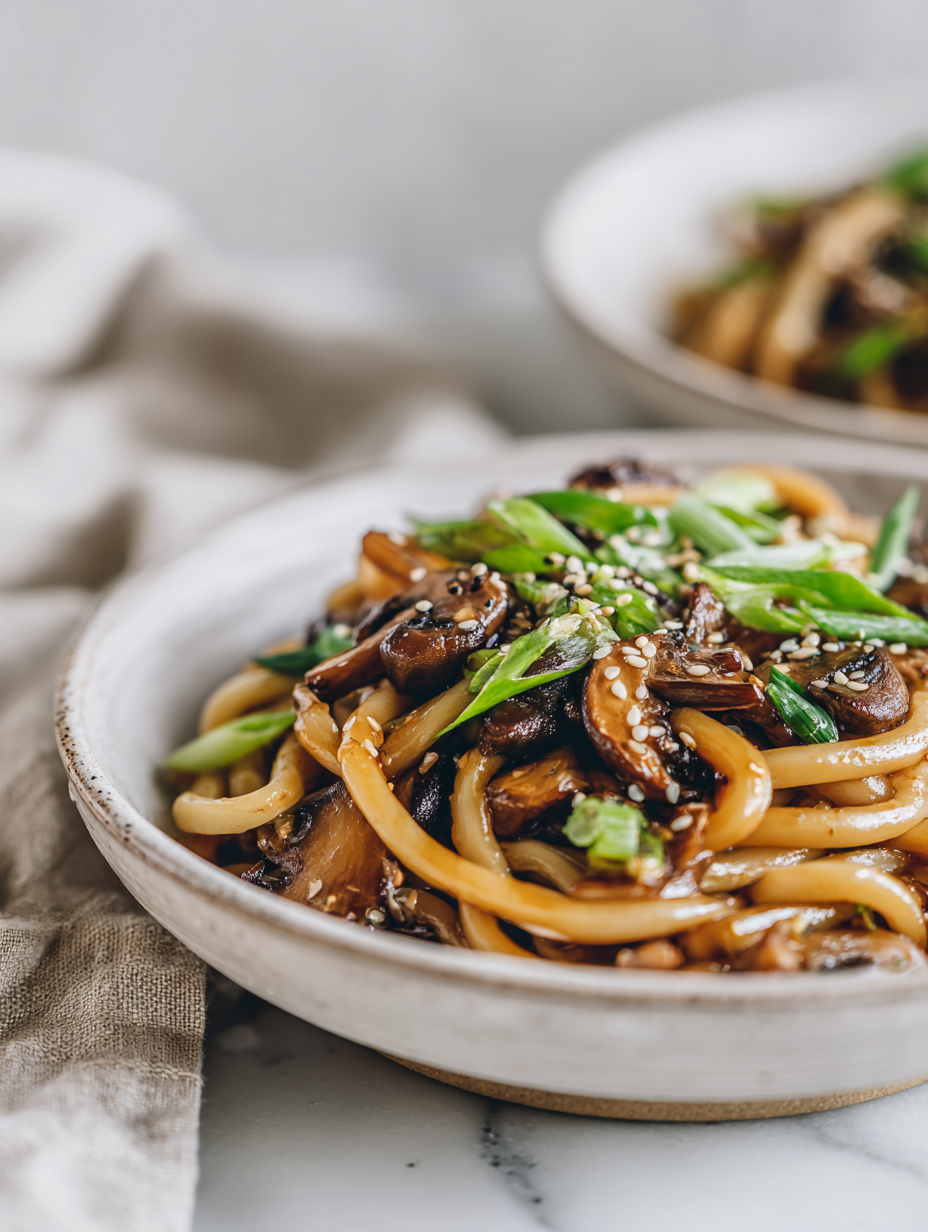
Vegan Udon Noodles with Mushrooms and Green Onions
Ingredients
Equipment
Method
- Bring a large pot of water to a rolling boil and add a pinch of salt. Drop in the udon noodles and stir gently to prevent sticking.
- Cook the noodles for about 8-10 minutes until they are just al dente, with a slight bounce when tested. The edges should appear glossy and firm.
- Using a slotted spoon, transfer the cooked noodles into a bowl of ice water to quickly stop the cooking process and lock in their chewy texture. Gently shake off excess water and set aside.
- Heat a wok or large skillet over medium-high heat. Add a teaspoon of toasted sesame oil and swirl to coat the pan.
- Add the sliced mushrooms to the hot pan and sauté for about 3-4 minutes, until they release their juices and turn golden brown with a slight caramelized edge.
- Stir in the minced garlic and grated ginger, cooking for about 30 seconds until fragrant. The kitchen should fill with a warm, spicy aroma.
- Pour in the vegetable broth and soy sauce, bringing the mixture to a gentle simmer. Let it cook for 2 minutes to meld the flavors and slightly reduce the sauce.
- Add the drained, cooled udon noodles to the skillet and toss quickly to coat them in the sauce. Cook for another 1-2 minutes until the noodles are heated through and glossy, maintaining their chewiness.
- Remove from heat and stir in the chopped green onions for a fresh, crisp contrast. Let sit for a minute to allow flavors to settle.
- Serve immediately, garnished with extra green onions or sesame seeds if desired. Enjoy the bright, chewy noodles coated in a savory, smoky sauce.
Pro tips for vegan udon
- Noodles: Rinse thoroughly in cold water after boiling to stop cooking and keep that springy texture.
- Sauce: Use a high-quality soy or tamari to ensure depth, and adjust the saltiness as needed.
- Stir-Fry: Keep heat high and toss quickly—your mushrooms should sizzle and caramelize without burning.
- Green: Add chopped scallions off the heat to preserve their bright flavor and crisp texture.
- Shock: Immediately dunk cooked noodles into ice water to lock in chewiness and prevent over-softening.
- Balance: Taste the sauce before combining—adjust soy or sesame oil for the perfect savory punch.
- Garnish: Finish with a sprinkle of sesame seeds or extra scallions for texture and visual appeal.
Common mistakes and how to fix them
- FORGOT to check noodle doneness → Always taste noodles before draining.
- DUMPED noodles too early → Shock in ice water immediately after boiling.
- OVER-TORCHED the sauce → Cook on medium heat, stir constantly to prevent burning.
- MISSED the resting time → Let noodles sit for 1 minute before serving.
Quick fixes and pantry swaps
- When noodles stick, splash a little more boiling water and stir vigorously.
- If sauce is too thick, add a splash of hot broth to loosen it up.
- When noodles are limp, shock in ice water immediately for better texture.
- DUMPED noodles too early? Rinse quickly in cold water to stop cooking.
- When sauce shimmers and smells smoky, it’s ready for tossing the noodles.
Prep, store, and reheat tips
- Prepare the noodles: Cook and shock in ice water up to a day ahead. Keep them in an airtight container, shiny and chewy when reheated.
- Make the sauce: Mix soy, sesame oil, and ginger ahead. Store in the fridge for up to 3 days—flavors deepen overnight.
- Chop toppings: Slice green onions, mushrooms, and garlic in advance. Keep in separate containers to save time when assembling.
- Refrigerate leftovers: Store any leftover noodles in a sealed container for up to 2 days. Expect slight loss in chewiness, but still flavorful.
- Reheating: Gently rewarm noodles in a hot skillet or microwave, adding a splash of broth or water. Look for steam, and noodles should be springy with a fresh aroma.
Top questions about vegan udon noodles
1. Can I use dried udon noodles?
Use fresh udon for the best springy texture; dried ones need soaking in hot water before boiling.
2. Can I substitute soy sauce?
Yes, opt for a low-sodium or gluten-free soy sauce if needed; it will slightly alter the depth of flavor.
3. What are good soy sauce substitutes?
Absolutely, try tamari or coconut aminos for different flavor profiles, but keep in mind they might be a bit milder.
4. Why shock the noodles in ice water?
Shock the cooked noodles in ice water immediately after boiling to lock in chewiness and prevent mushiness.
5. How much sesame oil should I use?
Use a high-quality, toasted sesame oil sparingly to add a nutty aroma; too much can overpower the dish.
6. How do I know when mushrooms are done?
Sauté mushrooms until golden and juicy, releasing smoky aromas; they should be fragrant and caramelized on the edges.
7. When should I add green onions?
Fresh green onions add brightness and crunch—add them off heat to keep their vibrant flavor and crispness.
8. How do I reheat vegan udon noodles?
Reheat leftovers gently in a skillet with a splash of broth or water, until noodles are hot and springy again.
9. What if my noodles get mushy?
If noodles turn limp, dunk them in ice water immediately after draining to restore their chewy texture.
10. How do I fix bland flavor in the dish?
Adjust soy sauce and sesame oil to taste before tossing with noodles—aim for a savory, well-balanced flavor.
Cooking this vegan udon dish reminds me how much texture can elevate simple ingredients. It’s satisfying to see the noodles achieve that perfect chew, turning a quick weeknight bowl into something memorable.
Every time I make it, I think about how a few thoughtful steps—shocking the noodles, balancing the sauce—transform comfort food into a small, joyful ritual. It’s honest, straightforward cooking that celebrates tactile pleasure and flavor in every bite.