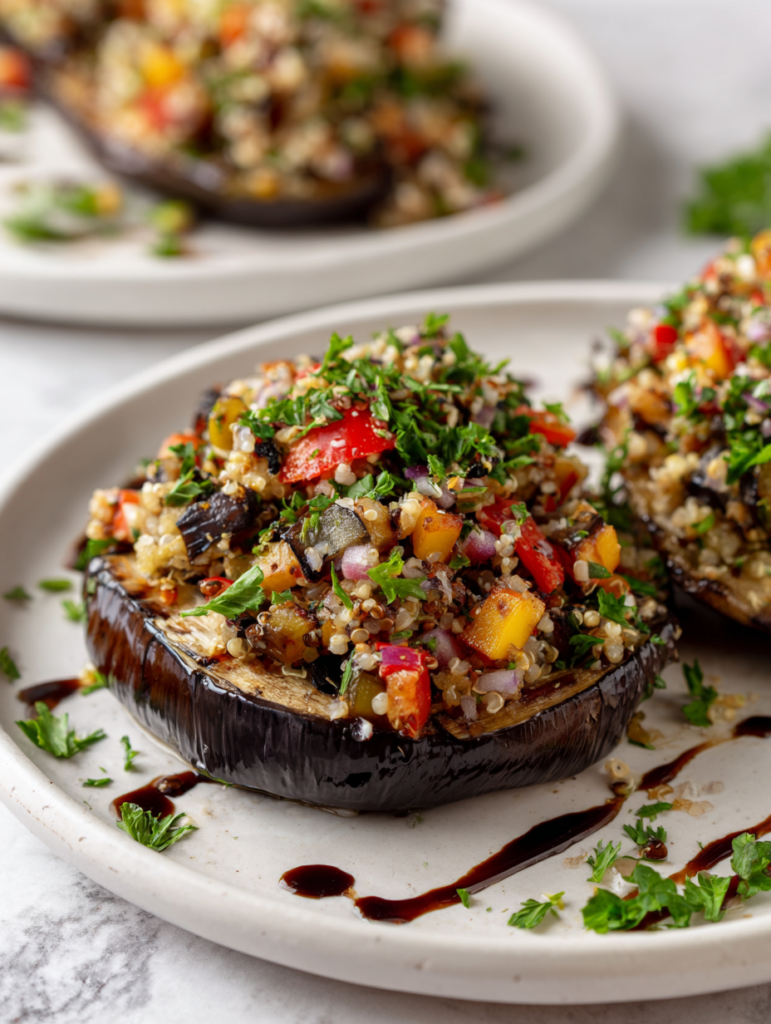
This vegan stuffed eggplant recipe is my way of reclaiming those humble garden harvests and turning them into something hearty and satisfying. It’s a dish that’s rooted in memory—my grandma’s kitchen, where she’d fill eggplants with whatever was fresh and leftover, then bake until everything was tender and fragrant with herbs.
I love how adaptable it is—no two versions are quite the same, and it always feels like a little culinary treasure hunt. Plus, it’s a reminder that simple ingredients—ripe eggplants, grains, herbs—can come together in a way that’s both nourishing and a little nostalgic, especially on busy weeknights or lazy weekends.
This recipe is inspired by my grandmother’s obsession with stuffing eggplants using leftover grains and garden herbs, transforming humble ingredients into a comforting, rustic dish that feels like a warm hug from the past.
A Rustic Take on Garden Bounty
- Cooking this reminds me of my grandmother’s cluttered kitchen, where every dish was a bit chaotic but full of love.
- There’s a quiet pride in turning simple, garden-fresh ingredients into something that feels like a warm hug.
- I used to dread eggplant’s bitterness, but roasting it until it’s smoky and tender changed my whole view.
- Nothing beats the smell of herbs filling the house—like a little slice of summer, even in winter.
The story behind this recipe
- This dish is born from a memory of my grandmother’s garden, where she’d stuff eggplants with whatever she had—leftover grains, fresh herbs, bits of roasted veggies. It felt like a way to make something special out of humble, everyday ingredients, and I’ve carried that idea into my own kitchen.
- Every time I make it, I think of those lazy summer afternoons, the smell of herbs simmering, and the satisfaction of transforming simple garden bounty into a hearty, nourishing meal. It’s a reminder that with a little patience, even modest ingredients can turn into something memorable—no fancy tricks needed.
- heading: Rustic Inspiration
Historical and Cultural Roots
- This dish traces back to Mediterranean coastal villages where eggplants were stuffed with leftover grains and herbs, turning humble garden produce into a celebratory meal.
- Historically, stuffed eggplants have been a way to make use of every ingredient, making it a symbol of resourcefulness in rural kitchens across the Middle East and Southern Europe.
- Legend has it that in some regions, this dish was reserved for special occasions—its rich, earthy flavors felt like a gift from the land itself.
Ingredient breakdown: key components
- Eggplants: I love how roasting brings out their smoky sweetness, making them tender and lush—skip slicing too thin or they dry out.
- Cooked grains: I use quinoa or bulgur, but you can swap in rice or couscous. Just ensure they’re fluffy and not mushy for a better texture.
- Herbs: Fresh parsley and mint lift everything with bright, aromatic notes—if you only have dried, use half the amount to avoid overpowering.
- Tomatoes: Ripe and juicy, they add a burst of tang—if out of season, a good splash of tomato paste can mimic that richness.
- Olive oil: I drizzle until the filling glistens, adding a rich, fruity depth—use a good quality, extra virgin oil for the best flavor.
- Breadcrumbs: They add a nice crunch and help hold the filling together—gluten-free options work, but expect a slightly softer texture.
- Spices: Cinnamon and paprika give warmth and smokiness—if you prefer, cumin or chili powder can switch up the flavor profile.
Spotlight on key ingredients
Eggplants:
- I love how roasting brings out their smoky sweetness, making them tender and lush—skip slicing too thin or they dry out.
- Cooked grains: I use quinoa or bulgur, but you can swap in rice or couscous. Just ensure they’re fluffy and not mushy for a better texture.
- Herbs: Fresh parsley and mint lift everything with bright, aromatic notes—if you only have dried, use half the amount to avoid overpowering.
Tomatoes and Olive oil:
- Tomatoes: Ripe and juicy, they add a burst of tang—if out of season, a good splash of tomato paste can mimic that richness.
- Olive oil: I drizzle until the filling glistens, adding a rich, fruity depth—use a good quality, extra virgin oil for the best flavor.
Notes for ingredient swaps
- Oil-Free: Use a splash of vegetable broth or water when sautéing, which keeps things lighter but may soften the flavor slightly.
- Gluten-Free: Swap breadcrumbs for crushed gluten-free crackers or ground almonds for a nutty crunch and cohesive filling.
- Soy-Free: Replace soy-based ingredients with sunflower seed or tahini-based pastes to keep the richness without soy.
- Smoky Flavor: Add a dash of smoked paprika or chipotle chili powder for depth—if you want a milder smoke, skip the chipotle.
- Fresh Herbs: Use basil or cilantro if parsley and mint aren’t available—each brings its own bright, fresh note.
- Tomatoes: Sun-dried or roasted tomatoes can boost umami; fresh out of season? A teaspoon of tomato paste works well.
- Grains: Quinoa, bulgur, or rice are interchangeable—just cook them fluffy, not mushy, to avoid soggy stuffing.
Equipment & Tools
- Baking sheet: Roast eggplants and bake stuffed shells.
- Spoon: Hollow out eggplants and fill them.
- Large skillet: Cook the filling ingredients.
- Knife: Chop vegetables and herbs.
- Cutting board: Prepare ingredients safely.
- Spoon or spatula: Mix and stuff the filling.
Step-by-step guide to stuffed eggplant
- Preheat your oven to 200°C (390°F). Slice the eggplants in half lengthwise. Using a spoon, carefully scoop out the flesh, leaving about a 1 cm border. Chop the scooped flesh and set aside. Brush the eggplant skins with a little olive oil, then place on a baking sheet. Roast for 20 minutes until the skins are slightly shriveled and fragrant. Remove and let cool slightly.
- While the eggplants roast, heat a tablespoon of olive oil in a large skillet over medium heat (about 160°C/320°F). Add chopped onion and garlic, sauté until translucent and fragrant, about 5 minutes. Toss in the chopped eggplant flesh, cook until it softens and releases a smoky aroma, around 8 minutes. Season with salt, pepper, and a pinch of smoked paprika.
- Stir in cooked grains (quinoa, bulgur, or rice), chopped tomatoes, and fresh herbs (parsley and mint). Mix well until the filling is cohesive and fragrant. Adjust seasoning as needed. If the mixture feels too dry, add a splash of water or vegetable broth. Let it cool for 5 minutes.
- Stuff each roasted eggplant shell generously with the filling, pressing down gently. Arrange the stuffed eggplants on the baking sheet. For a crispy top, sprinkle with breadcrumbs and drizzle with a little olive oil. Bake in the same oven at 180°C (355°F) for 25-30 minutes until golden and bubbling.
- Once baked, transfer to a serving platter. Let rest for 5 minutes so the filling settles. Garnish with extra herbs if desired. Serve warm, with a squeeze of lemon for brightness or a drizzle of good olive oil. Enjoy the smoky, herbaceous aroma as you cut into the tender, flavorful eggplant.
Allow the stuffed eggplants to rest for 5 minutes before serving. Garnish with fresh herbs or a squeeze of lemon. Plate directly from the baking sheet or transfer to a platter for a rustic look. Serve with a simple side salad or crusty bread.
How to Know It’s Done
- Eggplant shells are tender and slightly shriveled after roasting.
- Filling is hot, fragrant, and holds together when scooped with a spoon.
- Top is golden and crispy, with breadcrumbs toasted evenly.
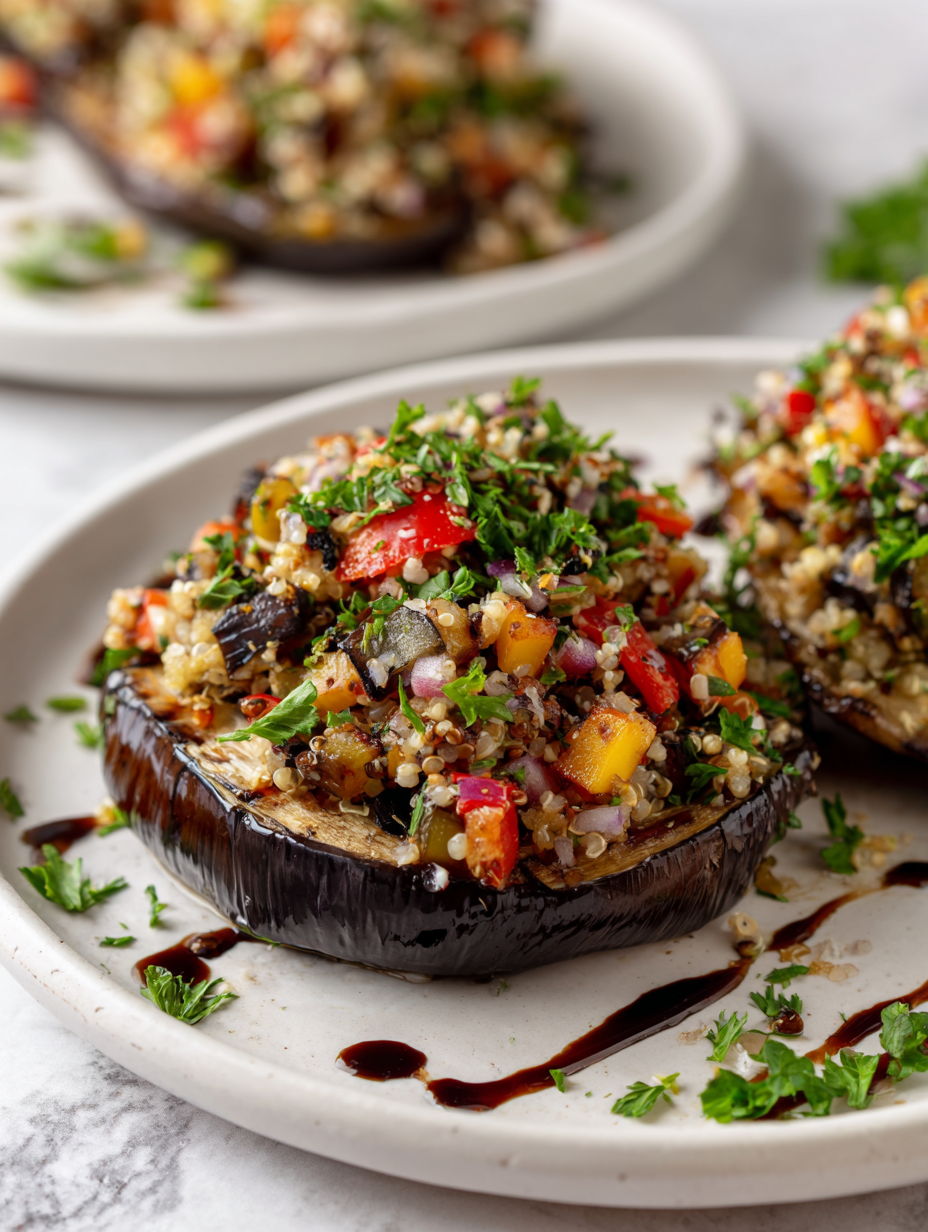
Vegan Stuffed Eggplant
Ingredients
Equipment
Method
- Preheat your oven to 200°C (390°F). Slice the eggplants in half lengthwise and use a spoon to carefully scoop out the flesh, leaving about a 1 cm border to keep the shells sturdy. Chop the scooped flesh and set aside. Brush the eggplant skins lightly with olive oil and place them cut-side down on a baking sheet. Roast for about 20 minutes until the skins are slightly shriveled and fragrant. Remove from oven and let cool slightly.
- Meanwhile, heat a tablespoon of olive oil in a large skillet over medium heat. Add the minced garlic and sauté until fragrant, about 1 minute, until it turns a light golden color. Toss in the chopped eggplant flesh and cook, stirring occasionally, until it softens and develops a smoky aroma, about 8 minutes. Season with salt, pepper, and smoked paprika, stirring well to coat the mixture evenly.
- Add the cooked grains, chopped tomatoes, and chopped herbs to the skillet. Mix thoroughly until everything is combined and the mixture is fragrant and cohesive. If it looks dry, add a splash of water or vegetable broth. Remove from heat and let cool for a few minutes.
- Once the roasted eggplant shells are cool enough to handle, gently stuff each half with the grain and herb mixture, pressing lightly to fill evenly. Place the stuffed eggplants on the same baking sheet. Sprinkle breadcrumbs over the top and drizzle with a little olive oil to help them crisp up.
- Bake the stuffed eggplants at 180°C (355°F) for about 25-30 minutes, until the tops are golden brown and bubbling. The eggplants should be tender when pierced with a fork, and the breadcrumbs toasted and crispy.
- Remove from the oven and let rest for 5 minutes. Transfer to a serving platter and garnish with extra herbs if desired. Serve warm, perhaps with a squeeze of lemon or a drizzle of olive oil for added brightness. Enjoy the smoky, herbaceous flavors and tender textures in every bite!
Notes
Pro tips for perfect stuffed eggplant
- Bolded mini-head: Use a sharp knife to halve eggplants cleanly, reducing crushing and uneven edges.
- Bolded mini-head: Roast eggplants until skins are shriveled and fragrant—this deepens flavor and softens the flesh perfectly.
- Bolded mini-head: Sauté aromatics over medium heat until translucent and fragrant—this builds a flavorful base for the filling.
- Bolded mini-head: Gently pack the stuffing into eggplant shells to avoid spills and ensure even baking.
- Bolded mini-head: Sprinkle breadcrumbs just before baking for a crispy, golden top that stays crunchy.
- Bolded mini-head: Rest the stuffed eggplants for 5 minutes after baking—this helps the filling set and makes serving neater.
- Bolded mini-head: Finish with a squeeze of lemon or a drizzle of olive oil to brighten flavors and add a fresh touch.
Common mistakes and how to fix them
- FORGOT to pat eggplants dry before roasting → they steam instead of caramelize, causing sogginess.
- DUMPED filling directly into eggplant shells → risk of spilling; gently pack with a spoon for neatness.
- OVER-TORCHED breadcrumbs → turn bitter; keep an eye and remove early if they darken too much.
- USED too much oil in filling → makes it greasy; drizzle sparingly and rely on roasting for flavor.
Quick fixes and pantry swaps
- When eggplants release too much moisture, splash with a little salt and let sit 10 minutes to draw out excess water.
- If filling is too dry, add a splash of vegetable broth or water to loosen it without losing flavor.
- DUMPED too much oil in the sauté? Patch it by adding a bit more cooked grains or bread crumbs to absorb excess fat.
- Over-baked breadcrumbs? Shield with foil or reduce oven heat slightly to prevent bitter, burnt tops.
- Splash lemon juice or a dash of vinegar when filling tastes flat—brightens and balances rich flavors.
Prep, store, and reheat tips
- You can prep the stuffed eggplant filling up to 1 day ahead; keep it in an airtight container in the fridge. It will lose some of its fresh herb brightness but remains flavorful.
- Assemble the stuffed eggplants a few hours before baking, then refrigerate uncovered. Cover loosely to prevent moisture buildup. Reheat in the oven at 180°C (355°F) until warmed through and bubbling, about 15 minutes. The aroma will tell you it’s ready.
- Leftovers keep well for 2-3 days in the fridge. The flavors tend to meld and deepen, especially if stored after baking. Reheat gently to avoid drying out—use oven or microwave, checking for hot, fragrant, and tender textures.
- For freezer storage, freeze baked stuffed eggplants wrapped tightly for up to 2 months. Thaw overnight in the fridge, then reheat as above. Expect a slightly softer texture but no loss in flavor.
Top questions about vegan stuffed eggplant
1. How do I prepare eggplants for stuffing?
Slice eggplants in half lengthwise, scoop out the flesh, and roast until tender and fragrant. Stuff with a flavorful grain and herb mixture, then bake until golden on top.
2. What grains work best for the filling?
Use cooked quinoa, bulgur, or rice—aim for fluffy, not mushy. This keeps the stuffing moist but not soggy.
3. How can I tell when the eggplants are cooked?
Roast the eggplants until their skins are shriveled and smell smoky—that’s when they’re perfectly tender.
4. Can I make this gluten-free?
Yes, you can swap in gluten-free breadcrumbs or crushed nuts for crunch. Just watch the texture to keep it cohesive.
5. Can I use dried herbs instead of fresh?
Add fresh herbs like parsley and mint for brightness. If dried, use half the amount to keep the flavor balanced.
6. What if the filling is too dry?
If the filling feels too dry, stir in a splash of vegetable broth or water. It should be moist but not soupy.
7. How do I know when they’re done baking?
Bake the stuffed eggplants until the top is crispy and golden, about 25-30 minutes at 180°C (355°F).
8. How long will leftovers last?
Store leftovers in an airtight container in the fridge for up to 3 days. Reheat in the oven for best texture.
9. Can I make this ahead of time?
You can prepare the filling a day ahead and stuff the eggplants just before baking for convenience.
10. What if the eggplants are too watery?
If the eggplants release too much moisture, sprinkle with salt and let sit for 10 minutes to draw out excess water.
This dish isn’t just about feeding yourself; it’s about reconnecting with simple, nourishing flavors that carry stories and memories. The smoky eggplant paired with fresh herbs feels like a little moment of comfort, especially when the season feels busy or a bit chaotic.
In a way, it’s a reminder that good food doesn’t need fancy ingredients or complicated techniques. Sometimes, it’s just about taking humble produce and turning it into something that feels soulful and real, right from your own kitchen.