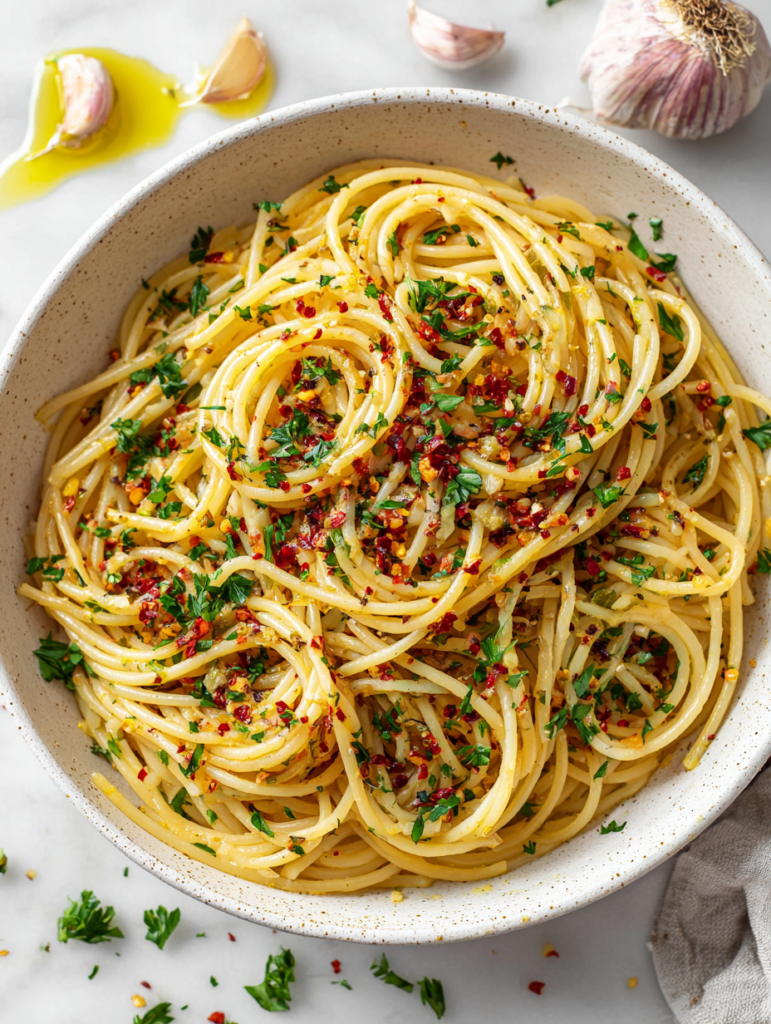
Vegan Spaghetti Aglio e Olio might seem like a straightforward dish, but it’s packed with memories of my childhood kitchen—garlic sizzling in olive oil, the comforting aroma filling the air on busy weeknights. I love how this simple pasta can turn a hectic evening into a moment of mindful cooking, focusing on flavor and texture rather than fuss. It’s one of those recipes that reminds me how powerful minimal ingredients can be.
What makes this version special is how I’ve reimagined the classic without any dairy or meat, leaning into the richness of good quality olive oil and the punch of fresh garlic. It’s a dish that’s quick to throw together, but each bite carries a nostalgic warmth—like a tiny ritual that grounds me amidst the chaos of a busy schedule. Sometimes, all I need is a plate of this, and everything feels a little more manageable.
This dish is more than just comfort food; it’s a reminder that simplicity can be deeply satisfying. It’s perfect for those evenings when I want something honest and nourishing, without sacrificing time or flavor. Plus, it’s a blank canvas—an invitation to add your own twist, maybe a splash of chili or a handful of herbs, making it uniquely yours every time.
Focusing on the nostalgic simplicity of a classic Italian dish, but with a modern vegan twist that highlights the comforting power of garlic and olive oil, turning it into a quick, mindful ritual for busy weeknights.
The story behind this recipe
This recipe came from a summer spent in Italy, where I fell in love with how Italians savor even the simplest dishes. One night, I watched a local cook whip up a quick pasta with just garlic, olive oil, and chili flakes—no fuss, just flavor. That moment stuck with me, especially how each ingredient seemed to glow with purpose and tradition. Now, I keep that memory alive in my own kitchen, making this vegan version whenever I crave something honest and straightforward. It’s a dish that reminds me that sometimes, less really is more, especially when it’s made with good ingredients and a little heart.
Key ingredients and tips
- Garlic: I love crushing fresh garlic until it’s fragrant and slightly golden, which releases a sweet, spicy aroma. Skip pre-minced for more punch.
- Olive oil: Use a good extra virgin olive oil—its fruity, slightly peppery notes make all the difference. Don’t skimp; it’s the base of the flavor.
- Spaghetti: I prefer a traditional durum wheat spaghetti that holds the sauce well, but feel free to try gluten-free if needed. Cook until just al dente, about 8 minutes.
- Red pepper flakes: A pinch of these brings a gentle heat and a slight smoky note. Adjust to your spice tolerance, but don’t skip it for that kick.
- Salt: I add sea salt to the pasta water generously—salty enough so the noodles are flavorful on their own. Taste the water; it should taste like the sea.
- Parsley: Fresh chopped parsley adds a bright, herbaceous note and a pop of color. Toss it in right before serving to keep its vibrancy.
- Lemon zest (optional): A tiny sprinkle adds a lemon-bright zing that lifts the dish from simple to special. Use a microplane for best results.
Spotlight on key ingredients
Garlic & Olive Oil:
- Garlic: I love crushing fresh garlic until it’s fragrant and slightly golden, which releases a sweet, spicy aroma. Skip pre-minced for more punch.
- Olive oil: Use a good extra virgin olive oil—its fruity, slightly peppery notes make all the difference. Don’t skimp; it’s the base of the flavor.
- Spaghetti: I prefer a traditional durum wheat spaghetti that holds the sauce well, but feel free to try gluten-free if needed. Cook until just al dente, about 8 minutes.
Notes for ingredient swaps
- Oil-Free: Swap olive oil for a splash of vegetable broth or water. Keeps it light, but may lose some richness.
- Gluten-Free: Use gluten-free spaghetti or rice pasta. Slightly different texture, but holds the sauce nicely.
- Low-Sodium: Choose low-sodium or salt-free pasta and control salt at the end. Keeps it gentle on the salt front.
- Flavor Boost: Add a dash of smoked paprika or a few drops of high-quality infused oil for extra depth.
- Herb Variations: Swap parsley for basil or cilantro. Fresh herbs brighten the dish differently and add unique aroma.
- Garlic Alternatives: Use roasted garlic for a milder, sweeter flavor or garlic-infused oil for convenience.
- Spice Level: Omit red pepper flakes for milder taste or add a pinch of paprika or cayenne for extra heat.
Equipment & Tools
- Large pot: Boil pasta efficiently with enough space to prevent sticking.
- Skillet or frying pan: Sauté garlic and chili flakes evenly, developing flavor.
- Slotted spoon: Drain pasta while reserving pasta water.
- Microplane or zester: Add fresh lemon zest for brightness.
Step-by-step guide to vegan Aglio e Olio
- Gather all your ingredients and tools. A large pot for boiling pasta, a skillet for frying garlic, and a slotted spoon. Keep everything within arm’s reach; this dish comes together quickly.
- Bring a large pot of salted water to a rolling boil—about 1 tablespoon salt per 4 liters of water. Cook spaghetti until just al dente, roughly 8 minutes. Drain, reserving a half cup of pasta water.
- While pasta cooks, peel and thinly slice 4-6 garlic cloves. In a skillet over medium heat (about 160°C/320°F), pour in 1/4 cup of good extra virgin olive oil. Once shimmering, add garlic slices.
- Cook garlic gently, stirring often, until fragrant and just starting to turn golden—about 2-3 minutes. Watch carefully; burnt garlic will turn bitter. If garlic begins to brown too quickly, lower the heat.
- Add a pinch (about 1/4 teaspoon) of red pepper flakes to the garlic and oil. Stir for 30 seconds until fragrant. This adds a smoky heat that balances the richness.
- Transfer drained spaghetti to the skillet. Toss vigorously to coat all strands with garlic and oil. If the mixture feels dry, add a splash of the reserved pasta water, 1 tablespoon at a time, until glossy.
- Taste and adjust salt if needed. Add freshly chopped parsley and lemon zest (if using) for brightness. Toss again to distribute evenly.
- Remove from heat. Let sit for 1-2 minutes to let flavors meld. Plate immediately, garnished with extra parsley or a squeeze of lemon, if desired.
Serve immediately while hot, garnished with extra herbs or a squeeze of lemon. Let rest for 1 minute before eating to allow flavors to settle, then dig in.
How to Know It’s Done
- Garlic is fragrant and lightly golden, not burnt.
- Pasta is al dente with a slight bite.
- Oil is glossy and clings to noodles, not greasy.
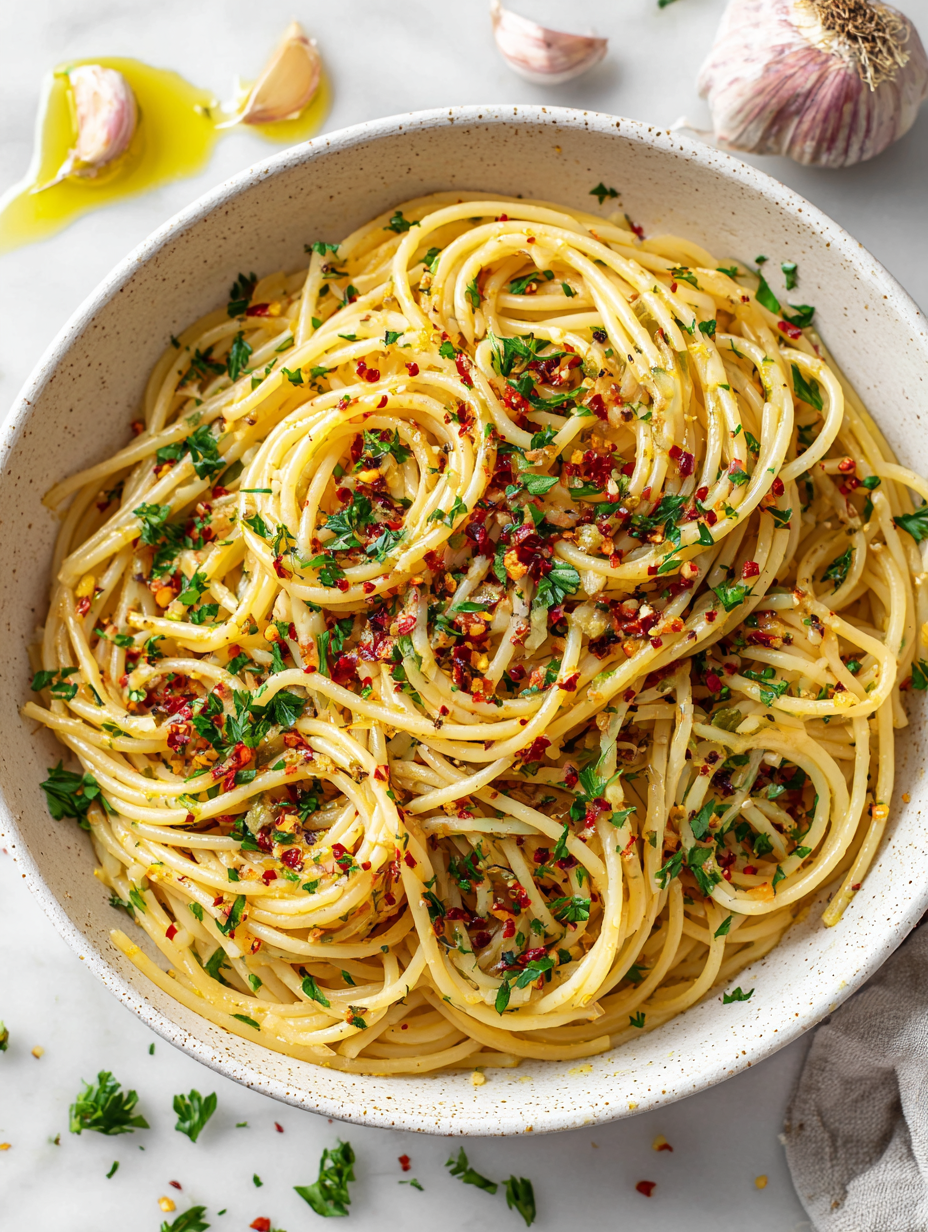
Vegan Spaghetti Aglio e Olio
Ingredients
Equipment
Method
- Bring a large pot of water to a rolling boil, adding a generous tablespoon of salt. Cook the spaghetti until just al dente, about 8 minutes, until it has a slight bite and is tender yet firm. Drain, reserving a small cup of pasta water.
- While the pasta cooks, peel and thinly slice the garlic cloves. Heat the olive oil over medium heat in a skillet until shimmering and hot, but not smoking. Add the sliced garlic and cook gently, stirring frequently, until it releases a fragrant aroma and turns light golden, about 2-3 minutes.
- Add red pepper flakes to the skillet and stir for about 30 seconds, allowing the heat to release their smoky spice. The garlic should be fragrant and just beginning to brown—be careful not to burn it.
- Transfer the drained spaghetti into the skillet with the garlic oil. Toss vigorously to coat all strands evenly, allowing the pasta to absorb the flavors. If the mixture seems dry, add a splash of the reserved pasta water to loosen and create a glossy sauce.
- Remove the skillet from heat. Stir in the chopped parsley and lemon zest for a burst of freshness. Taste the pasta and add more salt if needed, adjusting with reserved pasta water if the sauce needs thinning or more gloss.
- Serve immediately while hot, with extra parsley or lemon on top if desired. The garlic should be fragrant with a slight crunch, and the pasta coated in a shiny, flavorful oil. Enjoy this simple, comforting dish that celebrates minimal ingredients.
Notes
Pro tips for perfect vegan Aglio e Olio
- garlic: Crush garlic with the side of your knife to release maximum aroma and flavor before slicing.
- Fragrant oil: Warm olive oil gently over medium heat until shimmering—avoid overheating to prevent smoking and bitterness.
- Pasta water: Reserve at least half a cup of starchy water before draining—this helps emulsify the sauce and cling to noodles.
- Heat control: Keep garlic at a gentle sizzle; if it starts to brown too quickly, lower the heat immediately.
- Quick tossing: Toss pasta and garlic oil vigorously in the pan to coat evenly and create a glossy finish.
- Timing: Remove from heat just as garlic turns golden and fragrant—this prevents bitter burnt notes.
- Fresh herbs: Add chopped parsley just before serving for vibrant color and bright flavor.
Common mistakes and how to fix them
- FORGOT to stir garlic continuously → Burnt garlic turns bitter, fix by lowering heat immediately.
- DUMPED pasta water too early → Save some for sauce, it adds gloss and flavor.
- OVER-TORCHED garlic → Turn down heat sooner to prevent bitterness.
- MISSED salt in water → Taste water; it should taste like the sea to flavor the noodles properly.
Quick fixes and pantry swaps
- When garlic burns, splash cold oil to cool and salvage flavor.
- If pasta clumps, toss with a splash of warm water to loosen.
- Splash extra olive oil if sauce feels dry before serving.
- Patch over salted dishes with a squeeze of lemon or a rinsed potato piece.
- Shield garlic from direct heat to prevent bitter over-torching.
Prep, store, and reheat tips
- Prep garlic and chop parsley ahead; store in airtight containers in the fridge for up to 2 days. The aroma will be fresh and pungent, ready to toss in at the last minute.
- Cook spaghetti al dente, then toss with a little olive oil to prevent sticking. Store in a sealed container in the fridge for up to 1 day; it will absorb flavors and may clump slightly.
- The garlic-infused oil can be made a day in advance. Keep chilled in a small jar; the flavors will deepen, and the oil will develop a slightly smoky aroma over time.
- Reheat gently on the stove over low heat, swirling until warmed through. Watch for bubbling and aroma; the garlic should not burn, and the oil should shimmer invitingly.
Top questions about vegan Spaghetti Aglio e Olio
1. Can I make this dish soy-free?
Yes, you can substitute nutritional yeast for a cheesy flavor or use vegan Parmesan for a salty, umami boost.
2. Is gluten-free pasta a good substitute?
Absolutely, swapping in gluten-free pasta is straightforward, though it might have a slightly different texture.
3. Can I make it spicier?
Yes, you can add extra chili flakes or hot sauce if you prefer more heat, just adjust to your taste.
4. Can I use garlic-infused oil instead of fresh garlic?
Certainly, using garlic-infused olive oil can deepen flavor and save time if you’re short on fresh garlic.
5. Can I use dried herbs?
If you only have dried parsley, use about half the amount called for fresh; it still adds flavor but less vibrancy.
6. Can I use roasted garlic?
Yes, but be mindful that roasted garlic will add a sweeter, milder flavor compared to raw or fresh garlic.
7. Can I add cheese or dairy substitutes?
Yes, adding nutritional yeast or vegan cheese can give a creamy, cheesy note without dairy.
8. What can I substitute for red pepper flakes?
If you don’t have red pepper flakes, a pinch of smoked paprika or cayenne can add similar smoky or spicy notes.
9. Can I make this ahead?
Yes, it’s best enjoyed fresh for the crispy garlic and vibrant flavors, but leftovers can be stored in the fridge for a day or two.
10. How do I reheat leftovers without losing flavor?
When reheating, gently warm in a skillet with a splash of water or oil until hot and fragrant—avoid high heat to prevent burning the garlic.
This simple pasta has a way of grounding me, especially when garlic fills the kitchen with that warm, inviting scent. It’s a reminder that even the most straightforward ingredients can create something deeply satisfying. Sometimes, the best comfort comes from a plate of this, shared or alone, with no fuss needed.
In the end, it’s really about slowing down just enough to enjoy the process—crushing garlic, tossing pasta, and savoring each bite. No matter the season, this dish keeps me connected to those honest, honest flavors I grew up with. It’s a little ritual I come back to when I need a quick moment of calm.