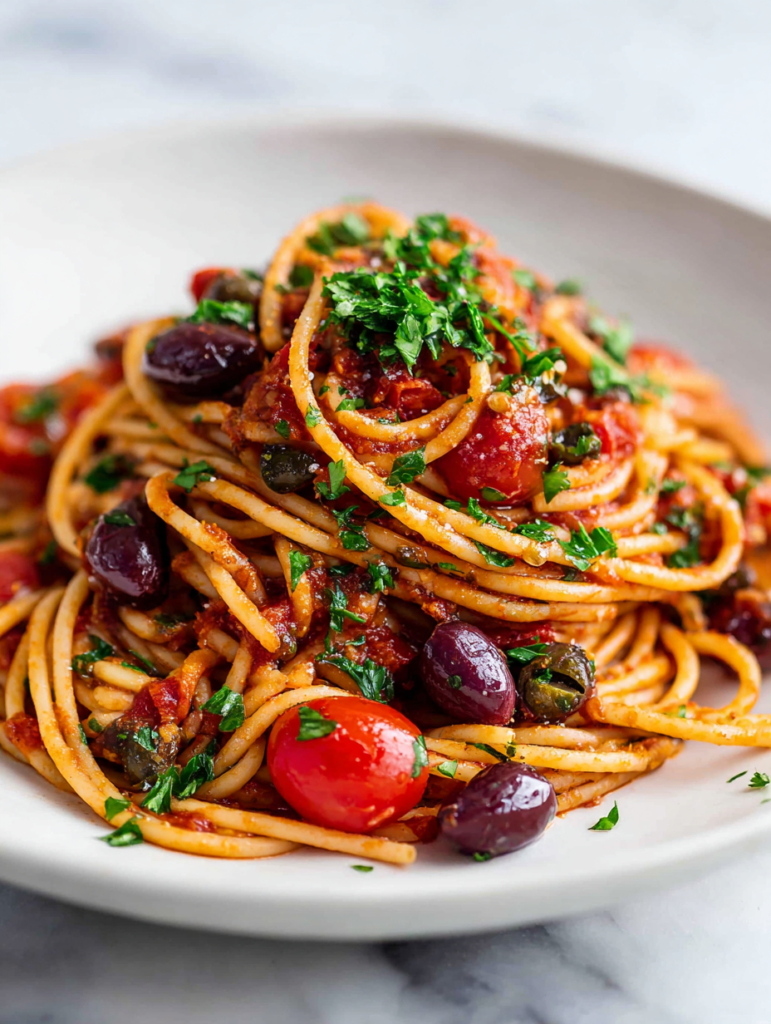
Vegan Puttanesca might sound like an oxymoron at first—how do you get that salty, briny punch without anchovies or cheese? But honestly, it’s a game of kitchen improvisation. I’ve found that with a few clever swaps, you can mimic that deep, complex flavor profile that makes traditional puttanesca so addictive, all while keeping it plant-based and bright.
This dish is a bit of a flavor puzzle, and I love that about it. It’s a reminder that vegan ingredients aren’t just substitutes—they can stand on their own, bold and unapologetic. Plus, it’s quick, unfussy, and perfect for those nights when you want something satisfying but don’t want to mess around with complicated prep.
Focusing on how vegan ingredients can mimic the rich, salty depth of traditional puttanesca, highlighting flavor adaptation over authenticity.
The story behind this recipe
- This recipe was born out of a cluttered pantry and a craving for something salty and savory that didn’t rely on the usual fishy or cheesy crutches. One evening, I started tossing together what I had—olives, capers, a splash of tomato—and suddenly, it clicked. That burst of briny, smoky flavor took me straight back to a tiny, sunbaked alley in Sicily, where I first tasted a version of this dish. It’s funny how simple ingredients can conjure up memories with just one bite.
- I love that vegan puttanesca isn’t about perfect imitation but about capturing that bold, unpretentious spirit. It’s a recipe I turn to when I want comfort and a quick hit of flavor that feels like a little rebellion—no anchovies, no cheese, just honest, punchy ingredients that come together fast and loud.
- heading:
Key ingredients and their secrets
- Olives: I prefer briny kalamata olives for that punchy, slightly smoky flavor; you can swap in green olives if you want a milder note, but don’t skip the saltiness. The scent of crushed olives always signals flavor in the making.
- Capers: These tiny guys add a burst of tang and salt; if you’re out, a pinch of sea salt and a squeeze of lemon zest can mimic that sharpness. I like the way capers crackle slightly when heated, releasing their briny aroma.
- Tomatoes: Canned crushed tomatoes give that rich, velvety base—I use organic for sweetness, but if fresh, a handful of sun-ripened cherry tomatoes works. The smell of simmering tomato is pure comfort, like a warm blanket.
- Garlic: I love slicing garlic thin for quick caramelization—look for golden edges and a fragrant, nutty aroma. If you’re sensitive to raw garlic, lightly roasting it first deepens the sweetness and mellow the punch.
- Red pepper flakes: Just a pinch for heat—adjust to your spice tolerance. The subtle shimmer of chili oil in the sauce makes it lively without overwhelming the briny depth. Remember, a little goes a long way.
- Olive oil: Use a good-quality extra virgin—its grassy, fruity notes finish the dish beautifully. When heated, it should crackle gently, releasing that fresh aroma that signals it’s time to add the tomatoes.
- Herbs (basil & parsley): Fresh herbs brighten the dish—chop them just before serving to preserve their vibrant scent. Dried herbs can be a quick stand-in but won’t give you that fresh, green punch.
Spotlight on key ingredients
Olives & Capers:
- Olives: I prefer briny kalamata olives for that punchy, slightly smoky flavor; you can swap in green olives if you want a milder note, but don’t skip the saltiness. The scent of crushed olives always signals flavor in the making.
- Capers: These tiny guys add a burst of tang and salt; if you’re out, a pinch of sea salt and a squeeze of lemon zest can mimic that sharpness. I like the way capers crackle slightly when heated, releasing their briny aroma.
Notes for ingredient swaps
- Olives: I prefer briny kalamata olives for that punchy, slightly smoky flavor; you can swap in green olives if you want a milder note, but don’t skip the saltiness. The scent of crushed olives always signals flavor in the making.
- Capers: These tiny guys add a burst of tang and salt; if you’re out, a pinch of sea salt and a squeeze of lemon zest can mimic that sharpness. I like the way capers crackle slightly when heated, releasing their briny aroma.
- Tomatoes: Canned crushed tomatoes give that rich, velvety base—I use organic for sweetness, but if fresh, a handful of sun-ripened cherry tomatoes works. The smell of simmering tomato is pure comfort, like a warm blanket.
- Garlic: I love slicing garlic thin for quick caramelization—look for golden edges and a fragrant, nutty aroma. If you’re sensitive to raw garlic, lightly roasting it first deepens the sweetness and mellow the punch.
- Red pepper flakes: Just a pinch for heat—adjust to your spice tolerance. The subtle shimmer of chili oil in the sauce makes it lively without overwhelming the briny depth. Remember, a little goes a long way.
- Olive oil: Use a good-quality extra virgin—its grassy, fruity notes finish the dish beautifully. When heated, it should crackle gently, releasing that fresh aroma that signals it’s time to add the tomatoes.
- Herbs (basil & parsley): Fresh herbs brighten the dish—chop them just before serving to preserve their vibrant scent. Dried herbs can be a quick stand-in but won’t give you that fresh, green punch.
Equipment & Tools
- Large skillet: To cook the sauce evenly and allow flavors to meld.
- Wooden spoon: For stirring and preventing sticking or burning.
- Sharp knife: To slice garlic and chop herbs cleanly.
- Pot for pasta: To boil the pasta to the right doneness.
- Colander: To drain pasta efficiently without breaking it.
Step-by-step guide to vegan puttanesca
- Gather your equipment: a large skillet (preferably non-stick), a wooden spoon, and a sharp knife. Have everything within reach to keep the process smooth.
- Heat 2 tbsp of olive oil over medium heat (about 160°C/320°F). Once shimmering, add 3-4 thinly sliced garlic cloves. Cook until fragrant and just starting to brown, about 1 minute.
- Add 1/2 tsp red pepper flakes to the garlic. Stir quickly—this releases their heat and aroma. Be careful not to burn the garlic, which can turn bitter.
- Pour in 1 can (14 oz) crushed tomatoes. Stir well and bring to a gentle simmer. Let it cook uncovered for 10-12 minutes, stirring occasionally, until slightly thickened and fragrant.
- While the sauce simmers, chop 1/2 cup pitted kalamata olives and 2 tbsp capers. Add them to the sauce. Stir and cook for another 5 minutes, allowing the flavors to meld and the briny notes to infuse.
- Taste the sauce. If it’s too thick, add a splash of water or vegetable broth. Adjust salt if needed—remember, olives and capers are salty, so don’t overdo it.
- Cook 8 oz of spaghetti or your preferred pasta in salted boiling water (about 8 minutes for al dente). Drain, reserving a cup of pasta water.
- Add the drained pasta directly into the sauce. Toss well, adding a splash of reserved pasta water if needed to loosen. Cook together for 1-2 minutes, letting the pasta soak up the flavors.
- Finish with 2 tbsp chopped fresh parsley and a handful of chopped basil. Mix in just before serving to keep their bright aroma intact.
- Transfer to plates, drizzle with a little extra virgin olive oil, and garnish with more herbs if desired. Serve hot, with a lemon wedge on the side if you like a bright finish.
Let the pasta sit for a minute after draining to prevent sticking. Toss with sauce while still hot. Finish with fresh herbs and a drizzle of olive oil. Serve immediately for the best flavor and texture.
How to Know It’s Done
- Sauce is rich, slightly thickened, with a fragrant tomato aroma.
- Olives and capers are heated through, releasing their briny scent and slight crackle.
- Pasta is perfectly al dente, coated evenly with sauce, with a glossy finish.
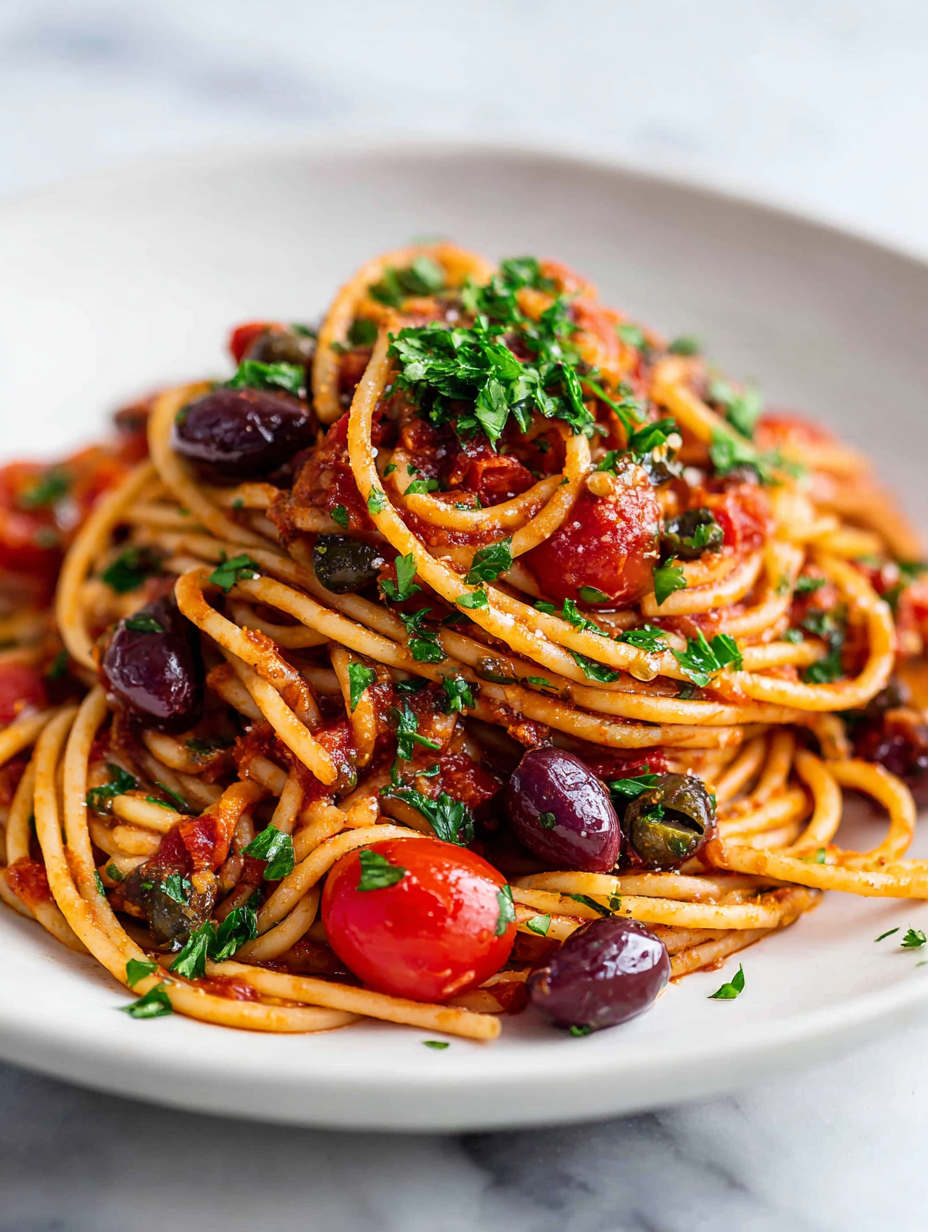
Vegan Puttanesca
Ingredients
Equipment
Method
- Bring a large pot of salted water to a boil, then cook your pasta until just al dente, about 8 minutes. Drain and set aside.
- While the pasta cooks, heat olive oil in a large skillet over medium heat. Add thinly sliced garlic and cook, stirring frequently, until fragrant and golden around the edges, about 1 minute.
- Add red pepper flakes to the garlic, stirring quickly to release their smoky heat and aroma. Cook for about 30 seconds.
- Pour in crushed tomatoes, stirring to combine. Bring the mixture to a gentle simmer and cook uncovered for 10-12 minutes, allowing the sauce to thicken slightly and develop a rich aroma.
- Add chopped olives and capers to the sauce, stirring well. Continue to simmer for another 5 minutes to let the flavors meld and infuse into the sauce.
- Taste the sauce and adjust salt if needed, keeping in mind the saltiness from olives and capers. Once ready, add the drained pasta directly into the skillet, tossing to coat evenly.
- Cook together for 1-2 minutes, allowing the pasta to absorb the flavors. Sprinkle with chopped parsley and basil right before serving for a fresh, vibrant aroma.
- Transfer the pasta to serving bowls or plates, drizzle with a little extra virgin olive oil if desired, and garnish with additional herbs. Serve immediately while hot and fragrant.
Tips to Elevate Your Puttanesca
- Use high-quality olive oil to enhance flavor and aroma. It crackles gently when heated, signaling it’s ready.
- Add garlic slices early in the cooking process for a quick, fragrant caramelization that deepens the sauce.
- Slightly toast red pepper flakes in oil before adding tomatoes to release their smoky heat and flavor.
- When simmering, stir occasionally and taste—look for a rich, slightly thickened sauce with vibrant aroma.
- Mix olives and capers into the sauce near the end to preserve their briny, slightly crunchy texture and sharp scent.
- Reserve a cup of pasta water, then toss it in with the sauce for a silky, cohesive finish and flavor boost.
Common mistakes and how to fix them
- FORGOT to adjust salt if olives and capers are very salty.
- DUMPED all ingredients into the pan at once, stir for even cooking.
- OVER-TORCHED garlic, which turns bitter—lower heat and stir constantly.
- MISSED the aroma test—smell for fragrant tomato and briny notes, not burnt.
Quick Fixes & Pantry Swaps
- When sauce is too thick, splash in hot water and stir until loosened.
- Splash a little balsamic vinegar if olives lack punch and add depth.
- Patch over burnt garlic with fresh slices—quickly sauté to revive aroma.
- Shield delicate herbs by adding them at the very end for fresh scent.
- If pasta sticks, toss with a bit of olive oil before reheating to prevent clumping.
Prep, store, and reheat tips
- Prep the sauce ingredients: chop olives, measure capers, and crush tomatoes a day ahead. Keep refrigerated to preserve freshness and briny aroma.
- Store the prepared sauce in an airtight container for up to 2 days. The flavors deepen, and the garlic mellows, making it more robust.
- Cook the pasta just until al dente, then toss with a little olive oil to prevent sticking. Store separately for up to 24 hours in the fridge.
- Reheat the sauce gently over low heat, stirring frequently. It should shimmer and smell vibrant, not burnt or dull.
- Add the cooked pasta to the warm sauce just before serving. Reheat together for 1-2 minutes until hot and coated with flavorful sauce.
Top questions about vegan puttanesca
1. Is vegan puttanesca filling enough as a main?
Yes, it’s hearty and satisfying, with a punchy, salty flavor that mimics traditional versions. The olives and capers pack a briny punch that fills you up.
2. Can I serve it as a main course?
Absolutely. Using a good-quality tomato sauce and plenty of briny ingredients makes it rich and flavorful without cheese or fish.
3. How can I make it more filling?
Yes, you can add extra protein like chickpeas or tofu to bulk it up. It’s also great with a side of crusty bread.
4. Can I use fresh tomatoes instead of canned?
It’s best to use crushed canned tomatoes for that velvety base, but fresh ripe tomatoes work in summer for a brighter flavor.
5. How do I control the spice level?
Adjust the garlic and chili flakes to taste. If you prefer milder, cut back; for more punch, add extra at the end.
6. How long does it stay good refrigerated?
Yes, it keeps well for about 2 days in the fridge. Reheat gently until it shimmers and smells fragrant again.
7. Should I mix the pasta and sauce immediately?
Add the pasta to the sauce just before serving for the best texture. Toss and serve immediately to enjoy the fresh flavors.
8. What olive oil should I use?
Yes, using high-quality olive oil adds a grassy, fruity aroma that elevates the dish’s flavor and richness.
9. How do I know when the garlic is done?
Be careful not to overcook the garlic; aim for golden edges and a nutty aroma, not burnt bitterness.
10. What if the sauce thickens too much?
If the sauce becomes too thick, splash in a bit of hot water or vegetable broth to loosen it and restore shine.
This vegan puttanesca isn’t just a quick dinner, it’s a reminder that bold, salty flavors can shine without fish or cheese. Whenever I make it, I’m struck by how simple ingredients can come together into something so satisfying, almost rebellious. It’s a dish that feels deeply rooted in flavor and freedom, perfect for those nights when you crave something punchy and honest.
In the end, it’s about embracing what’s in your pantry and trusting that you can create something memorable without overthinking. A splash of good olive oil, a handful of briny olives, and a good simmer—sometimes, that’s all you need for a meal that’s vibrant and totally yours.