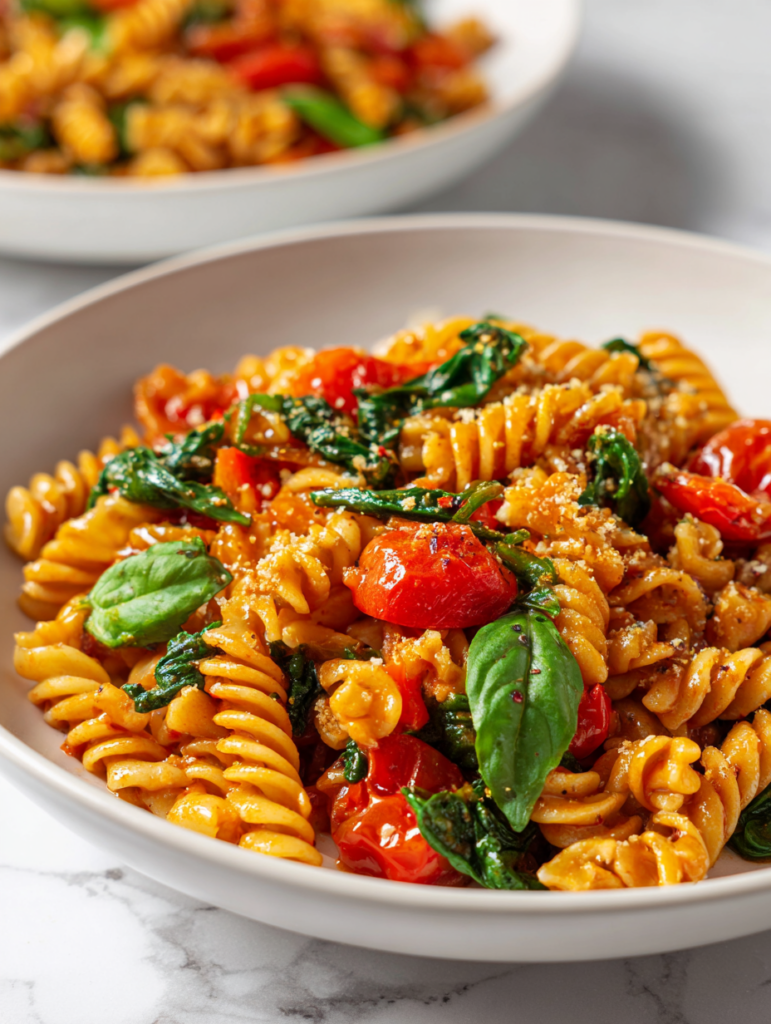
On busy weeknights, I turn to this vegan one-pot pasta that somehow feels like a warm hug. It’s my go-to when I need something nourishing but don’t want to spend ages fussing in the kitchen. The smell of garlic, herbs, and melting cherry tomatoes fills the air—instant comfort.
What I love most is how it all comes together in one pan—no draining, no mess, just a simple simmer that melds flavors together. It’s a bit chaotic to toss everything in at once, but the payoff is a creamy, flavorful dish that’s ready in under 30 minutes. Some nights, that’s all I need to feel a little more grounded.
Focusing on how this one-pot pasta can be a cozy yet quick way to bring comfort during hectic weeknights, especially when I need something nourishing without the fuss of multiple dishes.
Inspiration Behind This Dish
This dish was born out of a chaotic evening when I had little time but craved something hearty and warm. I remembered how my grandmother used to toss pasta with whatever was in the fridge—simple, quick, and full of flavor. Over the years, I kept tweaking that idea, making it more plant-based and fuss-free, until it became my go-to for busy nights. It’s a little messy, a little spontaneous, but always satisfying.
Ingredient breakdown: key components
- Pasta: I prefer using spaghetti or linguine for a silky texture that’s easy to stir, but you can swap in fettuccine for a heartier bite.
- Vegetable broth: I use a rich, homemade broth that adds depth, but store-bought works fine—just watch the salt levels and season accordingly.
- Cherry tomatoes: I love their burst of sweetness and acidity when they soften, so don’t skimp—try to use ripe, plump ones for maximum juiciness.
- Garlic: I crush and sauté it until fragrant, which makes the kitchen smell amazing—if you prefer less pungency, add it later or use less.
- Nutritional yeast: I sprinkle it at the end for a cheesy note, but if you’re allergic or out, a splash of vegan cream or cashew cheese works too—just adjust the creaminess.
- Olive oil: I drizzle a good-quality extra virgin oil over the finished dish for shine and flavor—skip it if you’re watching your fat intake, but it makes a difference.
- Fresh herbs: I toss in basil or parsley just before serving for a bright, fragrant finish—dried herbs are okay, but they won’t pack quite the same punch.
Spotlight on key ingredients
Pasta, Cherry Tomatoes, Broth:
- Pasta: I love using spaghetti for its silky texture that clings to sauce, but fettuccine adds a hearty bite.
- Vegetable broth: My homemade broth offers depth, though store-bought is fine—just watch the salt and season well.
- Cherry tomatoes: Their burst of sweetness and acidity really makes this dish sing—ripeness is everything here.
Notes for ingredient swaps
- Vegan Cheese: Nutritional yeast adds cheesy flavor, but you can swap in vegan cheese for creaminess—expect a slightly different melt.
- Pasta: Gluten-free or legume-based pasta works well, though it might have a different texture or cooking time.
- Cherry Tomatoes: Use sun-dried tomatoes in oil for a concentrated, tangy punch—just reduce the cooking time to prevent over-softening.
- Vegetable Broth: Miso or mushroom broth can deepen umami notes—adjust salt accordingly, as they tend to be saltier.
- Olive Oil: Avocado oil offers a milder flavor and high smoke point—perfect if you prefer a subtler oil note.
- Herbs: Dried basil or oregano are fine in a pinch but won’t deliver the fresh, fragrant finish of fresh herbs—use sparingly.
- Garlic: Roasted garlic gives a milder, sweeter flavor—add it at the end for a more subtle aroma, especially if you’re sensitive to pungency.
Equipment & Tools
- Deep skillet or large saucepan: To cook pasta and sauce together, ensuring even heat and easy stirring.
- Stirring spoon: To mix ingredients and prevent sticking during simmering.
- Measuring cup: To measure broth and ensure consistent liquid for cooking.
Step-by-step guide to vegan one-pot pasta
- Equipment & Tools: Gather a deep 30cm (12-inch) wide skillet or large saucepan, a stirring spoon, and a measuring cup. The wide pan helps everything cook evenly and makes stirring easier.
- Add 400g (14 oz) of dry spaghetti or linguine directly into the pan. Pour in 1.5 liters (6 cups) of vegetable broth. Make sure the pasta is fully submerged. Turn on medium-high heat (~200°C/390°F) and bring to a boil, stirring occasionally.
- Once boiling, reduce heat to medium (about 180°C/355°F). Cook uncovered, stirring every 2-3 minutes to prevent sticking. Cook until the pasta is al dente, about 10-12 minutes. The broth should reduce and create a creamy sauce. Watch for the pasta to soften, and the liquid to thicken.
- While the pasta cooks, prepare 2 cups of cherry tomatoes. Halve them if large, or leave small ones whole. After 8 minutes of simmering, add the tomatoes directly into the pan. Stir gently, allowing their juices to seep into the sauce.
- Check the pasta’s doneness. The sauce should be glossy and slightly thickened, coating the noodles. If it’s too runny, cook a few more minutes until the liquid reduces further. If overly thick, add a splash of hot broth or water.
- In the last minute, add 3 minced garlic cloves and a tablespoon of olive oil. Stir until fragrant, about 30 seconds. If the garlic starts to brown too quickly, lower the heat slightly.
- Turn off heat. Stir in 2 tablespoons of nutritional yeast or vegan cheese, plus a handful of chopped basil or parsley. Adjust seasoning with salt and pepper to taste.
- Rest & Finish: Let the pasta sit for 2 minutes off the heat. Serve straight from the pan, topped with extra herbs and a drizzle of olive oil if desired. No need to drain—just scoop and enjoy.
Let the pasta rest for 2 minutes to settle. Serve hot, garnished with fresh herbs and a drizzle of olive oil for added flavor and shine.
How to Know It’s Done
- Pasta is cooked al dente with a glossy, slightly thickened sauce.
- Cherry tomatoes burst and soften, releasing juices into the dish.
- Garlic is fragrant but not burnt, with a golden hue.
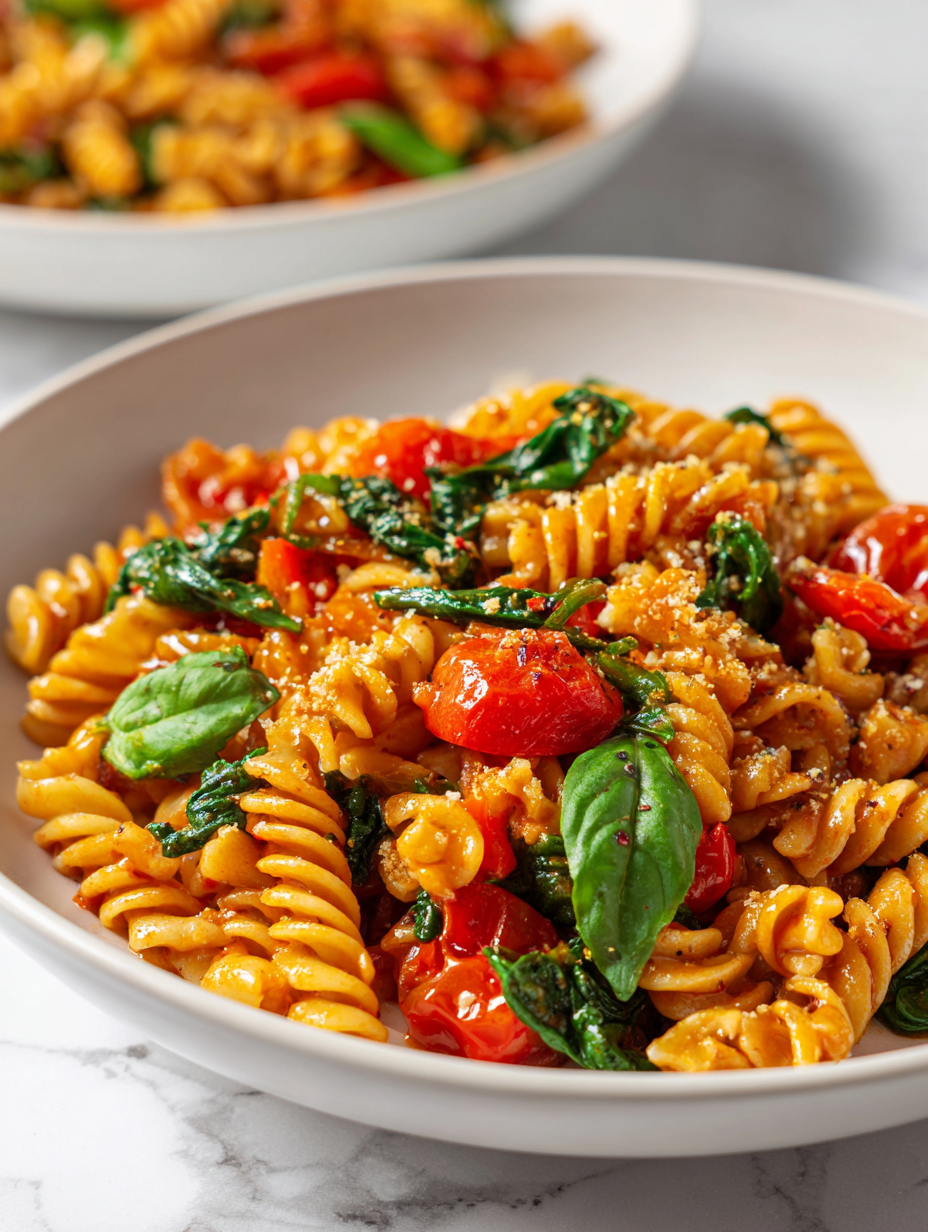
Vegan One-Pot Pasta
Ingredients
Equipment
Method
- Place a deep skillet or large saucepan on the stove. Add your dry pasta and pour in the vegetable broth, making sure the pasta is fully submerged. Turn the heat to medium-high and bring to a gentle boil, stirring occasionally, until the broth begins to bubble and the pasta starts softening, about 5 minutes.
- Reduce the heat slightly to maintain a lively simmer. Continue cooking, stirring every couple of minutes, until the broth reduces and the pasta becomes al dente, about 10 minutes. You’ll notice the mixture thickening and the pasta soaking up the flavors.
- While the pasta cooks, prepare your cherry tomatoes by halving them if large. When about 8 minutes have passed, gently stir the tomatoes into the pan. Their juices will seep out, creating a vibrant, glossy sauce around the pasta.
- Check the pasta for doneness; it should be tender but still hold a slight bite. If the sauce is too thin, cook for a few more minutes until it thickens and coats the noodles beautifully. If it’s too thick, stir in a splash of hot broth to loosen it up.
- In the last minute of cooking, add the minced garlic and drizzle the olive oil into the pan. Stir until the garlic becomes fragrant and turns golden, about 30 seconds. Be careful not to let it brown too much or it might become bitter.
- Turn off the heat. Stir in the nutritional yeast or vegan cheese for a cheesy note, along with chopped fresh herbs. Taste and adjust with salt and pepper to suit your preference.
- Let the pasta sit for a couple of minutes to settle and absorb all the flavors. Then, serve straight from the pan, garnished with extra herbs and a drizzle of olive oil if desired. Enjoy the warm, comforting aroma and the glossy, flavorful dish.
Tips for perfect one-pot pasta
- Bolded mini-head: Use wide, shallow pans → Helps everything cook evenly and makes stirring easier.
- Bolded mini-head: Stir often in the first 10 minutes → Prevents sticking and ensures broth is absorbed uniformly.
- Bolded mini-head: Smell for garlic fragrance → When fragrant and golden, it’s perfect; avoid browning to prevent bitterness.
- Bolded mini-head: Taste the pasta before finishing → Should be al dente, with a slight bite and flavorful, creamy sauce.
- Bolded mini-head: Adjust heat if sauce reduces too quickly → Keep at a gentle simmer to prevent burning or sticking.
- Bolded mini-head: Add herbs at the end → Preserves fresh aroma and vibrant color, brightening the dish.
- Bolded mini-head: Use the pasta’s starchy cooking water → For a silkier, more cohesive sauce if needed.
Common mistakes and how to fix them
- FORGOT to check pasta doneness → Test for al dente texture and sauce consistency.
- DUMPED too much water → Reduce broth gradually for a creamy sauce, not soup.
- OVER-TORCHED garlic → Sauté on medium heat until fragrant, avoid browning to prevent bitterness.
- MISSED stirring during cooking → Stir every few minutes to prevent sticking and ensure even cooking.
Quick fixes and pantry swaps
- If the sauce is too thin, splash in a bit more broth and simmer until glossy.
- When pasta sticks, dump in a splash of cold water and stir vigorously to loosen.
- Splash a teaspoon of lemon juice if the tomatoes are too bland or dull.
- Patch over overcooked pasta with a quick drizzle of olive oil and fresh herbs.
- Shield the garlic from burning by lowering the heat immediately if it starts to brown.
Prep, store, and reheat tips
- Prep the pasta and measure broth ahead of time; both can be stored in airtight containers in the fridge for up to 24 hours. The pasta may absorb some liquid, so reheat with a splash of hot broth for best texture.
- Chop garlic and herbs in advance; store in small jars or containers in the fridge. Fresh herbs are best used within 24 hours to preserve their bright aroma and color.
- Cooked pasta can be kept in a sealed container in the fridge for up to 2 days. Reheat gently on the stovetop with a little broth or water, watching for the sauce to shimmer and loosen.
- The cooked dish is best enjoyed fresh, but leftovers can last for 1-2 days in the fridge. Reheat slowly on low heat, stirring often, until steaming and the sauce regains its gloss.
- For longer storage, freeze individual portions up to 3 months. Thaw in the fridge overnight and reheat with a splash of hot water or broth, checking for even warmth and sauce consistency.
Top questions about vegan pasta
1. How do I prevent the pasta from sticking together?
Use a wide pan to prevent the pasta from sticking and to make stirring easier. Keep stirring every few minutes.
2. How long does it take to cook the pasta in one pot?
Add the pasta and broth, then simmer until the liquid reduces and the pasta is al dente, about 10-12 minutes.
3. Can I use canned tomatoes instead of cherry tomatoes?
Use ripe cherry tomatoes for sweetness and juiciness. If you prefer a smoky flavor, add a touch of smoked paprika.
4. How do I make the dish more cheesy without dairy?
Stir in nutritional yeast or vegan cheese at the end for cheesy flavor. Adjust seasoning as needed.
5. Can I make this recipe gluten-free?
Yes, gluten-free pasta works well. Adjust cooking time if needed, as some gluten-free varieties cook faster or slower.
6. How can I brighten the flavor of this dish?
Add extra herbs or a squeeze of lemon juice just before serving for brightness. Taste and adjust seasoning as you go.
7. What if the sauce is too thin or too thick?
If the sauce becomes too watery, increase the heat slightly and cook until it thickens. For overly thick sauce, stir in a splash of hot broth.
8. When should I add garlic for best flavor?
Use freshly minced garlic for a vibrant aroma. Add it in the last minute of cooking to prevent burning.
9. How long can I store leftovers?
Leftovers can be stored in a sealed container in the fridge for up to 2 days. Reheat on the stovetop with a bit of broth.
10. Can I freeze this dish?
Yes, you can freeze individual portions for up to 3 months. Thaw in the fridge overnight and reheat gently.
This dish is a reminder that simple comfort food can come together quickly and without fuss. It’s the kind of meal I turn to when I need something nourishing and satisfying, especially during busy weeks or when the fridge feels a little empty.
And honestly, the way the flavors meld—the garlic, the tomatoes, the herbs—makes it feel like a little bit of kitchen magic. It’s imperfect, a little chaotic, but always reliable when I need a quick, warm plate. That’s what keeps me coming back to this one-pot pasta, time after time.