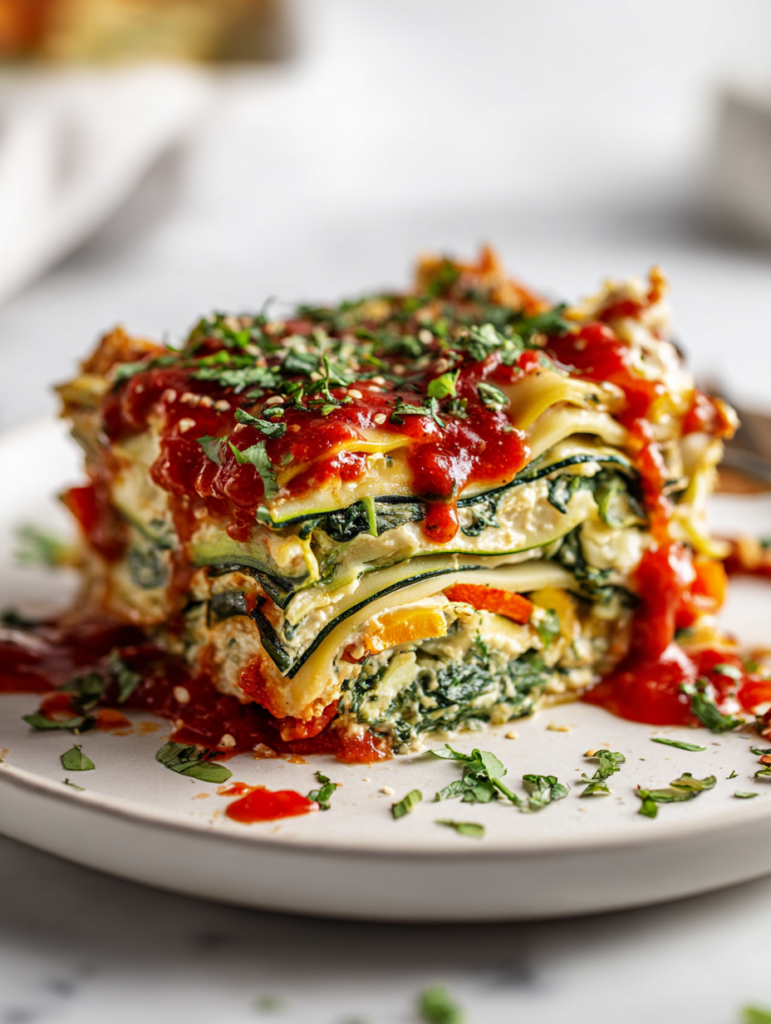
Layering flavors in a vegan lasagna is like crafting a symphony of textures and tastes, even without cheese or meat. I love the challenge of balancing smoky, umami-rich tomato sauce with herbs and tender vegetables, creating a dish that’s as comforting as it is complex.
This recipe became a staple during my transition to plant-based eating, proving that satisfying, hearty meals don’t need dairy or animal products. It’s about coaxing every ingredient to shine—each layer adding depth and richness that surprises even skeptical eaters.
Cooking this lasagna is a bit of an art, a slow build of flavors that meld in the oven. It’s a reminder that good food isn’t about shortcuts, but about patience, layering, and trust in simple ingredients turned extraordinary.
Focusing on the art of layering flavors to make a vegan lasagna that’s rich and deeply satisfying, despite no cheese or meat. It’s about balancing smoky, umami, and fresh herbs in every bite—transforming simple ingredients into a comforting, complex dish that feels indulgent and hearty.
The story behind this recipe
- This vegan lasagna came about during a time when I was experimenting with ways to make plant-based meals more satisfying and layered. I wanted something that felt indulgent, without relying on cheese or heavy cream, but still packed with flavor and texture.
- One day, I was craving lasagna but tired of the usual dairy-heavy versions. I started experimenting with roasted vegetables, smoky tomato sauces, and hearty plant-based proteins, trying to mimic that comforting, layered feel. It became a dish I turn to when I want something familiar yet fresh, and it’s always a hit with friends who aren’t even vegan.
- heading: ‘The story behind this recipe’
Ingredient breakdown: key components
- Tomato sauce: I use a rich, slow-simmered sauce with smoky paprika; it’s vibrant and oozes warmth. Feel free to add a splash of balsamic for depth.
- Cashew cheese: Blended cashews create a creamy, neutral base that mimics ricotta. Soak them at least 4 hours, then blend until silky—skip if nut allergies are an issue.
- Vegetables: Roasted zucchini and eggplant add a tender, smoky bite. Roast at 200°C (400°F) until edges caramelize for best flavor.
- Lasagna noodles: I prefer no-boil noodles to save time, but pre-soak them in hot water for 10 minutes if you want softer layers—watch for sticking.
- Fresh herbs: Basil and oregano brighten the dish with a burst of green and fragrance. Chop just before layering to keep their fresh aroma alive.
- Plant-based protein: Crumbled tempeh or lentils add heartiness. Sauté until browned and fragrant, then layer for a meaty texture without the meatiness.
- Olive oil: A drizzle before baking enhances richness and helps the top crisp up slightly. Use a good-quality extra virgin for that fragrant punch.
Spotlight on key ingredients
Cashew cheese:
- Cashews: I love how they turn into a silky, neutral cream—rich but light. Soak them well for the best blend.
- When blended, they should be smooth and spreadable, with a mild nutty aroma. Skip the soaking if in a rush, but expect a grainier texture.
Tomato sauce:
- It’s the backbone—bright, tangy, with a smoky undertone from paprika. Feel free to simmer longer for depth.
- It should be thick and fragrant, clinging to noodles and veggies. If it’s watery, simmer it down until it’s velvety and vibrant.
Notes for ingredient swaps
- Dairy-Free: Use coconut or soy-based ricotta instead of cashew cheese; expect a slightly different richness and nutty undertone.
- Gluten-Free: Swap traditional noodles for gluten-free lasagna sheets; be mindful that texture may vary slightly, especially in cooking time.
- Vegetables: Zucchini or eggplant can be replaced with roasted sweet potatoes for a sweeter, softer bite with a caramelized flavor.
- Herbs: Fresh thyme or parsley can replace basil and oregano; they add different aromatic notes but still brighten the dish.
- Tomato Sauce: Use fire-roasted diced tomatoes for a smoky flavor or add a splash of balsamic vinegar for extra depth.
- Plant Protein: Crumbled tempeh can be replaced with lentils or mushrooms; each brings a unique texture and umami punch.
- Olive Oil: Swap with avocado oil for a milder, buttery flavor that still crisps up nicely during baking.
Equipment & Tools
- 9×13 inch baking dish: To assemble and bake the lasagna.
- Large skillet: For sautéing the sauce ingredients.
- Blender: To make smooth cashew cheese.
- Baking sheet: To roast vegetables.
Step-by-step guide to vegan lasagna
- Gather all your equipment: a 9×13 inch baking dish, a large skillet, a blender, and a spatula. Preheat your oven to 190°C (375°F).
- Prepare the sauce: in a skillet, heat 2 tbsp olive oil over medium heat. Add chopped onions and garlic, cook until fragrant and translucent, about 5 minutes. Stir in crushed tomatoes, smoked paprika, salt, and pepper. Simmer on low for 20 minutes, stirring occasionally. The sauce should be thick and aromatic.
- Make the cashew cheese: soak 1 cup cashews in hot water for at least 4 hours or overnight. Drain and blend with 1/4 cup water, 2 tbsp lemon juice, a pinch of salt, and nutritional yeast until smooth and creamy. Set aside.
- Roast the vegetables: chop zucchini and eggplant into 1/4-inch slices. Toss with a tbsp of olive oil, salt, and pepper. Spread on a baking sheet and roast at 200°C (400°F) for 15-20 minutes, until edges are caramelized and veggies are tender.
- Cook the noodles: if using no-boil noodles, soak them in hot water for 10 minutes and drain. If boiling, cook in salted water according to package instructions until al dente, then drain and set aside.
- Layer the lasagna: spread a thin layer of sauce on the bottom of your dish. Place noodles over the sauce. Add a layer of roasted vegetables and dollops of cashew cheese. Repeat layers until all ingredients are used, ending with a layer of sauce and a sprinkle of herbs.
- Bake: cover with foil and bake for 30 minutes. Then remove the foil and bake for another 10 minutes until the top is bubbling and slightly browned.
- Rest and serve: let the lasagna rest for 10-15 minutes out of the oven. Slice and serve warm, with a sprinkle of fresh herbs for added brightness.
Allow the lasagna to rest for 10-15 minutes outside the oven. This helps it set and makes slicing easier. Serve warm, garnished with fresh herbs if desired.
How to Know It’s Done
- The sauce should be thick and fragrant after simmering.
- Vegetables should be tender with caramelized edges after roasting.
- The top should be bubbly and slightly browned after baking.
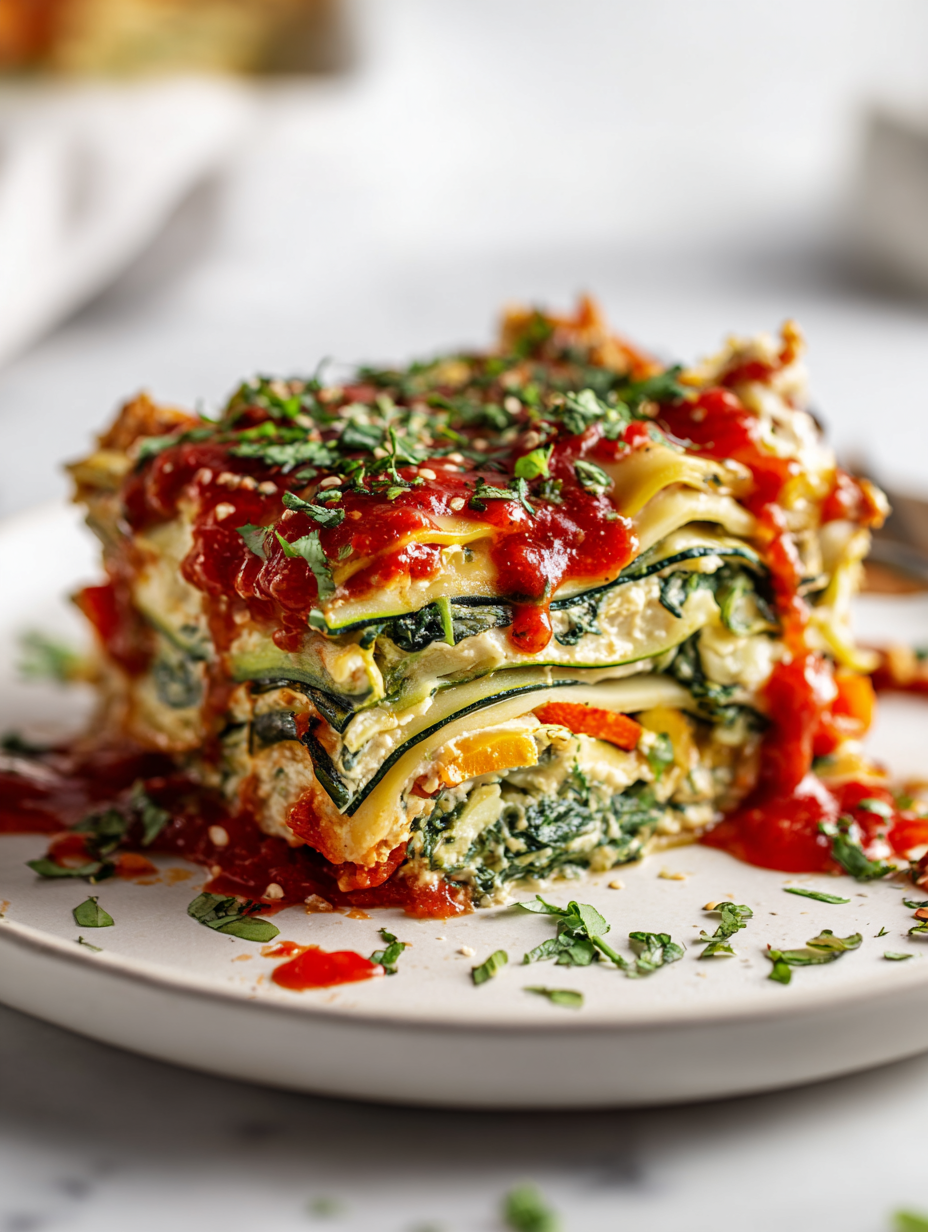
Vegan Lasagna
Ingredients
Equipment
Method
- Gather all your tools: a baking dish, skillet, blender, and baking sheet. Preheat your oven to 190°C (375°F).
- In the skillet, heat 2 tablespoons of olive oil over medium heat. Add chopped onion and cook until fragrant and translucent, about 5 minutes. The aroma should be inviting and the onions slightly golden.
- Stir in minced garlic and cook for another minute until fragrant, then add crushed tomatoes and smoked paprika. Let it simmer gently on low heat for 20 minutes, stirring occasionally, until the sauce thickens and releases a smoky aroma.
- Meanwhile, drain and rinse soaked cashews. In the blender, combine cashews, lemon juice, a pinch of salt, and 1/4 cup water. Blend until silky smooth, scraping down the sides as needed. Set aside the creamy cashew cheese.
- Chop zucchini and eggplant into 1/4-inch slices. Toss with 1 tablespoon olive oil, salt, and pepper, then spread evenly on a baking sheet. Roast at 200°C (400°F) for 15-20 minutes until edges are caramelized and vegetables are tender.
- Cook the lasagna noodles according to package instructions if not using no-boil noodles. Drain and set aside.
- Start layering your lasagna: spread a thin layer of sauce on the bottom of your dish. Place a layer of noodles over the sauce, then add roasted vegetables and dollops of cashew cheese. Repeat the layers, ending with a layer of sauce topped with chopped basil and oregano.
- Cover the assembled lasagna with foil and bake at 190°C (375°F) for 30 minutes. Then remove the foil and bake for an additional 10 minutes until bubbling and slightly browned on top.
- Take the lasagna out of the oven and let it rest for 10-15 minutes. This helps it set, making slicing easier and cleaner.
- Slice and serve the lasagna warm, garnished with extra fresh herbs if desired. The layers should be firm yet tender, with bubbling sauce and a golden top.
Pro tips for perfect vegan lasagna
- Bolded mini-head: Use a splash of smoky paprika in your sauce for added depth and aroma.
- Bolded mini-head: Sauté vegetables until edges are caramelized to boost sweetness and flavor complexity.
- Bolded mini-head: When blending cashews, add a touch of water gradually until silky—avoid over-blending to prevent heat buildup.
- Bolded mini-head: Cover your lasagna tightly with foil during baking to trap moisture and ensure even cooking.
- Bolded mini-head: Rest the lasagna for at least 10 minutes after baking—this helps it set and makes slicing cleaner.
- Bolded mini-head: For a crisp top, broil the lasagna for the last 2-3 minutes until lightly browned and bubbly.
- Bolded mini-head: Use no-boil noodles soaked briefly in hot water if you want softer layers—sticking can happen if over-soaked.
Common mistakes and how to fix them
- TOO MUCH WATER: Drain excess liquid from vegetables; excess moisture makes lasagna soggy. Pat dry if needed.
- NOT ENOUGH LAYERING: Layer ingredients evenly; uneven layers cause uneven cooking and flavor distribution.
- OVERSIMMERED SAUCE: Cook sauce just until thickened; overcooking leads to burnt-flavor and reduced brightness.
- UNDERBAKED LASAGNA: Check for bubbling edges and a hot center; bake longer if top isn’t golden and bubbling.
Quick fixes and pantry swaps
- When sauce is too watery, splash in a teaspoon of tomato paste to thicken and deepen flavor.
- If noodles stick together, dump them into hot water and stir gently to separate strands.
- Splash a bit of lemon juice into your cashew blend if it tastes flat or dull.
- Patch burnt edges on your lasagna with a quick sprinkle of fresh herbs and a drizzle of olive oil.
- Shield bubbling edges with foil if top over-browns before the center is heated through.
Prep, store, and reheat tips
- Assemble the lasagna a day in advance; keep it covered in the fridge overnight to let flavors meld and thicken slightly.
- Store leftovers in an airtight container for up to 3 days; the flavors deepen, and the edges may firm up, adding to the texture.
- Reheat in the oven at 180°C (350°F) for about 20 minutes until bubbling; the aroma of baked herbs and tomato will greet you.
- For best texture, let it rest for 10 minutes after reheating; the layers set, making slicing neater and easier to serve.
- Freezing is fine for up to 2 months; wrap tightly, and reheat directly from frozen, adding extra 10 minutes for heating.
Top questions about vegan lasagna
1. How do I make vegan cheese for lasagna?
Use soaked cashews blended with lemon juice and nutritional yeast. Expect a creamy, neutral flavor with a slight nutty aroma.
2. Can I use regular lasagna noodles?
Opt for no-boil noodles soaked briefly in hot water if you want softer layers; otherwise, cook traditional noodles until al dente.
3. What vegetables work best for vegan lasagna?
Roast vegetables like zucchini and eggplant until edges are caramelized, about 15-20 minutes at 200°C (400°F), for smoky sweetness.
4. How thick should the tomato sauce be?
Simmer your tomato sauce for at least 20 minutes until thick and fragrant. It should cling to the noodles without being watery.
5. How long should I bake vegan lasagna?
Cover the assembled lasagna with foil and bake at 190°C (375°F) for 30 minutes, then uncover for 10 more until bubbly and browned.
6. Why should I rest the lasagna before serving?
Let the lasagna rest for 10-15 minutes outside the oven. This helps it set and makes slicing easier without falling apart.
7. How do I store and reheat vegan lasagna?
Store leftovers in an airtight container for up to 3 days in the fridge. Reheat in the oven at 180°C (350°F) until bubbling.
8. Can I add extra flavor to the sauce?
Use a splash of smoky paprika in your sauce for added depth. It enhances the overall flavor with a subtle warmth.
9. What if my sauce is too thin?
If the sauce is too watery, simmer it longer until it thickens and becomes velvety. Stir occasionally to prevent sticking.
10. How do I prevent soggy lasagna layers?
When layering, ensure even distribution of ingredients to avoid soggy or dry patches. Use a spatula to smooth each layer.
This vegan lasagna is more than just a meal; it’s a reminder that plant-based cooking can be layered with flavor and soul. Each bite carries the warmth of roasted vegetables and the brightness of fresh herbs, making it perfect for cozy nights or weekend gatherings.
Sharing this dish feels like offering a little piece of comfort that everyone can enjoy, no matter their diet. It’s a testament to how simple, honest ingredients can come together to create something truly satisfying and memorable.