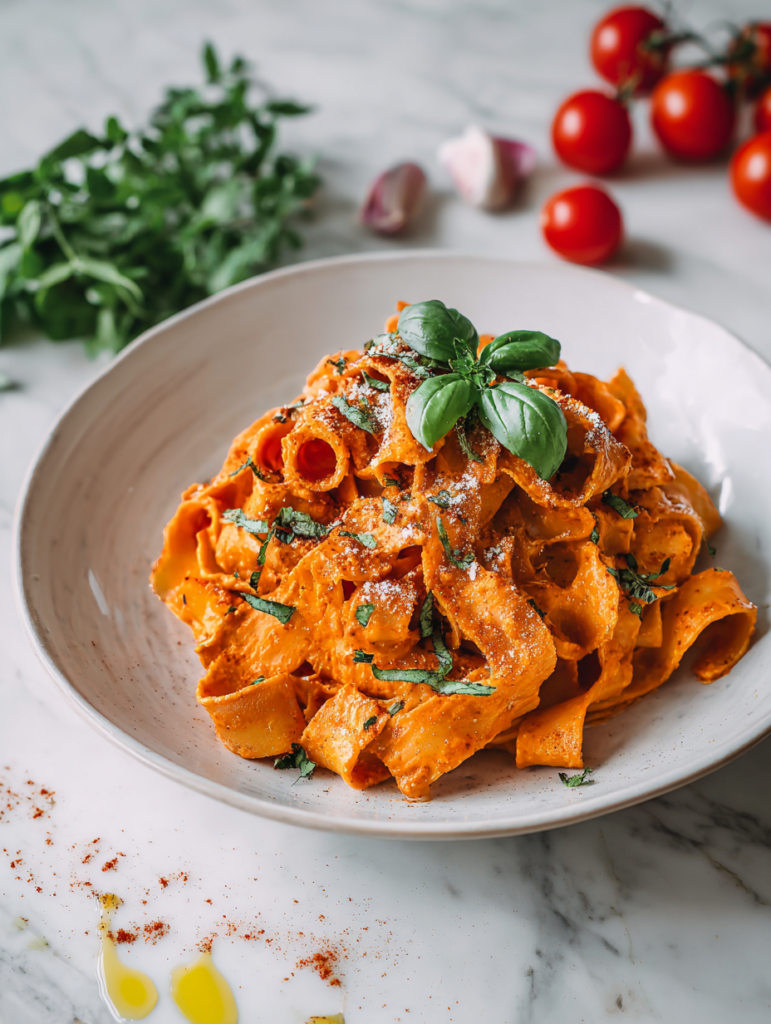
This vegan creamy tomato pasta isn’t about fancy ingredients or complicated techniques. It’s about using what’s already in your pantry—canned tomatoes, coconut milk, a touch of pasta water—and turning them into something velvety and satisfying. I love how the sauce feels rich and indulgent, but it’s all plant-based, and surprisingly quick to pull together after a long day.
What really keeps me coming back to this dish is how adaptable it is. Got a jar of sun-dried tomatoes? Toss them in. Want a smoky kick? A pinch of smoked paprika works wonders. It’s comfort food that feels like a little kitchen magic—simple, honest, and deeply nourishing, especially when you’re craving something warm and creamy but want to keep it plant-based.
Focusing on creating a rich, velvety sauce without traditional dairy, using unexpected pantry ingredients that transform humble tomato pasta into a luxurious, comforting dish.
The story behind this recipe
- This dish came together on a rainy Sunday, when I rummaged through my pantry and found a can of crushed tomatoes that needed using up. I wanted something creamy, but without the usual dairy, and I remembered a jar of coconut milk I had tucked away. The moment I blended it all together, I was hit with this rich, velvety sauce that felt indulgent but was entirely plant-based.
- It’s a recipe born from those quiet kitchen experiments when you’re just trying to make something comforting with what’s at hand. The kind of dish that makes you smile because it’s so straightforward but feels special enough for guests or a weeknight treat. I keep coming back to it because it’s honest, adaptable, and reminds me that good food doesn’t need to be complicated.
- story_type
Ingredient breakdown: key components
- Canned tomatoes: I love the brightness of crushed tomatoes, but if you prefer a richer flavor, try fire-roasted for a smoky depth. Swap with fresh when in season—just blitz and simmer. The canned version is quick and consistent, perfect for that velvety base.
- Coconut milk: It’s the secret to that silky, dairy-free creaminess. Full-fat makes a noticeable difference—less watery, more luxurious. If you want a lighter touch, dilute with a splash of plant-based milk, but don’t skimp on that rich texture.
- Garlic: I toss in extra because it blooms beautifully when sautéed—fills the kitchen with that warm, pungent aroma. For milder garlic, roast it first or use less—sometimes I add a pinch of garlic powder for convenience.
- Olive oil: I use a good-quality, fruity olive oil—it adds a subtle complexity. Toast the garlic in it gently, just until fragrant, to bring out its nutty notes. If you’re out, a neutral oil works, but skip the flavorless options for the best aroma.
- Herbs: Fresh basil or oregano brighten the dish instantly—smelling that herbaceous pop is my favorite moment. Dry herbs work in a pinch, but add them earlier to develop flavor. For a more layered taste, add herbs at different stages.
- Pasta: I prefer a sturdy shape like rigatoni or penne—the sauce clings better, making each bite satisfyingly rich. Whole wheat adds fiber, but regular pasta keeps it classic. Save some pasta water—it’s magic for adjusting sauce consistency.
- Optional extras: Sun-dried tomatoes or a pinch of smoked paprika can elevate the sauce with a smoky, tangy kick. These ingredients feel like a little secret, adding depth without much effort.
Spotlight on key ingredients
Canned tomatoes:
- I love the brightness of crushed tomatoes, but if you prefer a richer flavor, try fire-roasted for a smoky depth. Swap with fresh when in season—just blitz and simmer. The canned version is quick and consistent, perfect for that velvety base.
- Coconut milk: It’s the secret to that silky, dairy-free creaminess. Full-fat makes a noticeable difference—less watery, more luxurious. If you want a lighter touch, dilute with a splash of plant-based milk, but don’t skimp on that rich texture.
- Garlic: I toss in extra because it blooms beautifully when sautéed—fills the kitchen with that warm, pungent aroma. For milder garlic, roast it first or use less—sometimes I add a pinch of garlic powder for convenience.
Herbs:
- Coconut milk: It’s the secret to that silky, dairy-free creaminess. Full-fat makes a noticeable difference—less watery, more luxurious. If you want a lighter touch, dilute with a splash of plant-based milk, but don’t skimp on that rich texture.
- Fresh basil or oregano brighten the dish instantly—smelling that herbaceous pop is my favorite moment. Dry herbs work in a pinch, but add them earlier to develop flavor. For a more layered taste, add herbs at different stages.
Notes for ingredient swaps
- Canned tomatoes: I love the brightness of crushed tomatoes, but if you prefer a richer flavor, try fire-roasted for a smoky depth. Swap with fresh when in season—just blitz and simmer. The canned version is quick and consistent, perfect for that velvety base.
- Coconut milk: It’s the secret to that silky, dairy-free creaminess. Full-fat makes a noticeable difference—less watery, more luxurious. If you want a lighter touch, dilute with a splash of plant-based milk, but don’t skimp on that rich texture.
- Garlic: I toss in extra because it blooms beautifully when sautéed—fills the kitchen with that warm, pungent aroma. For milder garlic, roast it first or use less—sometimes I add a pinch of garlic powder for convenience.
- Olive oil: I use a good-quality, fruity olive oil—it adds a subtle complexity. Toast the garlic in it gently, just until fragrant, to bring out its nutty notes. If you’re out, a neutral oil works, but skip the flavorless options for the best aroma.
- Herbs: Fresh basil or oregano brighten the dish instantly—smelling that herbaceous pop is my favorite moment. Dry herbs work in a pinch, but add them earlier to develop flavor. For a more layered taste, add herbs at different stages.
- Pasta: I prefer a sturdy shape like rigatoni or penne—the sauce clings better, making each bite satisfyingly rich. Whole wheat adds fiber, but regular pasta keeps it classic. Save some pasta water—it’s magic for adjusting sauce consistency.
- Optional extras: Sun-dried tomatoes or a pinch of smoked paprika can elevate the sauce with a smoky, tangy kick. These ingredients feel like a little secret, adding depth without much effort.
Equipment & Tools
- Large pot: Boil pasta evenly
- Deep skillet or saucepan: Cook sauce and combine pasta
- Immersion blender or regular blender: Puree sauce to velvety smoothness
- Measuring cups and spoons: Accurately measure liquids and seasonings
- Wooden spoon or spatula: Stir sauce and toss pasta
Step-by-step guide to creamy tomato pasta
- Gather all equipment and ingredients before starting. Use a large, deep skillet or saucepan for even heat distribution. Have a blender or immersion blender ready for sauce blending.
- Bring a large pot of salted water to a boil, about 2 liters (8 cups), at 100°C (212°F). Add pasta and cook until al dente, following package instructions, usually 8-10 minutes. Reserve 1 cup of pasta water before draining.
- While pasta cooks, heat 2 tbsp olive oil over medium heat (around 160°C/320°F). Add 3 minced garlic cloves and sauté until fragrant, about 30 seconds. Watch for a golden hue and fragrant aroma.
- Pour in 1 can (400g) crushed tomatoes and 1/2 cup coconut milk. Stir well, bringing to a gentle simmer. Cook for 8-10 minutes, stirring occasionally, until sauce thickens slightly and smells rich and bright.
- Taste and adjust with salt, pepper, and optional smoked paprika. If sauce thickens too much, add reserved pasta water gradually to reach desired consistency, about 2-3 tbsp at a time.
- While sauce simmers, check if pasta is ready. It should be tender but still give a slight resistance. Drain and set aside, saving a few tablespoons of pasta water for later use.
- Use an immersion blender or transfer sauce to a blender. Puree until smooth and velvety, about 20 seconds. Be careful with hot liquids—cover partially and blend in batches if needed.
- Return sauce to the pan, add drained pasta, and toss to coat evenly. Heat gently for 1-2 minutes until thoroughly warmed, but do not boil to prevent sauce separation.
- Finish with freshly chopped basil or oregano. Taste again, adjust seasoning if needed. Rest the pasta for 2 minutes off heat to let flavors meld before serving.
- Serve immediately with a drizzle of olive oil and a sprinkle of herbs. For an extra touch, garnish with vegan cheese or chili flakes if desired.
Let the pasta rest off heat for 2 minutes to allow flavors to settle. Finish with fresh herbs, a drizzle of olive oil, and serve immediately on warm plates.
How to Know It’s Done
- Sauce should be velvety, coat the back of a spoon, with a bright, smoky aroma.
- Pasta should be cooked al dente, tender yet with a slight bite, and well coated in sauce.
- Pasta water should be shiny and slightly starchy, helping to adjust sauce consistency.
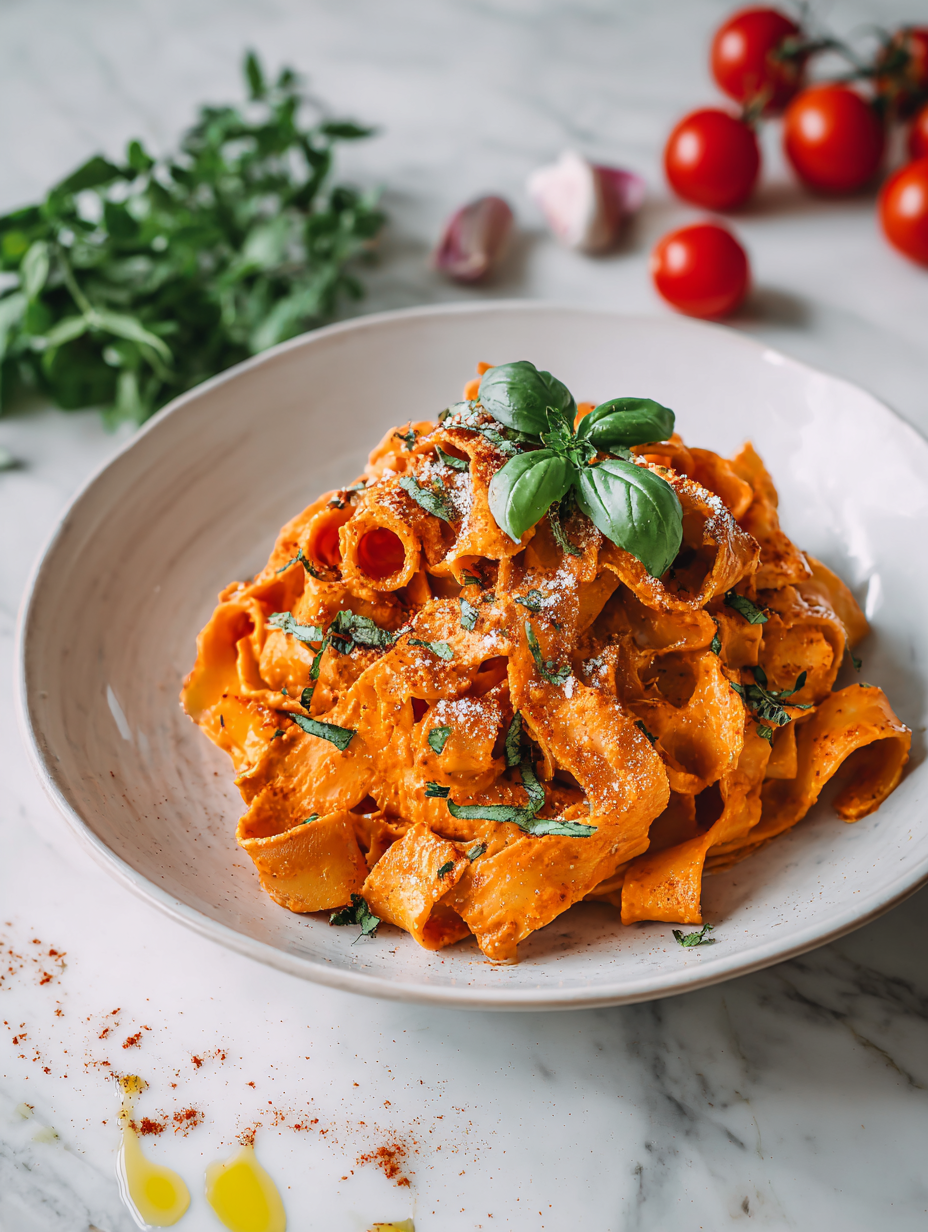
Vegan Creamy Tomato Pasta
Ingredients
Equipment
Method
- Bring a large pot of salted water to a boil, then add your pasta. Cook until al dente, about 8-10 minutes, until tender but still with a slight bite. Reserve 1 cup of pasta water, then drain and set aside.
- While the pasta cooks, heat the olive oil in a deep skillet over medium heat until shimmering and fragrant. Add the minced garlic and sauté for about 30 seconds, until it becomes fragrant and lightly golden, filling your kitchen with a warm aroma.
- Pour in the crushed tomatoes and coconut milk, stirring to combine. Bring the mixture to a gentle simmer and cook for about 8-10 minutes, until the sauce thickens slightly and develops a rich, vibrant aroma.
- Taste the sauce and season with salt and pepper as needed. If the sauce thickens too much, add a little of your reserved pasta water to loosen it, stirring until smooth and glossy.
- Transfer the hot sauce to a blender or use an immersion blender directly in the skillet. Blend until silky smooth, about 20 seconds, being cautious with the hot liquid. Return the pureed sauce to the pan if using a blender.
- Add the cooked pasta to the sauce and toss gently to coat evenly. Warm everything together over low heat for 1-2 minutes, allowing the flavors to meld and the sauce to cling beautifully to the noodles.
- Finish by stirring in freshly chopped basil or oregano, and taste again, adjusting seasoning if needed. Serve immediately, garnished with additional herbs if desired, and enjoy that velvety, plant-based comfort.
Pro tips for perfect creamy tomato pasta
- Sauté garlic gently until fragrant, not browned, for a sweet, aromatic base.
- Use a high-quality olive oil and toast garlic in it to deepen flavor and add nuttiness.
- Puree the sauce until silky smooth—vital for that velvety texture and rich mouthfeel.
- Reserve pasta water; its starchy quality helps loosen sauce and cling better to noodles.
- Add herbs like basil at the end to keep their fresh, vibrant aroma and flavor intact.
- Simmer tomatoes and coconut milk until sauce thickens slightly, about 8–10 minutes, for depth.
- Rest the pasta off heat for a couple of minutes before serving—flavors meld and sauce thickens slightly.
Common mistakes and how to fix them
- FORGOT to taste and adjust seasoning before serving. Always taste for balance and acidity.
- DUMPED the pasta water without saving. Keep some aside to adjust sauce consistency.
- OVER-TORCHED the garlic, turning bitter. Sauté at medium heat until fragrant, not browned.
- MISSED the sauce thickening. Simmer until it coats the back of a spoon and smells rich.
Quick fixes and pantry swaps
- When sauce looks oily, splash in a little more pasta water to shimmer and loosen it.
- If sauce is too thick, add a quick splash of warm plant-based milk for a velvety finish.
- Splash cold water on over-browned garlic to stop the bitter edge immediately.
- Patch a split sauce by removing from heat and whisking in a teaspoon of warm coconut milk.
- Shield pasta from sticking by tossing with a drizzle of olive oil before refrigerating.
Prep, store, and reheat tips
- Prepare the sauce up to two days in advance; store in an airtight container in the fridge. The flavors deepen overnight and the sauce remains velvety when reheated.
- Cook the pasta until just al dente, drain, then toss with a tiny splash of oil to prevent sticking. Keep in an airtight container for up to 24 hours. Reheat in hot water or microwave until steaming hot.
- Reheat the sauce gently over low heat, stirring often. Add a splash of plant-based milk or reserved pasta water to loosen it and restore creaminess. The sauce should smell rich and fragrant, not burnt.
- For longer storage, freeze the sauce in portions for up to 3 months. Thaw overnight in the fridge, then reheat slowly, checking for thickness and adjusting with water or milk as needed.
- Note that flavors may mellow slightly after refrigeration. Freshen up with a squeeze of lemon or a handful of fresh herbs right before serving to brighten the taste and aroma.
Top questions about vegan creamy tomato pasta
1. Can I use fresh tomatoes instead of canned?
Use canned crushed tomatoes for convenience and brightness. If you prefer fresh, blend ripe tomatoes and simmer until thickened.
2. Can I substitute coconut milk?
Coconut milk adds a rich, velvety texture without dairy. For a lighter version, dilute with a little plant-based milk or use cashew cream.
3. Can I make this oil-free?
Yes, you can skip the oil or use a neutral oil like grapeseed. For more flavor, stick with good-quality olive oil.
4. How do I avoid burning the garlic?
Overcooking garlic turns bitter. Sauté over medium heat just until fragrant, about 30 seconds, and remove promptly if it starts to brown.
5. Why save pasta water?
Save some pasta water before draining. It’s starchy and helps loosen the sauce, making it cling better to your noodles.
6. When should I add herbs?
Add fresh herbs at the end to keep their bright flavor and aroma. Dried herbs can be added earlier for deeper flavor.
7. How smooth should the sauce be?
Puree the sauce until silky smooth for that velvety texture. Use an immersion blender or transfer to a regular blender carefully.
8. What’s the perfect pasta texture?
Cook the pasta just until al dente—tender but with a slight bite. Overcooked pasta turns mushy and loses texture.
9. How do I reheat leftovers?
Reheat gently on low heat, stirring often. Add a splash of plant-based milk or reserved pasta water to restore creaminess.
10. Can I freeze this dish?
Freeze sauce in portions for up to 3 months. Thaw overnight, then reheat slowly, adjusting with water or milk for consistency.
This pasta isn’t just about comfort; it’s a reminder that plant-based can be rich and satisfying in unexpected ways. It’s perfect for those nights when you want something warm, creamy, and familiar without any fuss.
In a world full of fleeting trends, this dish feels honest and grounding—something you can rely on to nourish, relax, and maybe even bring a little joy to your table. Sometimes, the simplest ingredients yield the most memorable bites.