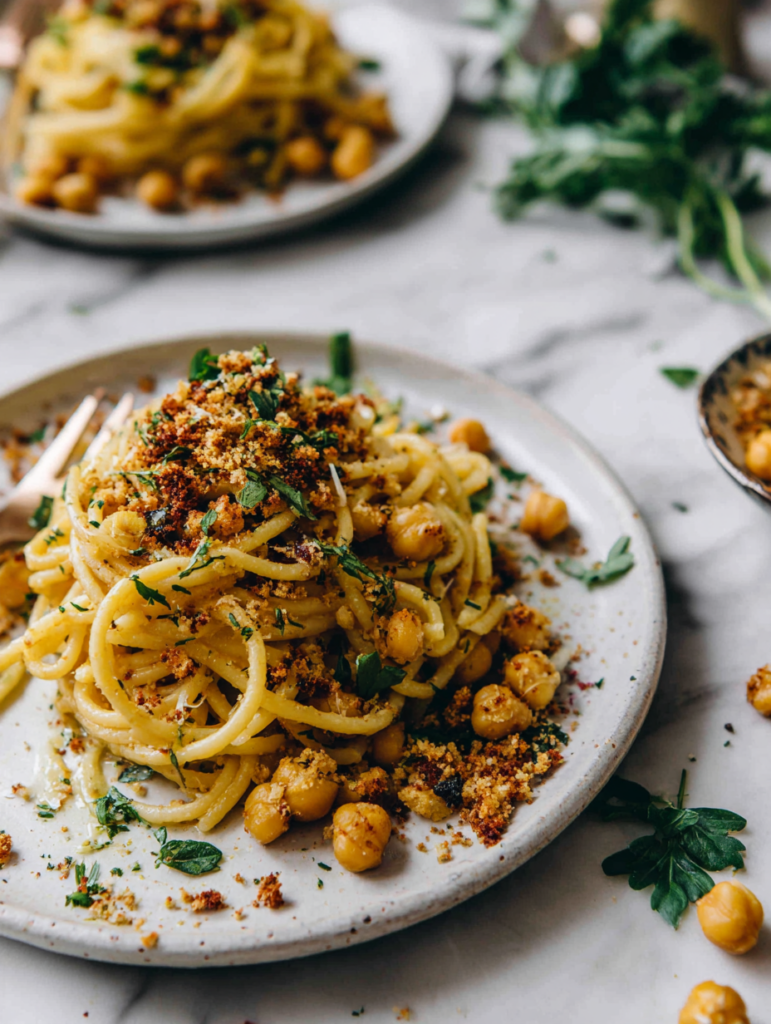
This vegan chickpea pasta is my go-to when I want something quick, hearty, and a little unexpected. It’s not just about throwing ingredients together; it’s about balancing textures—creamy, al dente, and a smoky crunch all in one bowl. I love how the chickpeas add a satisfying earthiness that keeps me coming back for more, even on busy weeknights.
What makes this dish stand out is its humble charm. It’s the kind of meal that feels cozy but isn’t heavy, perfect for those evenings when I crave comfort without the sluggish feeling afterwards. Plus, it’s a good reminder that simple ingredients, when treated with a little care, can turn into something memorable and deeply satisfying.
Focusing on the overlooked art of balancing textures—creamy chickpeas, al dente pasta, and a smoky, toasted topping—this recipe elevates a humble dish into a satisfying, multi-sensory experience.
The story behind this recipe
This recipe was born out of a lazy Sunday afternoon when I rummaged through my pantry and found a can of chickpeas and some forgotten pasta. I wanted something nourishing, quick, and satisfying but with a bit of a twist—something that felt familiar yet new. The idea of combining creamy chickpeas with al dente pasta and adding a smoky, toasted topping came from a craving for comfort that still kept my taste buds alert. It’s become a go-to dish that reminds me how humble ingredients can be elevated with a bit of care and a touch of spice.
Ingredient breakdown: key components
- Chickpeas: I love how their earthy, nutty flavor becomes silky and almost buttery when mashed—boost with a squeeze of lemon for brightness, or skip the mash if you prefer a chunkier bite.
- Pasta: I opt for a hearty whole wheat or chickpea pasta that holds onto sauce well—cook just to al dente, around 8-10 minutes, so it doesn’t turn mushy and keeps a satisfying bite.
- Garlic: Sautéed until golden, it releases a warm, fragrant aroma that fills the kitchen—be careful not to burn it, or it turns bitter fast; lower heat if needed.
- Smoked paprika: Adds a subtle smoky depth—start with a teaspoon, then adjust to taste; it’s not overpowering but delivers that cozy, toasted note.
- Olive oil: I use a good extra virgin for richness—watch for that luscious, glossy shimmer as it heats, and don’t skimp—this is flavor glue.
- Lemon juice: Brightens everything and cuts through the earthiness—add just before serving for that fresh, zingy pop that lifts the dish.
- Fresh herbs: Parsley or basil add a pop of color and freshness—chop just before serving to keep their vibrancy and aroma lively.
Spotlight on key ingredients
Chickpeas:
- Their earthy, nutty flavor becomes silky and almost buttery when mashed—brighten with lemon or keep chunky for texture.
- Pasta: I choose hearty, whole grain or chickpea pasta that holds sauce well—cook to just al dente, around 8-10 minutes, for a firm bite.
Smoked paprika and Olive oil:
- Smoked paprika: Adds a subtle smoky, toasted depth—start with a teaspoon, then adjust; it’s not overpowering but cozy and warm.
- Olive oil: Use a good extra virgin for richness—watch for that luscious, glossy shimmer as it heats, and don’t skimp, it’s flavor glue.
Notes for ingredient swaps
- Dairy-Free: Use coconut cream or cashew cheese instead of dairy for richness, but expect a slightly sweeter or nuttier flavor.
- Gluten-Free: Swap regular pasta with chickpea or rice pasta—same texture, different subtle flavor and slightly different cooking time.
- Smoked Flavor: Try chipotle powder or smoked sea salt to deepen smokiness; each adds a unique, spicy depth.
- Lemon Brightness: Replace lemon juice with lime or vinegar for a different tang, or skip entirely if you prefer a milder taste.
- Herb Variations: Use cilantro or dill instead of parsley or basil for a fresh, contrasting herbal note.
- Oil Choice: Swap olive oil for toasted sesame oil for a nuttier aroma, or use avocado oil for a milder, buttery touch.
- Spice Level: Add red pepper flakes or cayenne for heat—start small, as it can quickly overtake the dish.
Equipment & Tools
- Large pot: Boil pasta efficiently.
- Frying pan: Cook chickpeas and sauce.
- Colander: Drain pasta.
- Spoon: Stir and mash ingredients.
Step-by-step guide to chickpea pasta
- Equipment & Tools: Gather a large pot for boiling pasta, a frying pan (about 25cm or 10in) for the sauce, a spoon for stirring, and a colander for draining.
- Bring a large pot of water to a rolling boil. Salt generously—like the sea—about 1 tablespoon per liter.
- Add pasta: Cook until just al dente, about 8-10 minutes. It should be firm to the bite but not hard. Drain and set aside.
- While pasta cooks, heat 2 tablespoons olive oil in the frying pan over medium heat (about 160°C/320°F).
- Add minced garlic (2 cloves) and sauté until fragrant, around 30 seconds. Don’t let it brown or it turns bitter.
- Toss in a can of chickpeas (drained and rinsed). Cook for 3-4 minutes, mashing some with the back of the spoon for creaminess.
- Sprinkle in smoked paprika (1 teaspoon) and stir until fragrant, about 30 seconds. Watch for a smoky aroma filling the kitchen.
- Add cooked pasta to the pan. Toss everything together, allowing the flavors to mingle for about 2 minutes. If it looks dry, splash in a little reserved pasta water.
- Finish with a squeeze of lemon juice (half a lemon), chopped fresh herbs, and adjust seasoning with salt and pepper. Stir well.
- Remove from heat. Let rest for 2 minutes to allow flavors to settle and pasta to absorb the sauce.
- Plate the pasta, garnishing with extra herbs or a drizzle of olive oil if desired. Serve immediately.
Let the pasta rest off heat for a couple of minutes to deepen flavors. Serve hot, with optional extra herbs or a drizzle of olive oil for shine.
How to Know It’s Done
- Pasta is cooked al dente, with a slight firmness when bitten.
- Chickpeas are heated through and slightly mashed, creamy but not mushy.
- The sauce has a smoky, fragrant aroma with vibrant lemon notes and a glossy appearance.
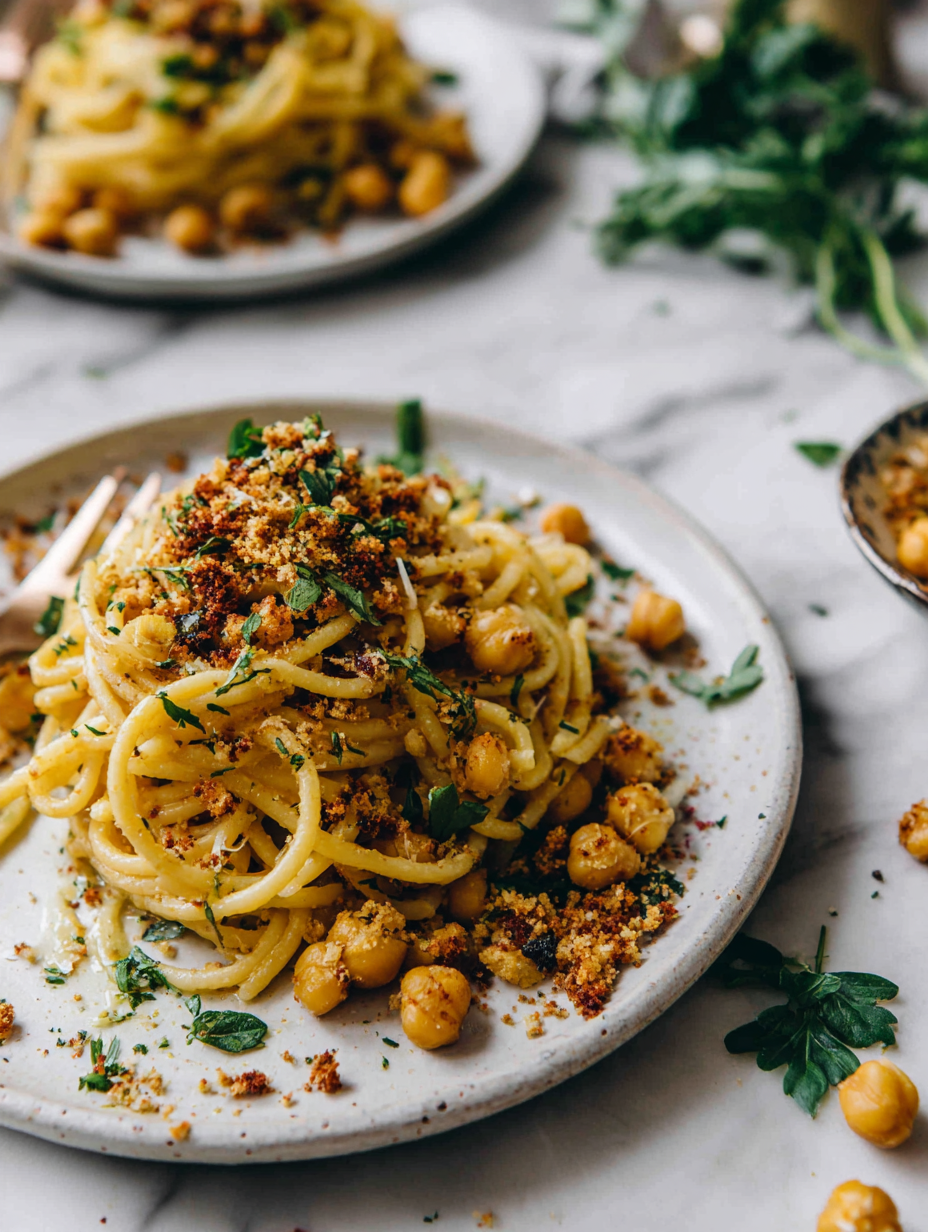
Vegan Chickpea Pasta with Smoky Toasted Topping
Ingredients
Equipment
Method
- Bring a large pot of salted water to a rolling boil. Add the pasta and cook until just al dente, about 8-10 minutes, until it has a firm bite and is slightly resistant when bitten.
- While the pasta cooks, heat 1 tablespoon of olive oil in a frying pan over medium heat. Add the minced garlic and sauté for 30 seconds until fragrant and golden, filling the kitchen with a warm aroma.
- Add the drained chickpeas to the pan, stirring well. Cook for 3-4 minutes, mashing some with the back of your spoon to create a creamy texture, while leaving some whole for bite.
- Sprinkle in the smoked paprika and stir quickly; your kitchen should fill with a smoky, toasted aroma as the spice releases its fragrance. Cook for about 30 seconds to deepen the flavor.
- Drain the cooked pasta, reserving a small cup of pasta water. Add the pasta to the chickpea mixture in the pan and toss to combine, adding a splash of the reserved water if the mixture looks dry. Cook for 2 minutes to let flavors meld.
- Squeeze fresh lemon juice over the pasta and stir in the chopped herbs. Season with salt and pepper if needed, and toss everything together until evenly coated.
- Remove from heat and drizzle with the remaining 1 tablespoon of olive oil. Let the dish rest for a minute, allowing the flavors to deepen and the pasta to absorb the sauce.
- Serve the pasta hot, garnished with extra herbs if desired, and enjoy the satisfying blend of creamy chickpeas, smoky spices, and fresh citrus.
Pro tips for perfect chickpea pasta
- Use residual heat to gently toast garlic—avoid rushing to prevent bitterness.
- Mash chickpeas in the pan for a silky texture—use the back of your spoon and cook until creamy.
- When adding smoked paprika, stir quickly—its aroma blooms immediately, so don’t delay.
- Save a cup of pasta water—its starchy goodness can loosen the sauce and help it cling better.
- Drizzle olive oil at the end—adds gloss and richness, making the dish feel more luxurious.
- Lemon juice just before serving—brightens flavors and balances earthiness with a quick squeeze.
- Keep an eye on the pasta—al dente is key; overcooked pasta loses its satisfying bite and texture.
Common mistakes and how to fix them
- FORGOT to taste and adjust seasoning before serving—always check for balance.
- DUMPED in all the pasta water—reserve some for adjusting sauce consistency.
- OVER-TORCHED garlic—lower heat immediately to avoid bitterness and burnt flavor.
- MISSED the resting step—let the pasta sit for a minute to deepen flavors.
Quick fixes and pantry swaps
- If sauce is too thick, splash in hot water and stir gently.
- When pasta sticks, toss with a little olive oil and shake the pot.
- Splash extra lemon juice if flavors feel dull or flat.
- Patch overcooked chickpeas by mashing them further into the sauce.
- Shield burnt garlic by removing pan from heat immediately and starting fresh.
Prep, store, and reheat tips
- Prep the chickpeas by draining and rinsing—keeps them fresh and ready to mash or add whole, up to 2 days ahead in the fridge.
- Cook the pasta al dente, drain, and toss with a little olive oil—store in an airtight container for up to 3 days; reheat with a splash of water to loosen.
- Prepare the garlic and smoked paprika mixture in advance—store in a small jar in the fridge for up to 2 days, and warm gently before adding to the dish.
- Lemon juice can be squeezed and kept in a small jar for up to 1 day—freshness diminishes slightly, so add just before serving.
- Reheat leftovers in a skillet over low heat, stirring occasionally, until heated through and fragrant—check for dryness and splash with water or oil if needed.
Top questions about chickpea pasta
1. Can I use dried chickpeas instead of canned?
Use canned chickpeas for quick prep, or cook dried ones ahead of time. Rinse well for a smooth texture.
2. How do I know when the pasta is perfectly cooked?
Cook pasta until just al dente, usually 8-10 minutes. It should be firm but not hard, with a slight bite.
3. When should I add lemon juice?
Add lemon juice just before serving to brighten the dish. It cuts through earthiness and enhances flavors.
4. Can I substitute chickpeas with other beans?
Yes, swap chickpeas for cannellini beans or lentils for variation. Adjust cooking times slightly for different beans.
5. How much smoked paprika should I add?
Use smoked paprika for a smoky depth, but start with a teaspoon and adjust. It’s subtle but adds warmth.
6. Why reserve pasta water?
Keep some reserved pasta water to loosen the sauce if it gets too thick. The starch helps everything cling.
7. What type of olive oil works best?
Use a good quality olive oil for richness and flavor. Heat until shimmering, then add garlic for best aroma.
8. How do I avoid burning garlic?
To prevent burning garlic, keep heat moderate and stir constantly. It’s fragrant and golden, not bitter.
9. How should I store and reheat leftovers?
Leftovers keep in the fridge for up to 3 days. Reheat in a skillet with a splash of water or oil.
10. How do I fix bland pasta?
Adjust seasoning with salt, pepper, and lemon to taste. It’s all about balancing earthiness with brightness.
This dish isn’t just about nourishment; it’s about finding joy in simplicity and texture. The smoky, creamy bites remind me that humble ingredients can surprise us when treated with care.
Whenever I make this pasta, I feel a little more grounded—like I’ve rediscovered a quick, honest way to satisfy both my palate and my soul. It’s a reminder that good food doesn’t have to be complicated to feel meaningful.