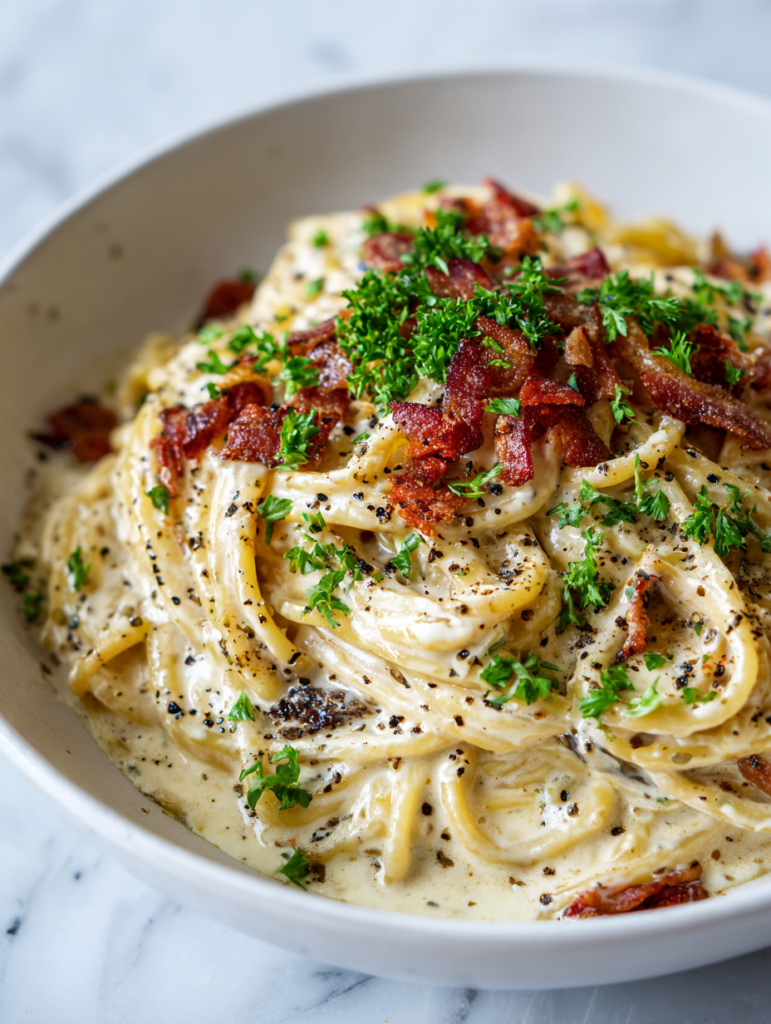
Vegan carbonara always felt like a bit of a culinary challenge to me. Achieving that creamy, savory richness without cheese or eggs seemed impossible, but I was determined to crack it using just plants. The trick was finding a way to mimic the silky sauce and smoky bites that make traditional carbonara so addictive.
This recipe comes from countless experiments in my tiny kitchen, where I wanted comfort food that’s indulgent but honest. It’s about harnessing umami and texture—things that surprise you with how close they get to the real deal, even without dairy or processed ingredients. Honestly, it’s become my go-to when I need something cozy and satisfying, no matter the season.
Focusing on creating a rich, creamy texture using only plant-based ingredients, this recipe aims to mimic the indulgence of traditional carbonara without any soy or processed fats, making it accessible and satisfying for vegans craving comfort food.
The inspiration behind this vegan twist
- This recipe was born out of a late-night craving for something creamy and savory, but without the usual dairy and eggs. I wanted a dish that felt indulgent but still honest, using only plant-based ingredients that I could whip up quickly in my tiny kitchen. It’s funny how a simple idea can turn into a little experiment that sticks.
- I remember the first time I got that silky, smoky sauce just right, and it hit me how satisfying vegan comfort food can be when you focus on flavor and texture. That moment of discovery—when everything came together—made me realize I was onto something. Now, I keep this recipe close, especially when I need a quick, hearty meal that feels like a little treat.
- story_type
- heading
Key ingredients and tips
- Cashew nuts: I love how they turn silky when blended, almost like dairy. Soak them well to avoid graininess, or you’ll get a gritty sauce—trust me, I’ve been there.
- Nutritional yeast: Its cheesy, nutty aroma really boosts the umami. Don’t skip it, but if you want less of that tang, reduce slightly or try a milder brand.
- Smoked paprika: Adds that smoky depth that’s key for authenticity. Be gentle at first, then add more if you crave a richer, more intense smokiness—my nose loves it!
- Mushroom broth: I simmer dried mushrooms to extract a deep, earthy flavor, but a splash of mushroom soy or miso can work if you’re in a pinch—just adjust the salt.
- Pasta: I prefer a thick, al dente spaghetti or rigatoni. The chewiness holds the sauce better, and the texture is just more satisfying, especially when you bite into that smoky, creamy goodness.
- Black salt (kala namak): Its sulfurous aroma mimics eggs perfectly. Use sparingly at first; it can get overwhelming if you overdo it, but it’s magic for that authentic tang.
- Olive oil: I swirl it in at the end for a glossy finish and subtle fruity note, but quality matters here—good extra virgin makes all the difference, especially when it shimmers on hot pasta.
Spotlight on Key Ingredients
Nutritional Yeast:
- Cashew nuts: I love how they turn silky when blended, almost like dairy. Soak them well to avoid graininess, or you’ll get a gritty sauce—trust me, I’ve been there.
- Its cheesy, nutty aroma really boosts the umami. Don’t skip it, but if you want less of that tang, reduce slightly or try a milder brand.
- Smoked paprika: Adds that smoky depth that’s key for authenticity. Be gentle at first, then add more if you crave a richer, more intense smokiness—my nose loves it!
Cashew Nuts:
- I love how they turn silky when blended, almost like dairy. Soak them well to avoid graininess, or you’ll get a gritty sauce—trust me, I’ve been there.
- Nutritional yeast: Its cheesy, nutty aroma really boosts the umami. Don’t skip it, but if you want less of that tang, reduce slightly or try a milder brand.
Notes for ingredient swaps
- Dairy-Free: Nutritional yeast replaces cheese for that cheesy, nutty flavor. It’s less creamy but still satisfying.
- Gluten-Free: Use a gluten-free pasta blend. The texture might be a tad softer, but still deliciously smoky and rich.
- Oil-Free: Skip the olive oil and sauté the smoky bits with a splash of vegetable broth or water. Keep the flavor deep.
- Smoked Flavor: If you don’t have smoked paprika, use a pinch of liquid smoke or chipotle powder for that smoky punch.
- Cashews: Macadamia nuts or soaked sunflower seeds can mimic creaminess. Watch for different flavor notes, keep it subtle.
- Lemon Juice: Use apple cider vinegar or a splash of white wine vinegar if lemon isn’t available. Adds brightness, just less zing.
- Mushrooms: Dried shiitakes or portobellos add earthiness. Fresh mushrooms work, but dried ones give a deeper smoky aroma.
Equipment & Tools
- Large pot: Boil pasta evenly
- Blender: Create silky, smooth sauce
- Skillet: Sauté smoky bits and heat pasta
- Wooden spoon: Stir gently without scratching
Step-by-step guide for vegan carbonara
- Gather your equipment: a large pot for boiling pasta, a blender for creamy sauce, a skillet for smoky bits, and a wooden spoon for stirring. Preheat the skillet over medium heat, about 160°C (320°F).
- Cook the pasta: Salt a large pot of boiling water (1 tbsp salt per 4 liters). Add spaghetti or rigatoni, cook until al dente (about 8-10 minutes). Drain, reserving ½ cup pasta water.
- Prepare the smoky bits: In the skillet, add a drizzle of olive oil. Add chopped smoked paprika and a handful of chopped mushrooms. Sauté until mushrooms are browned and fragrant (about 5 minutes). Set aside.
- Make the sauce: In a blender, combine soaked cashews (soak for 4 hours or overnight), nutritional yeast, lemon juice, a splash of mushroom broth, garlic, salt, black salt, and a pinch of smoked paprika. Blend until silky smooth, adding reserved pasta water a tablespoon at a time to loosen if needed. The sauce should be creamy and slightly thick.
- Combine and heat: Return the smoky mushroom bits to the skillet. Add the cooked pasta and pour over the cashew sauce. Toss gently over low heat (about 2 minutes), just until everything is warmed through and coated. The sauce should cling to the pasta with a glossy sheen.
- Final touches: Taste and adjust salt or smoked paprika as needed. Remove from heat. Drizzle with a little olive oil for shine, and sprinkle with freshly chopped parsley if you like. Serve immediately.
- Rest briefly: Let the pasta sit for 2 minutes off heat to meld flavors. Plate with a sprinkle of black salt for that eggy aroma, and enjoy the rich, smoky, creamy bite.
Let the pasta rest off heat for 2 minutes to deepen flavors. Plate immediately, drizzle with olive oil, and sprinkle with black salt for that eggy aroma. Serve hot for best texture and flavor.
How to Know It’s Done
- Sauce is creamy and coats pasta without clumping.
- Smoky mushroom bits are browned and fragrant.
- Pasta is al dente, with a slight chew.
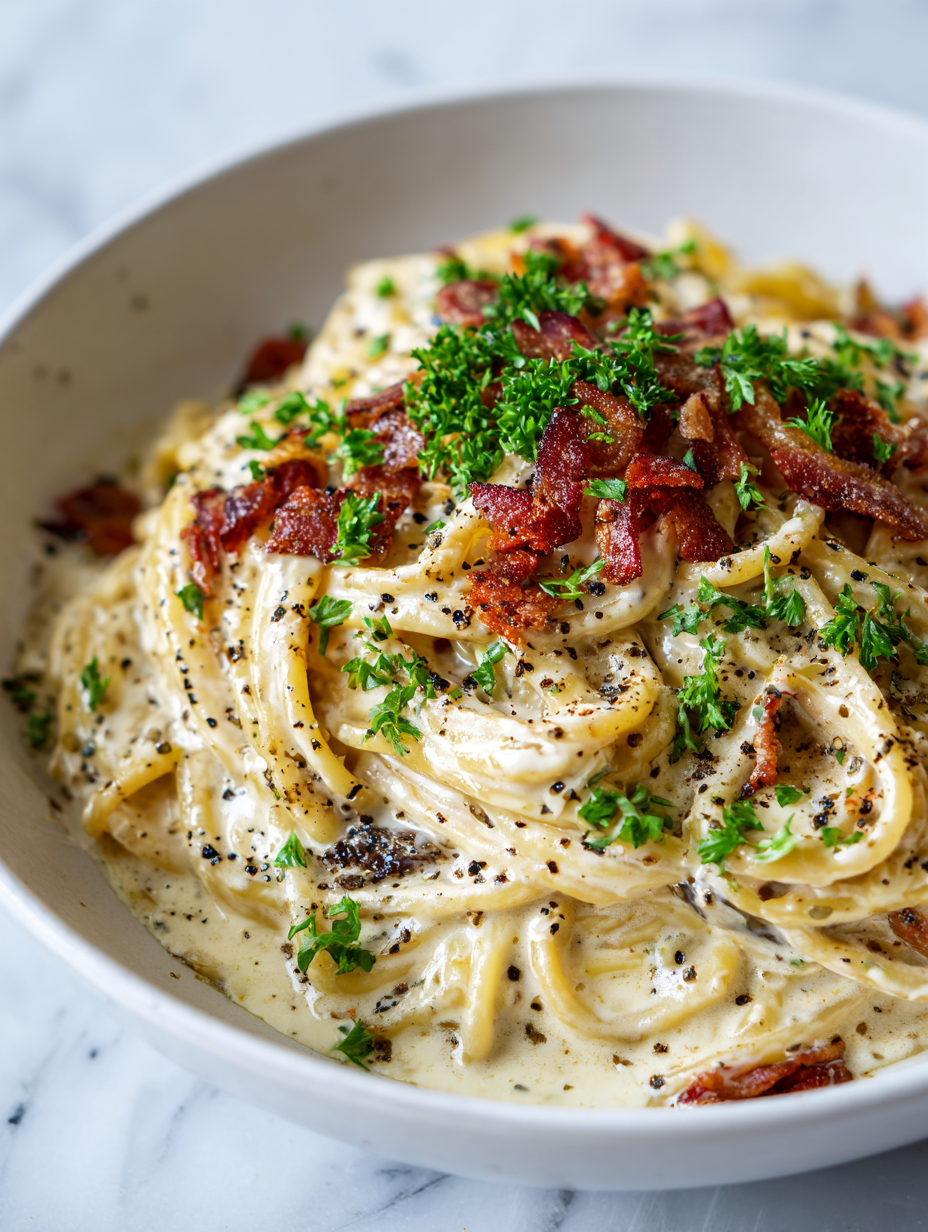
Vegan Carbonara
Ingredients
Equipment
Method
- Bring a large pot of salted water to a boil and cook the pasta until just al dente, about 8-10 minutes. Drain and set aside, reserving ½ cup of pasta water.
- In a skillet over medium heat, add a tablespoon of olive oil. Sauté the chopped mushrooms with smoked paprika until they are browned and fragrant, about 5 minutes. Remove from heat and set aside.
- In a blender, combine the soaked cashew nuts, nutritional yeast, lemon juice, mushroom broth, minced garlic, black salt, and a pinch of smoked paprika. Blend until silky smooth, adding reserved pasta water a tablespoon at a time to achieve a creamy, flowing sauce.
- Pour the blended sauce into the skillet with the sautéed mushrooms. Warm over low heat, stirring gently, until the sauce thickens slightly and becomes glossy, about 2 minutes. Adjust seasoning if needed.
- Add the cooked pasta to the skillet, tossing gently to coat each strand evenly with the creamy sauce. Cook for another minute to allow flavors to meld.
- Remove from heat, drizzle with a little more olive oil for shine, and sprinkle with chopped parsley. Serve immediately while hot, enjoying the silky, smoky, plant-based goodness.
Pro tips for vegan carbonara
- Use high-speed blending to achieve a silky, smooth sauce without graininess.
- Sauté smoky bits over medium heat until mushrooms are deeply browned for maximum flavor.
- Reserve pasta water and add gradually to the sauce for perfect creaminess and binding.
- Taste and adjust salt and smoked paprika at the end—smokiness intensifies as it sits.
- Cook pasta just to al dente—residual heat will finish the sauce’s thickening process.
- Drizzle olive oil just before serving for a glossy finish and enhanced richness.
- Use black salt sparingly—its sulfur aroma mimics eggs and adds depth to the flavor.
Common mistakes and how to fix them
- FORGOT to taste and adjust: Season gradually; over-salting can ruin the dish quickly.
- DUMPED sauce too early: Let it thicken slightly on low heat; it enhances creaminess.
- OVER-TORCHED smoky bits: Keep an eye; burnt bits turn bitter, use gentle heat for perfect char.
- MISSED blending step: Ensure cashews are soaked and blended until silky, no grainy texture.
Quick fixes and pantry swaps
- When sauce curdles, splash in warm water and blend again to smooth it out.
- If sauce is too thick, add a little hot pasta water and stir until silky.
- DUMPED the smoky bits by burning them—start over with lower heat and more oil.
- Splash a bit of lemon juice when sauce feels flat to brighten flavors and balance richness.
- When in doubt, swap smoked paprika with a dash of liquid smoke for instant smoky depth.
Prep, store, and reheat tips
- Prepare the sauce: Blend cashews and seasonings up to 1 day ahead, then refrigerate. The flavors develop overnight and the sauce firms up slightly, so stir in a splash of water before serving to loosen.
- Cook the pasta: Boil until al dente, drain, and toss with a little olive oil to prevent sticking. Store in an airtight container for up to 24 hours; reheat in boiling water or microwave, adding a splash of water to revive creaminess.
- Smoke the mushroom bits: Sauté the smoky mushrooms ahead of time, then cool and store in a sealed container for up to 2 days. Reheat gently in a skillet or microwave, checking for crispness and aroma.
- Assemble just before serving: Combine pasta with sauce and smoky bits at the last minute to keep everything fresh and vibrant. Reheat gently on low heat to prevent separation, and adjust seasoning as needed. Expect a slightly thicker sauce after storage; stir in warm water or broth to loosen.
Top questions about vegan carbonara
1. Can I make the sauce without cashews?
Use soaked cashews blended until silky for a dairy-free, creamy texture that mimics cheese sauce.
2. What does black salt do in this recipe?
Black salt adds an eggy aroma; start with a pinch and adjust to taste, but don’t overdo it.
3. How do I get a smoky flavor without bacon?
Use a smoky paprika or a splash of liquid smoke for authentic smoky flavor; adjust to your heat preference.
4. How firm should the pasta be?
Cook the pasta until just al dente; overcooking makes it mushy and less able to hold the sauce.
5. Why do I need to save pasta water?
Add reserved pasta water gradually to loosen the sauce and help it cling to the noodles.
6. How do I reheat leftovers?
Reheat gently on low heat, stirring with a splash of water or broth to restore creaminess without separation.
7. When should I season the dish?
Adjust seasoning at the end, tasting for salt, smokiness, and acidity to balance the dish.
8. Can I substitute fresh mushrooms?
Use dried mushrooms simmered in water or mushroom broth for a deep, earthy umami flavor.
9. Can I prepare this in advance?
Make the sauce ahead and store in the fridge for up to 1 day; re-blend if it thickens.
10. How do I make the dish more tangy?
Add a squeeze of lemon or vinegar at the end to brighten flavors and balance the richness.
This dish isn’t just about mimicking traditional flavors; it’s about embracing how rich and satisfying plant-based eating can be. Sometimes, all it takes is a few honest ingredients to create something truly memorable. It’s a reminder that good food doesn’t need to rely on dairy or eggs to deliver comfort and depth.
Whenever I make this vegan carbonara, I feel a little proud of how straightforward and forgiving it is. It’s perfect for those busy nights when you want something hearty but don’t want to compromise on flavor. Plus, it’s a dish I keep coming back to—proof that simple, honest cooking still has plenty of surprises to offer.