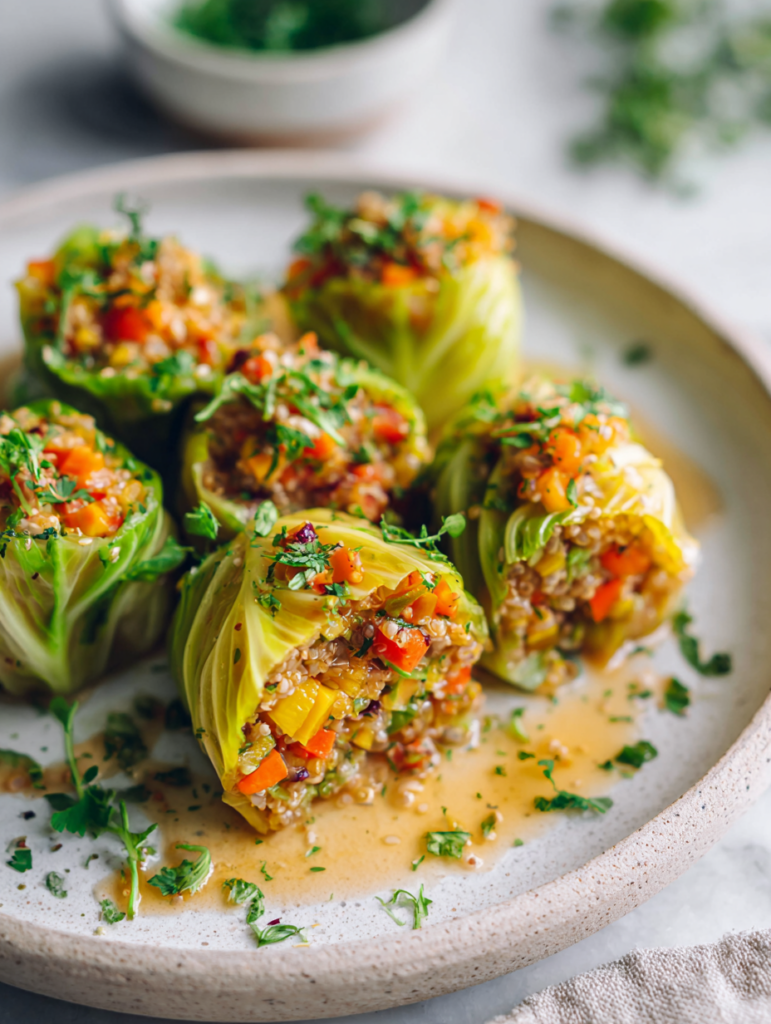
Traditional cabbage rolls often lean on meat for that hearty, satisfying feel, but I’ve found a way to capture that same comfort using just plants. This recipe flips the script, turning humble cabbage leaves into a vessel for a rich, savory filling that mimics the texture and flavor of classic versions without any animal products. It’s a little rebellious, a little nostalgic, and honestly, a lot delicious.
What excites me most is how simple ingredients—think mushrooms, nuts, and herbs—can come together into something unexpectedly hearty. I love that I can make this dish in advance, knowing each time I reheat, the flavors deepen and the aroma of simmering tomato and spices fills the kitchen with warmth. It’s a dish that feels both familiar and new, perfect for cozy nights or when you want to impress without fuss.
This recipe focuses on transforming traditional cabbage rolls by using a plant-based filling that mimics the comforting richness of classic meat versions, while highlighting how simple, everyday ingredients can be elevated into something unexpectedly hearty and satisfying without any animal products.
A Plant-Based Take on Classic Comfort
- Making these cabbage rolls feels like reclaiming a childhood memory, but with a modern, plant-based twist that surprises even my meat-loving friends.
- I get a little thrill every time I hear the gentle simmer and smell that smoky, tomato-laced aroma filling the kitchen—it’s pure comfort in a dish.
- There’s something deeply satisfying about turning humble ingredients into a hearty, satisfying meal that’s both nourishing and guilt-free.
- This recipe has become my go-to when I want to feed a crowd without spending hours in the kitchen or relying on leftovers.
- Every time I make these, I feel a quiet pride in creating something wholesome, flavorful, and totally guiltless, yet utterly indulgent.
A Nostalgic Reboot for Classic Comfort
- This recipe came about during a chilly autumn evening when I was craving something warm and familiar, but wanted to keep it plant-based. I remembered my grandmother’s cabbage rolls, that comforting aroma of simmering tomato and herbs filling the kitchen. I started experimenting, trying to replicate that feeling with mushrooms, nuts, and herbs, and surprisingly, it worked — each bite felt like a little hug from the past.
- What keeps me coming back to this dish is how it transforms everyday ingredients into something unexpectedly hearty. I love the challenge of balancing flavors—savory, smoky, a touch of tang—and making it feel indulgent without any animal products. It’s a dish that feels like a small act of rebellion, proving that plant-based can be just as satisfying, if not more so.
- heading: ‘A Nostalgic Reboot for Classic Comfort’
Contextual origin, trivia, or history
- Cabbage rolls have roots in Eastern European cuisine, dating back hundreds of years as a way to stretch ingredients and preserve vegetables.
- Historically, they were a practical dish, using leftover meats and vegetables wrapped in cabbage leaves for a hearty meal during harsh winters.
- Vegan versions emerged more recently, as cooks sought to mimic those rich, comforting flavors while honoring plant-based diets.
- The idea of rolling and stuffing vegetables is ancient, but the adaptation to vegan fillings highlights creative resourcefulness in modern kitchens.
Key Ingredients in Focus
- Cabbage leaves: I pick firm, bright green leaves with no tears or browning. Their crispness keeps the rolls neat and adds a fresh crunch. You can blanch slightly if you want them softer, but I like some bite.
- Mushrooms: I love using shiitake or cremini for their umami punch, making the filling feel meaty and smoky. When cooked, they become tender and slightly gooey, releasing that earthy aroma. Skip if you’re allergic, and try walnuts for a nutty alternative.
- Nuts and seeds: I opt for chopped walnuts or sunflower seeds for texture and richness. They add a subtle nuttiness and help bind the filling. Toast them lightly beforehand for extra depth; otherwise, they stay mild and soft.
- Herbs and spices: Parsley, dill, and a pinch of smoked paprika are my go-to. They brighten the dish and add complexity. Fresh herbs give a lively aroma—use dried if you’re out, but double the amount.
- Tomato sauce: I prefer a thick, bright tomato purée with a splash of balsamic for tang. It’s the comforting scent that pulls everything together. If you want more acidity, a squeeze of lemon can lift the flavors at the end.
- Plant-based binder: I use cooked quinoa or oats to hold everything together—think of it as the glue that keeps each bite satisfying. If you’re gluten-free, oats are your friend; for a softer filling, blend cooked oats into a paste first.
- Seasonings: Soy sauce or tamari for umami, a dash of liquid smoke for smoky depth, and a pinch of black pepper. These small tweaks create a layered, savory profile that lingers on the palate.
Spotlight on key ingredients
Cabbage leaves:
- I look for firm, bright green leaves with no tears or discoloration. They keep their shape and add a fresh crunch. Blanch if you want them softer, but I prefer a slight bite.
- Mushrooms: Shiitake or cremini are my favorites for their deep umami and smoky aroma. When cooked, they become tender, releasing earthy juices that meld into the filling. Skip if allergic, and try walnuts for a nutty alternative.
Nuts and seeds:
- I prefer chopped walnuts or sunflower seeds for texture and richness. Toast them lightly to deepen their flavor before mixing into the filling. They add a subtle nuttiness and help bind everything together, staying firm in the oven.
- ingredient
Notes for ingredient swaps
- Dairy-Free: Cashew cream or coconut milk can replace any cream component, but expect a slightly sweeter, richer flavor.
- Gluten-Free: Use gluten-free oats or cooked rice instead of regular oats for binding; texture remains hearty and satisfying.
- Nut-Free: Sunflower seeds or toasted pumpkin seeds substitute nuts, adding crunch without the nutty flavor.
- Low-Sodium: Swap soy sauce with coconut aminos or a splash of balsamic vinegar for a milder, sweeter profile.
- Fresh Herbs: Dried herbs can be used if fresh aren’t available, but double the quantity for full flavor impact.
- Tomato Base: Tomato paste diluted with water or vegetable broth can replace canned or purée for a lighter, brighter sauce.
- Filling Texture: Crumbled firm tofu or tempeh can mimic the mushroom’s umami, adding protein and moisture.
Equipment & Tools
- Large pot: To blanch and soften the cabbage leaves.
- Skillet: To sauté the mushrooms and develop flavor.
- Mixing bowl: To combine the filling ingredients.
- Spoon or small scoop: To portion the filling onto the cabbage leaves.
- Baking dish: To hold the assembled cabbage rolls for baking.
- Aluminum foil: To cover the dish during baking to retain moisture.
Step-by-step guide to cabbage rolls
- Prepare the cabbage: Carefully peel off whole leaves, about 8-10, and blanch in boiling water for 2 minutes until slightly tender. Drain and set aside on a towel to cool slightly.
- Make the filling: In a skillet, heat 1 tbsp olive oil over medium heat (about 160°C/320°F). Add chopped mushrooms and cook until browned, about 5 minutes, stirring often. Add minced garlic, cook for another 30 seconds until fragrant.
- Combine the filling: In a bowl, mix the sautéed mushrooms, 1 cup cooked quinoa, 1/4 cup chopped walnuts, 2 tbsp chopped fresh parsley, 1 tsp smoked paprika, 1 tbsp soy sauce, and a pinch of black pepper. Adjust seasoning to taste. The mixture should be moist but firm enough to hold shape.
- Assemble the rolls: Lay a cabbage leaf flat, place about 2-3 tbsp of filling near the stem end. Fold in the sides, then roll tightly from bottom to top, sealing with a little water if needed. Repeat with remaining leaves and filling.
- Arrange in a baking dish: Lightly oil a 20cm (8-inch) baking dish. Place the cabbage rolls seam-side down, snugly together. Pour 1 cup of thick tomato sauce over the top, covering evenly.
- Bake: Cover with foil and bake at 180°C (355°F) for 35-40 minutes. The leaves should be tender and the filling heated through. Check periodically to prevent drying out; add a splash of water if the sauce gets too thick.
- Finish and serve: Remove from oven and let rest for 5 minutes. Serve hot, spooning extra tomato sauce over each roll, with a sprinkle of fresh herbs for color and aroma.
Let the baked rolls rest for 5 minutes to settle. Serve with extra tomato sauce, garnished with fresh herbs or a drizzle of olive oil for shine.
How to Know It’s Done
- Cabbage leaves are tender but still hold shape; they’re easy to bite through and not mushy.
- Filling is hot, moist, and holds together without crumbling when sliced.
- Tomato sauce is bubbling and slightly thickened, with a rich, smoky aroma filling the kitchen.
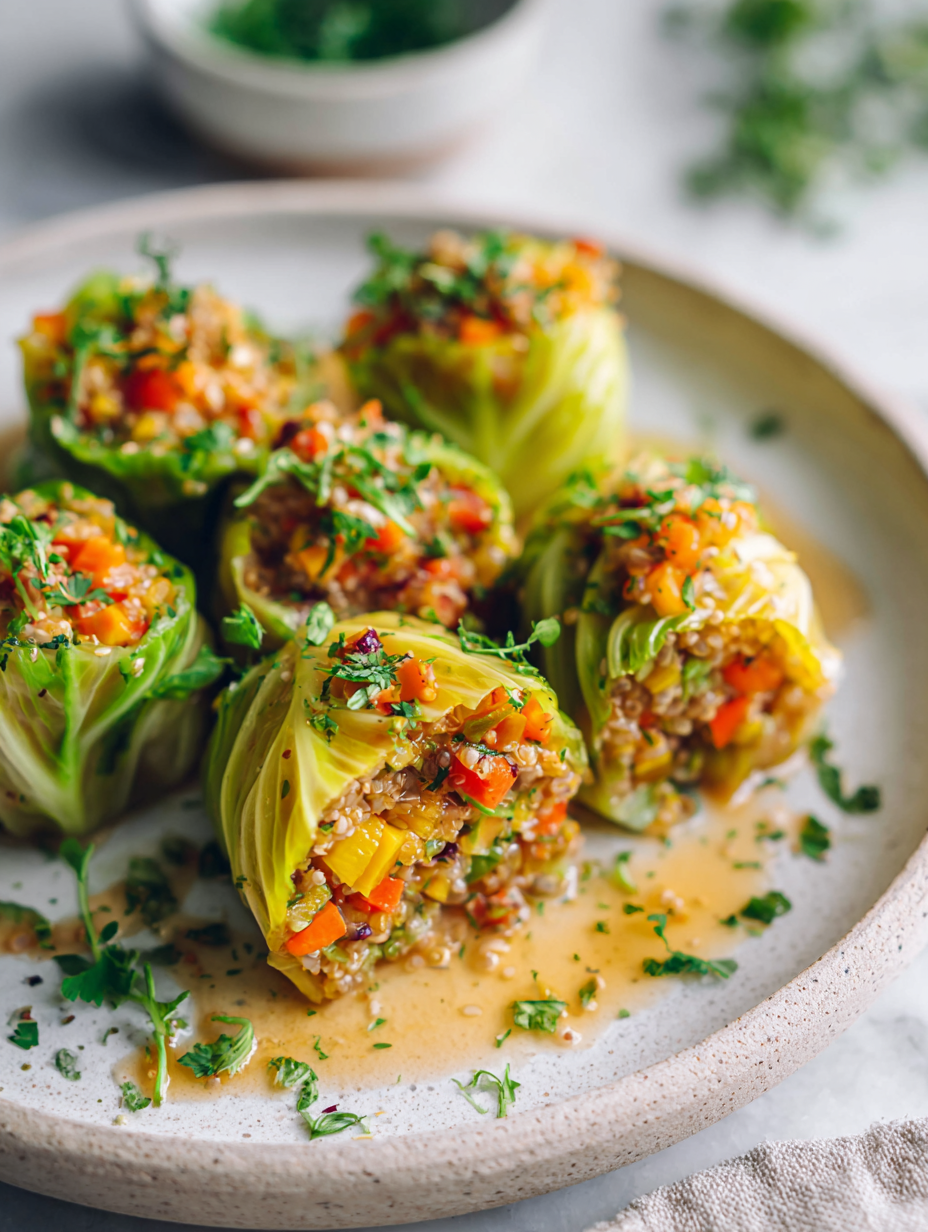
Plant-Based Cabbage Rolls
Ingredients
Equipment
Method
- Carefully peel off whole cabbage leaves, discarding any torn or discolored ones. Bring a large pot of water to a boil, then blanch the leaves for about 2 minutes until slightly tender and flexible. Drain and set aside to cool slightly.
- In a skillet, heat olive oil over medium heat until it shimmers and begins to smell fragrant. Add chopped mushrooms and cook, stirring often, until browned and tender—about 5 minutes. Add minced garlic and cook for another 30 seconds until fragrant and aromatic.
- Transfer the sautéed mushrooms and garlic to a mixing bowl. Add cooked quinoa, chopped walnuts, chopped parsley, smoked paprika, soy sauce, and a good pinch of salt and pepper. Mix everything thoroughly until well combined; the mixture should be moist but hold together when shaped.
- Lay a blanched cabbage leaf flat on a clean surface. Spoon about 2-3 tablespoons of filling near the stem end of the leaf. Fold the sides inward, then roll tightly from bottom to top, sealing the edges with a little water if needed. Repeat with remaining leaves and filling.
- Arrange the filled cabbage rolls seam-side down in a lightly oiled baking dish, snugly fitting them together. Pour the tomato sauce evenly over the rolls, covering them completely.
- Cover the dish with aluminum foil and bake at 180°C (355°F) for 35-40 minutes, until the leaves are tender and the filling is heated through. The sauce should be bubbling and slightly thickened, filling the kitchen with a warm aroma.
- Remove from the oven and let rest for about 5 minutes before serving. Carefully plate each roll, spooning extra tomato sauce over the top, and sprinkle with fresh herbs if desired. Enjoy the hearty, plant-based comfort!
Pro tips for perfect cabbage rolls
- Boldly steam the cabbage: Use a steamer basket over boiling water for a gentle, even soften without losing structure.
- Sauté mushrooms thoroughly: Cook until browned and fragrant, about 5 minutes, to develop deep umami and reduce moisture.
- Balance moisture in filling: Add nuts and grains gradually, checking texture—moist but firm enough to roll without falling apart.
- Seal rolls with damp fingers: Moisten the edges slightly to ensure they stay closed during baking, preventing filling leaks.
- Simmer uncovered for richness: Let the sauce reduce slightly in the oven for a more concentrated, smoky flavor that clings to the leaves.
- Rest before serving: Allow baked rolls to sit for 5 minutes—this helps firm up the filling and makes slicing neater.
- Use a sharp knife: Slice carefully to avoid tearing the cabbage leaves, revealing neat, beautiful rolls every time.
Common mistakes and how to fix them
- FORGOT to remove tough cabbage veins → Use a paring knife to cut out thick veins.
- DUMPED filling too early → Let it sit 10 minutes to firm up before rolling.
- OVER-TORCHED the sauce → Lower heat and stir constantly to prevent burning.
- MISSED sealing the rolls → Dip fingers in water to seal edges securely.
Quick fixes and pantry swaps
- When sauce shimmers, it’s thick enough—simmer longer if watery.
- Splash a bit of soy if filling tastes bland mid-mix.
- Patch a torn cabbage leaf with a little water to seal edges.
- DUMPED too much filling? Use a spoon to redistribute evenly.
- When rolls fall apart, refrigerate for 15 minutes to firm up before baking.
Prep, store, and reheat tips
- Prepare the cabbage leaves: blanch and cool in advance; store in airtight container for up to 24 hours, keeping them crisp and vibrant.
- Make the filling: cook and mix the mushroom and grain mixture a day ahead; refrigerate for up to 2 days, the flavors will deepen overnight.
- Assemble the rolls: tightly roll and place in a dish, cover with plastic wrap; they can be refrigerated for up to 24 hours before baking, which helps flavors meld and makes reheating easier.
- Reheating: warm covered in the oven at 180°C (355°F) for 20-25 minutes until heated through, the aroma of tomato and herbs will reignite, and the texture remains tender.
- Shelf life: cooked cabbage rolls are best enjoyed within 3 days; beyond that, the leaves may soften too much, and flavors could diminish—reheat gently to preserve texture.
Top questions about vegan cabbage rolls
1. How do I prepare the cabbage leaves?
Use firm, fresh cabbage leaves and blanch them briefly in boiling water for 2 minutes until slightly tender. This makes them easier to roll and less likely to tear.
2. What type of mushrooms work best?
Cook the mushrooms until browned and fragrant, about 5 minutes. They develop a smoky aroma and tender texture that mimics meatiness.
3. What can I use as a binder?
Use cooked quinoa or oats to bind the filling. Quinoa adds a light, nutty flavor, while oats give a softer, more cohesive texture.
4. How do I know when they’re done?
Bake the assembled rolls at 180°C (355°F) for 35-40 minutes until the leaves are tender and the sauce is bubbling with a rich aroma.
5. How long can I keep leftovers?
Store leftovers in an airtight container in the fridge for up to 3 days. Reheat in the oven at 180°C (355°F) for 20 minutes until hot and fragrant.
6. Can I make substitutions for soy sauce?
Replace soy sauce with coconut aminos for a lower sodium, milder umami flavor. It’s a good swap if you want less salt but still savory depth.
7. What are good nut or seed substitutes?
Use sliced walnuts or sunflower seeds for crunch, or toasted pumpkin seeds for extra flavor and texture in the filling.
8. How do I select the best cabbage leaves?
Choose bright green, firm cabbage leaves with no tears. If you prefer softer leaves, blanch them a little longer or briefly sauté.
9. What if my filling is too wet or dry?
If the filling feels too loose, add a bit more oats or quinoa. If too dry, mix in a splash of vegetable broth or tomato sauce.
10. How do I keep the rolls from opening up?
When rolling, moisten your fingers with water to seal the edges. This keeps the filling from spilling out during baking.
These vegan cabbage rolls are more than just a plant-based twist on an old classic; they’re a reminder that comfort food can be nourishing and satisfying without relying on animal products. The aroma of simmering tomato and herbs filling the kitchen makes every effort worth it, especially knowing the rich, smoky flavor you’re about to enjoy. It’s a dish that feels like a quiet act of rebellion, celebrating simple ingredients turned into something unexpectedly hearty.
Whenever I make these, I’m reminded of how humble ingredients—mushrooms, nuts, cabbage—can come together into something deeply satisfying. They’re perfect for cozy nights, feeding a crowd, or just reclaiming a bit of the familiar in a busy week. To me, that’s what really makes this recipe special—easy, honest, and a little bit rebellious in the best way.