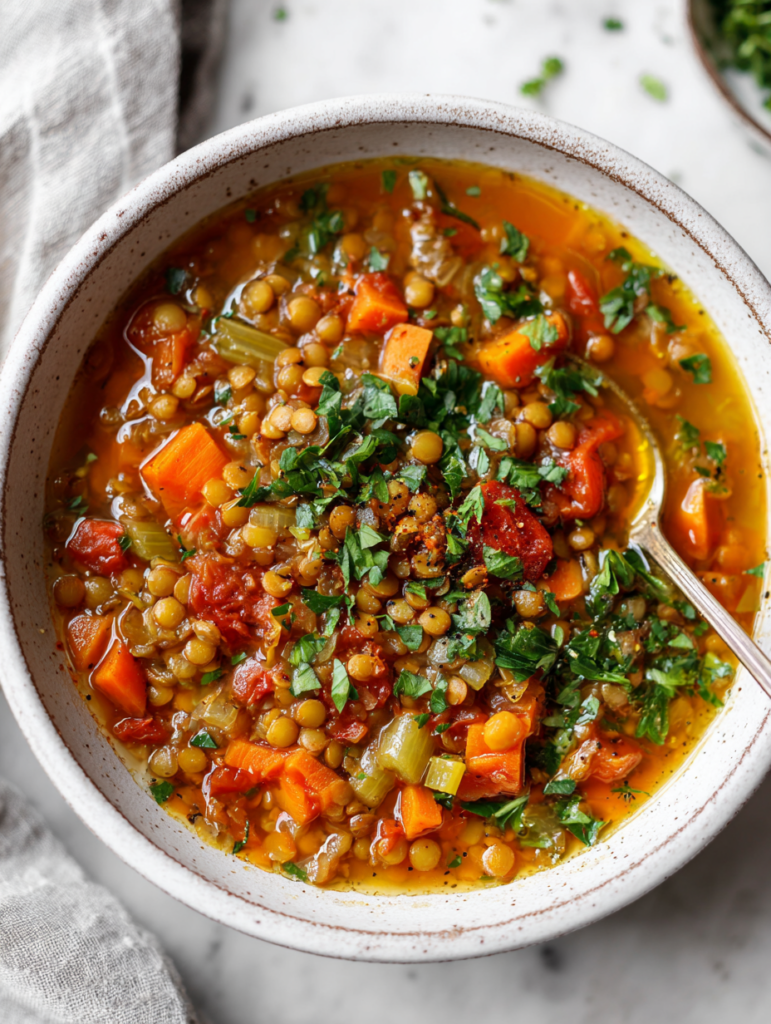
This lentil vegetable soup is my go-to when I want something honest and filling, but without fuss. It’s like a warm blanket for your stomach, especially on those days when the weather makes you crave comfort without heaviness. I love how humble ingredients like lentils and seasonal vegetables can come together into something that feels both nourishing and simple enough for a weeknight dinner.
There’s something about this soup that brings back childhood memories of slow weekends in the kitchen, chopping and simmering while the house fills with the smell of garlic and herbs. It’s a recipe I turn to when I need to clear my head or when I want to feed friends without stressing about complicated plating. It’s honest, straightforward, and always hits the spot in that quiet, satisfying way.
This recipe is inspired by the idea of turning a humble, everyday ingredient into a comforting, soul-warming dish that feels like a warm hug on a chilly day. I focus on how simple lentils and vegetables can be elevated with just a few honest touches, making it accessible yet deeply satisfying.
Turning Humble Lentils into Comfort
- Cooking this soup feels like a small act of kindness I gift myself after long days.
- I remember the first time I made it—smelled the garlic, and felt an unexpected warmth inside.
- There’s a quiet pride in turning simple ingredients into something that fills the soul as much as the stomach.
- On cold mornings, this soup is my secret weapon—something about its earthy aroma just lifts me up.
- Sharing a bowl of this with friends always sparks stories and laughter, making it more than just a meal.
The story behind this recipe
This soup was born out of a chilly weekend when I rummaged through the fridge and found a bag of dried lentils and some wilting carrots. I didn’t want it to be just another pot of plain lentil soup, so I started tossing in bits of whatever I had—some herbs, a squeeze of lemon, a dash of smoked paprika. Turns out, those improvisations made it feel like a cozy, personalized bowl, something I could turn to when I needed warmth without fuss. It’s become a kind of culinary blank slate, a reminder that even humble ingredients can surprise you with their quiet resilience.
Historical and Cultural Roots
- Lentil soup has roots in ancient civilizations, where humble legumes sustained long journeys and feasts alike.
- In Mediterranean cultures, lentils were often associated with good luck and prosperity, especially during New Year celebrations.
- This dish echoes traditional peasant cooking—simple, affordable, yet deeply nourishing—traversing centuries and continents.
- Historically, lentils were one of the first cultivated legumes, prized for their quick cooking time and rich protein content.
- The use of seasonal vegetables in this soup pays homage to traditional farm-to-table practices, connecting us to the land.
Key Ingredients and Tips
- Lentils: I prefer brown or green for their hearty, earthy flavor and how they hold shape. You can swap in red lentils for a softer, creamier texture, but expect a slightly quicker cook and less bite.
- Carrots: Their natural sweetness brightens the soup, especially when simmered until tender and slightly caramelized. Try parsnips instead for a subtler, nutty flavor that adds depth.
- Celery: Adds a fresh, crisp note. If you don’t have celery, fennel stalks work beautifully, offering a mild anise aroma and a gentle crunch.
- Onions: The base of flavor. Yellow onions caramelize well, but shallots give a sweeter, more delicate aroma. Skip onions altogether with leeks for a milder, onion-like flavor.
- Vegetable broth: I use homemade when I can, but a good store-bought works too. For a richer taste, add a splash of soy sauce or tamari—just enough to bring out umami without overpowering.
- Garlic: I love crushing it fresh for a punchy aroma. Roasted garlic can replace it if you want a mellower, sweet note that almost melts into the soup.
- Spices & herbs: A bay leaf and thyme are staples, but smoked paprika adds a smoky warmth. Fresh parsley stirred in at the end lifts everything with bright, herbal freshness.
Spotlight on key ingredients
Lentils:
- I love their earthy, hearty flavor and how they absorb spices. When cooked, they become tender yet hold their shape, offering satisfying bites. Use brown or green for texture, or red for a softer, creamier result.
- Carrots: They bring a natural sweetness that brightens the broth. When simmered, they become tender and slightly caramelized, adding depth. Swap in parsnips for a nuttier, subtler sweetness that still complements the soup.
Vegetables (Carrots & Onions):
- Carrots: Their bright, sweet aroma intensifies as they cook, releasing a faintly smoky scent. When they soften, they add a vibrant orange hue and a subtle sweetness that balances the earthiness of lentils.
- Onions: They mellow out and develop a rich, caramel-like aroma when sautéed. During cooking, they turn translucent and slightly golden, adding a foundational sweetness that layers the flavors beautifully.
Notes for ingredient swaps
- Dairy-Free: Omit cream or butter, or replace with coconut milk for added richness and a hint of sweetness.
- Vegetable Broth: Use water plus a splash of soy sauce or miso for umami if you don’t have broth on hand.
- Carrots: Swap in parsnips or sweet potatoes for a different sweetness and earthiness, especially if you want a softer, creamier texture.
- Onions: Shallots or leeks can stand in, offering a milder, sweeter flavor, but skip onions if you prefer a subtler base.
- Herbs & Spices: Fresh thyme or parsley can be replaced with dried versions, though fresh adds brightness; smoked paprika lends a smoky note, but regular paprika works fine.
- Lentils: Red lentils cook faster and break down more, making the soup creamier; brown or green lentils hold shape better, adding texture.
- Oil: Olive oil is classic, but coconut or avocado oil can add different subtle flavors and heat tolerances.
Equipment & Tools
- Large soup pot: For simmering and cooking the ingredients evenly.
- Wooden spoon: To stir the soup gently without scratching the pot.
- Sharp knife: For chopping vegetables precisely and safely.
- Cutting board: To prepare vegetables on a stable surface.
Step-by-step guide to Lentil Soup
- Gather your equipment: a large soup pot (for simmering), a wooden spoon (for stirring), and a sharp knife with a cutting board (for prep).
- Rinse 1 cup of dried lentils under cold water until the water runs clear; set aside to drain.
- Chop 1 large onion, 2 carrots, and 2 celery stalks into small, even dice; aim for about 1 cm pieces.
- Heat 2 tablespoons of oil in the pot over medium heat (about 160°C/320°F).
- Add the chopped onion and sauté until translucent, about 5 minutes, until they smell sweet and look glossy.
- Stir in the carrots and celery, cook for another 5 minutes, until vegetables soften and release their aroma.
- Add 3 minced garlic cloves, cook for 30 seconds until fragrant—don’t let it burn, or it turns bitter.
- Pour in 1.5 liters vegetable broth, bring to a gentle boil over high heat (about 100°C/212°F).
- Add the lentils, a bay leaf, and a teaspoon of thyme. Reduce heat to low (around 90°C/194°F).
- Simmer uncovered for about 25-30 minutes, stirring occasionally. Check for the lentils to soften but still hold shape.
- Taste and adjust salt, pepper, or add a splash of lemon juice for brightness. Remove the bay leaf.
- Let it rest for 5 minutes off heat, allowing flavors to meld and the soup to thicken slightly.
- Serve hot with a drizzle of olive oil or a sprinkle of fresh parsley. Enjoy the warmth and aroma.
Let the soup sit off heat for 5 minutes to settle. Ladle into bowls, drizzle with olive oil or sprinkle with herbs. Serve immediately, enjoying the warm, earthy scents.
How to Know It’s Done
- Lentils are tender but not mushy, with a slight bite.
- Vegetables are soft, fragrant, and slightly caramelized around the edges.
- Soup has a rich, inviting aroma with a balanced seasoning and a slight shimmer on top.
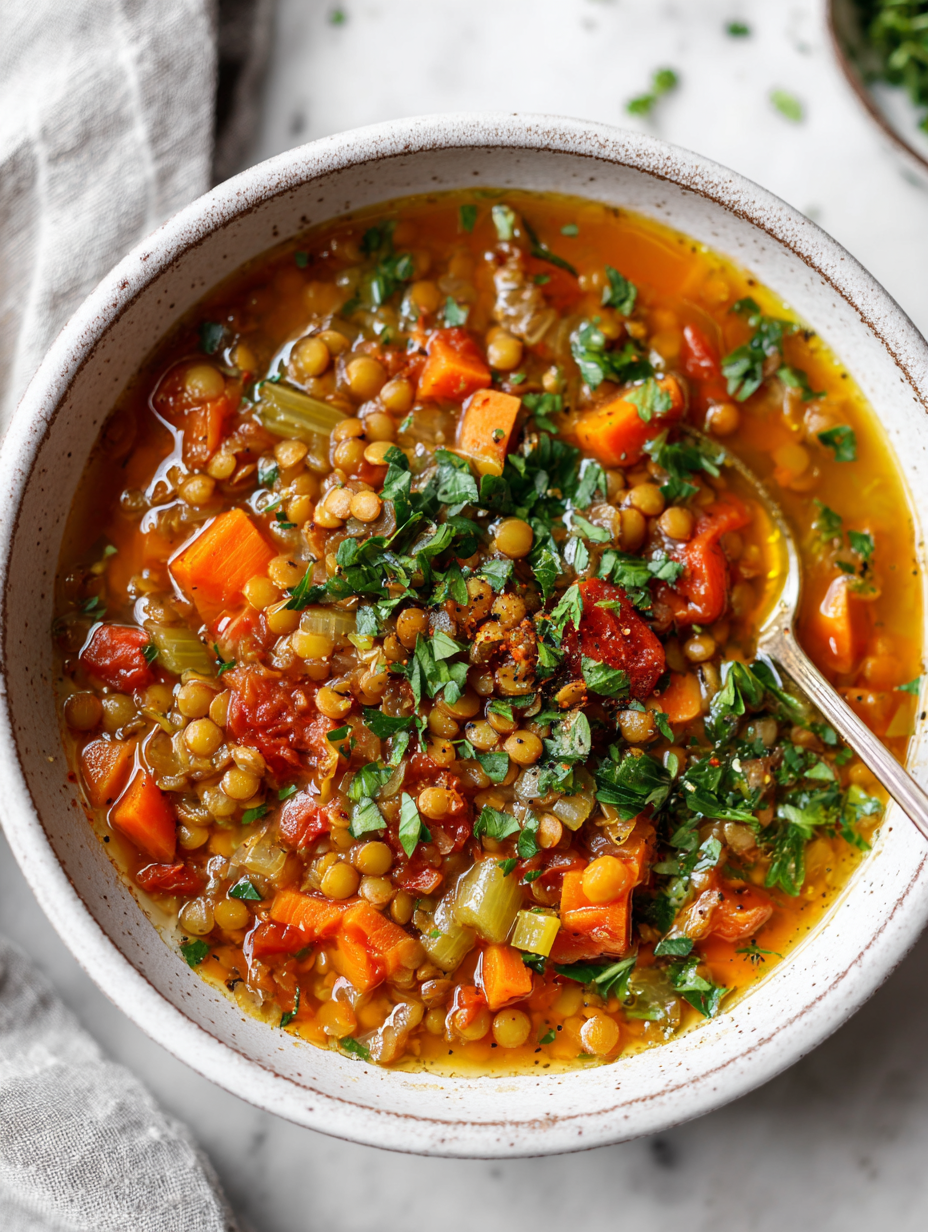
Hearty Lentil Vegetable Soup
Ingredients
Equipment
Method
- Rinse the lentils under cold water until the water runs clear, then drain and set aside.
- Chop the onion, carrots, and celery into small, even dice—around 1 cm pieces—to ensure even cooking and an appealing texture.
- Heat the olive oil in a large soup pot over medium heat until it shimmers and begins to gently ripple.
- Add the chopped onion and sauté for about 5 minutes, stirring occasionally, until it becomes translucent and fills the kitchen with a sweet, fragrant aroma.
- Stir in the diced carrots and celery, cooking for another 5 minutes until the vegetables soften slightly and their colors brighten.
- Add the minced garlic and cook for about 30 seconds, stirring constantly, until it becomes fragrant and slightly golden, but not browned.
- Pour in the vegetable broth, bringing the mixture to a gentle boil over high heat. This creates a bubbling, aromatic base for the soup.
- Add the rinsed lentils, bay leaf, and dried thyme to the pot, then reduce the heat to low so that the soup simmers gently.
- Let the soup simmer uncovered for about 25-30 minutes, stirring occasionally, until the lentils are tender but still hold their shape, and the vegetables are soft.
- Remove the bay leaf and taste the soup, then season with salt and pepper as needed, adjusting to your preference.
- Ladle the hot soup into bowls, garnish with chopped fresh parsley, and drizzle with a little olive oil for extra richness.
- Enjoy this rustic, hearty lentil vegetable soup while warm, savoring the comforting aroma and satisfying texture.
Pro tips for perfect Lentil Soup
- BOLD THE ONIONS: Sauté until translucent and fragrant, about 5 minutes, to develop a sweet base flavor.
- LOW AND SLOW: Simmer the soup gently at around 90°C/194°F—this helps the lentils soften evenly without breaking apart.
- TASTE AND ADJUST: Always check seasoning near the end—add salt or lemon juice to brighten and balance.
- SMELL THE GARLIC: Add minced garlic in the last 30 seconds of sautéing; it should smell fragrant and slightly nutty, not burnt.
- USE HOT BROTH: Pour hot vegetable broth into the pot to keep the simmer steady and prevent temperature shock.
- FORK TEST: Check lentils for tenderness by pressing a few with a fork—should be soft but still hold shape.
- LIFT THE FLAVOR: Finish with a drizzle of good olive oil or a squeeze of lemon for fresh brightness.
Common mistakes and how to fix them
- FORGOT to adjust heat → Keep an eye on simmering to prevent sticking or burning.
- DUMPED all ingredients at once → Sauté aromatics first for depth and flavor layering.
- OVER-TORCHED the soup → Lower heat if it starts to brown or smell burnt, then add liquid.
- MISSED seasoning checks → Taste during cooking and adjust salt or acid for balance.
Quick Fixes for Lentil Soup
- If soup is too thick, splash in hot broth and stir until smooth.
- When lentils stay hard, increase simmer time and check water level.
- Splash lemon juice at the end to brighten dull flavors.
- Patch over-salted soup with a potato wedge—remove after absorbing excess salt.
- Shield delicate vegetables by adding them late in cooking to prevent over-softening.
Prep, store, and reheat tips
- Chop vegetables a day in advance; store in an airtight container in the fridge for up to 24 hours. The fresh aroma of garlic and onion will stay vibrant.
- Cook and cool the soup completely before transferring to a container. It keeps well in the fridge for 3-4 days, with flavors mellowing slightly over time.
- For longer storage, freeze in individual portions for up to 3 months. The soup will thicken slightly; add a splash of hot broth when reheating.
- Reheat gently on the stove over low heat, stirring occasionally. The aroma should lift and the texture re-emerges, comforting as ever.
- When reheating, taste and adjust seasoning—sometimes a pinch of salt or a squeeze of lemon brightens the flavors after sitting.
Top questions about lentil soup
1. Do I need to soak the lentils beforehand?
Soaking lentils isn’t necessary but rinsing them well helps remove dust and impurities, ensuring a cleaner flavor.
2. Can I use store-bought vegetable broth?
Yes, using homemade broth adds depth, but store-bought works fine if you’re in a rush or want a milder taste.
3. Can I swap the carrots with another vegetable?
You can replace carrots with parsnips for a nuttier flavor or sweet potatoes for an extra touch of sweetness.
4. What’s the difference between red and green lentils in this soup?
Yes, red lentils cook faster and break down more, making the soup creamier and more comforting, especially if you like a softer texture.
5. Should I add lemon or vinegar?
Adding a squeeze of lemon at the end brightens the flavor and balances the earthiness of the lentils and vegetables.
6. How caramelized should the onions be?
Caramelizing onions until golden brings out a sweet, rich flavor that forms the base of the soup’s depth.
7. What if my soup is too thick?
If the soup gets too thick, stir in a bit of hot broth until it loosens to your desired consistency.
8. Can I add different herbs?
Stir in fresh herbs like parsley or thyme at the end for a burst of herbal brightness and freshness.
9. How long does the soup last in the fridge?
Leftovers will keep in the fridge for about 3 days; reheat gently on the stove, stirring occasionally, until steaming hot.
10. Can I freeze lentil vegetable soup?
To freeze, cool the soup completely, then store in airtight containers for up to 3 months. Reheat on the stove, adding a splash of broth if needed.
This soup feels like an old friend you didn’t realize you needed. Its simple, honest flavors are grounding, especially when the weather turns chilly and the days get short. I find myself returning to it when I want something nourishing that doesn’t demand too much fuss or fussiness.
Cooking it reminds me that the best comfort food is often the humblest. It’s a reminder that a few good ingredients, cooked with care, can create something quietly satisfying—without bells and whistles, just pure, honest nourishment.