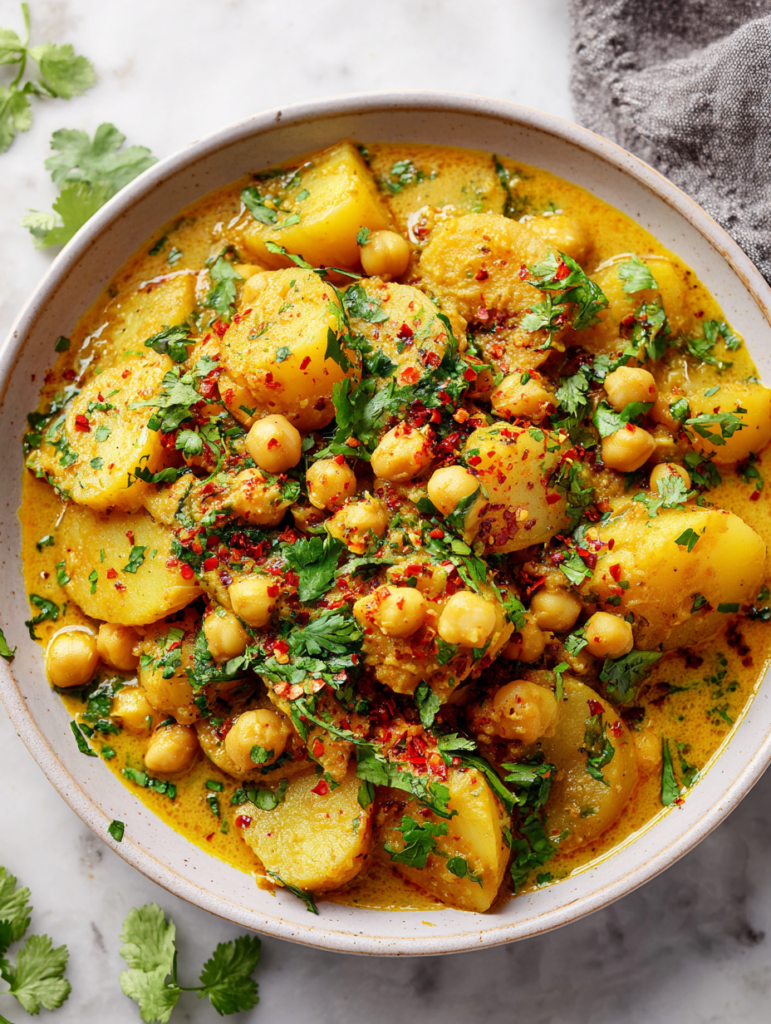
This chickpea potato curry is a nod to those roadside stalls that somehow make you feel instantly at home. The smoky spices, the soft potatoes, the hearty chickpeas—it’s all about turning humble ingredients into something deeply satisfying. I love how it smells like a busy street corner, with a hint of char and bright spice wafting through the air as it simmers.
Cooking this dish feels like a small act of rebellion against the fancy, overly complicated recipes we often chase. It’s straightforward, honest, and packed with flavor. Plus, it’s perfect for those days when you want something warm and filling but don’t want to mess around with a long grocery list or fancy techniques.
This recipe is inspired by childhood roadside snack stalls, blending the comforting familiarity of home-cooked curry with the bold, smoky flavors of street food. I love how the humble chickpeas and potatoes transform into something vibrant and satisfying, reminiscent of lazy weekend afternoons spent wandering market streets. It’s a reminder that simple ingredients, cooked with a bit of love and a pinch of adventure, can deliver a surprising punch of flavor.
The humble magic of everyday ingredients
- This dish takes me back to childhood afternoons spent helping my mom in the kitchen, the smell of spices filling the air and the sound of potatoes simmering softly.
- I find a strange comfort in how a simple can of chickpeas and a handful of potatoes can turn into something so hearty and full of flavor, especially on busy weeknights.
- Cooking this curry always feels like a small act of rebellion against the fancy, complicated recipes, reminding me that good, honest food doesn’t need to be perfect to be satisfying.
- There’s a quiet pride in making something so humble taste vibrant and nourishing, especially when the house is filled with the smoky aroma of spices simmering down.
The story behind this recipe
- This curry came together one rainy afternoon when I was rummaging through my pantry, looking for something warm and easy. I remembered how my grandmother used to toss together chickpeas and potatoes with whatever spices she had on hand, turning simple staples into a comforting stew. It’s that nostalgic feeling of improvising with what’s available, making do and ending up with something surprisingly satisfying.
- Every time I make this, I think about those lazy weekend afternoons spent in her kitchen. The way she’d sprinkle spices with a flourish, her laughter filling the air as the curry simmered. It’s become a little ritual for me—recreating that unpolished, homey magic, one pot at a time.
- heading: ‘The comfort in simplicity’
Historical and Cultural Roots
- This recipe has roots in street food stalls across South Asia, where quick, hearty snacks are made with humble ingredients.
- Potatoes and chickpeas have been staples in many cuisines for centuries, prized for their versatility and filling nature.
- The smoky spices used in this curry mimic the flavors of open-fire cooking, a technique dating back thousands of years.
- This dish often appears in rural communities as a simple, affordable meal that feeds many without fuss.
- Historically, combining chickpeas and potatoes was a way to stretch ingredients, making a nourishing meal from leftovers or pantry staples.
Ingredient breakdown
- Chickpeas: I use canned chickpeas for convenience, but soaked dried ones bring a nuttier flavor and firmer texture—soak overnight for best results.
- Potatoes: Russets are my go-to—they become soft and fluffy inside, but if you prefer a firmer bite, try waxy potatoes like Yukon Gold or red potatoes.
- Coconut Milk: I love the richness it adds, but if you want a lighter version, swap with plain tomato sauce or broth—less creamy, but still flavorful.
- Spices: Garam masala and turmeric are essential; I toast them briefly in oil to unlock their aroma—don’t skip this step, it makes all the difference.
- Tomatoes: Use canned diced for convenience, but fresh tomatoes, when in season, add a bright, zesty note—dice and simmer until tender.
- Oil: Vegetable or mustard oil works well; I prefer mustard oil for a smoky kick, but olive oil is fine if you want a milder flavor.
- Lemon or Lime: A squeeze brightens everything up—add just before serving, so the citrus flavor stays fresh and vibrant.
Spotlight on key ingredients
Chickpeas:
- I love canned for convenience, but dried soaked ones bring a nuttier flavor and firmer bite—soak overnight for best texture.
- Potatoes: Russets turn soft and fluffy inside, but waxy varieties like Yukon Gold hold shape better and add a slightly firmer bite.
Tomatoes:
- Turmeric: I add a pinch early on; it releases a warm, earthy aroma that deepens the sauce’s color and flavor.
- Using canned diced tomatoes adds a bright, zesty tang, but fresh in season can brighten the dish with a juicy burst.
Notes for ingredient swaps
- Dairy-Free: Swap coconut milk for plain tomato sauce or broth—less creamy, but still flavorful.
- Vegan: Use vegetable oil instead of ghee or butter, and coconut milk as the creamy base.
- Low-Sodium: Rinse canned chickpeas thoroughly or cook dried ones from scratch to control salt.
- Fresh Herbs: Replace dried spices with fresh ones if you have them, but reduce quantity to taste.
- Potatoes: Waxy potatoes like Yukon Gold or red potatoes hold shape better if you prefer less mush.
- Tomatoes: Use fresh, ripe tomatoes when in season for a brighter, zesty flavor—dice and simmer until tender.
- Oil: Mustard oil adds smoky depth, but vegetable or olive oil works fine for a milder touch.
Equipment & Tools
- Large heavy-bottomed pan or Dutch oven: To evenly cook the curry and prevent burning.
- Stirring spoon: For stirring spices, vegetables, and liquids.
- Sharp knife: To chop onions, potatoes, and tomatoes.
- Chopping board: To prepare vegetables safely and neatly.
Step-by-step guide to chickpea potato curry
- Gather your tools: a large heavy-bottomed pan or Dutch oven, a stirring spoon, a sharp knife, and a chopping board. Preheat the pan over medium heat (about 160°C / 320°F).
- Dice 2 large potatoes into 1-inch cubes. Keep them aside. Rinse and drain 1 can (15 oz) of chickpeas. Set aside.
- Heat 2 tablespoons of oil in the pan. Once shimmering, add 1 teaspoon of cumin seeds. Let crackle for about 30 seconds until fragrant.
- Add 1 chopped onion (about 1 cup). Cook, stirring occasionally, until translucent and soft, about 5 minutes. It should smell sweet and slightly caramelized.
- Stir in 2 teaspoons of garam masala, 1 teaspoon turmeric, and 1 teaspoon smoked paprika. Toast the spices for 1 minute until fragrant—watch for a rich aroma and slightly darker color.
- Add the diced potatoes to the pan. Toss to coat in spices. Cook for 3-4 minutes, stirring often. The potatoes should start to turn golden around the edges.
- Pour in 1 can (14 oz) of diced tomatoes and 1 cup of coconut milk. Stir well, scraping up any browned bits from the bottom. Bring to a gentle simmer.
- Add the chickpeas and season with salt to taste. Reduce heat to low, cover partially, and let simmer for 15-20 minutes. Check that potatoes are tender and the sauce has thickened slightly.
- Uncover and taste for seasoning. If too thick, add a splash of water. If it’s too thin, simmer uncovered for 5 more minutes until it reaches your preferred consistency.
- Squeeze a fresh lemon or lime over the curry just before serving. Stir to distribute the bright, zesty flavor. The curry should be fragrant, with a silky sauce and tender potatoes.
Serve the curry hot, garnished with a squeeze of lemon and fresh cilantro if desired. Let it sit for 5 minutes off heat to settle flavors before scooping into bowls.
How to Know It’s Done
- Potatoes are fork-tender and easily pierced.
- The sauce is thick and coats the back of a spoon.
- Spices are fragrant and well-integrated, not raw-smelling.
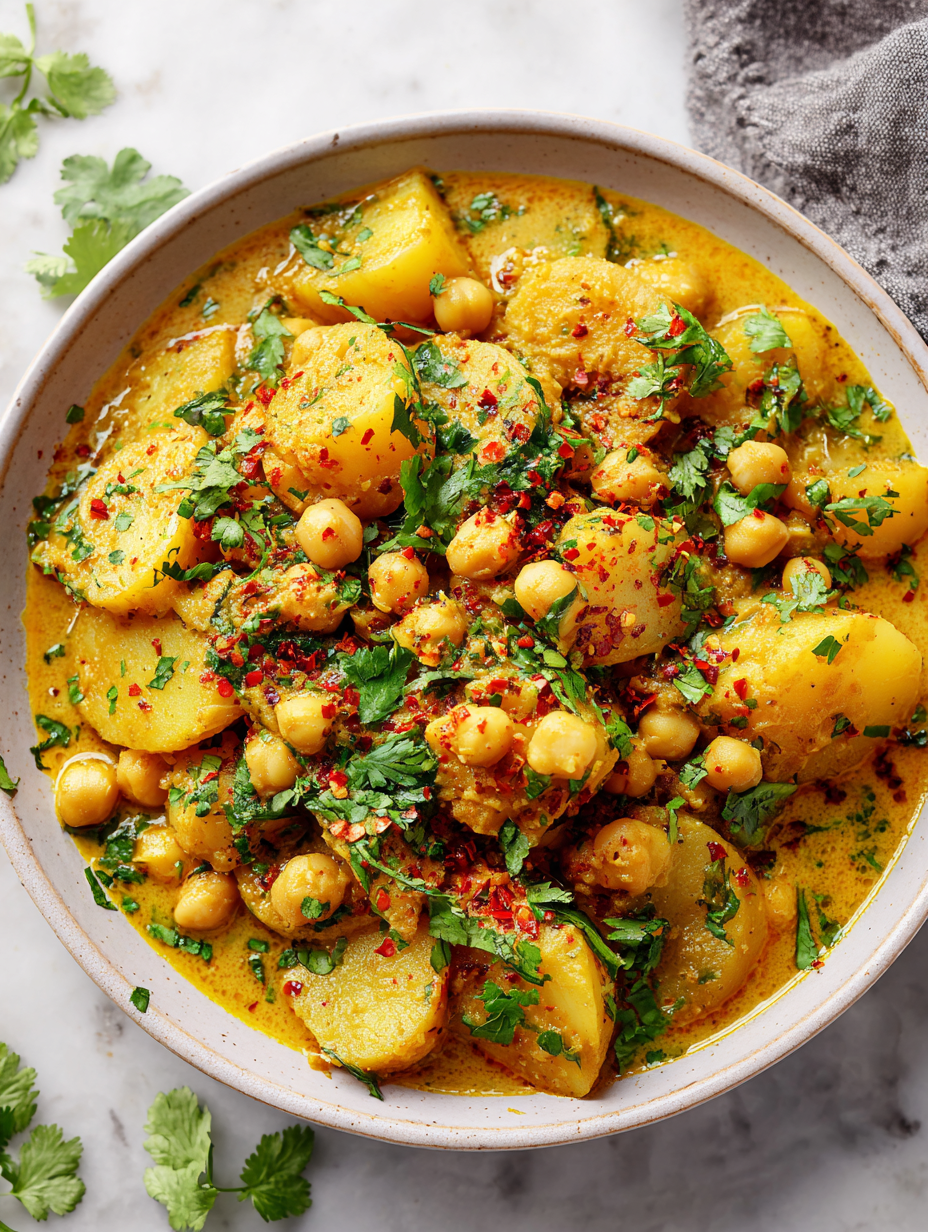
Chickpea Potato Curry
Ingredients
Equipment
Method
- Start by dicing your potatoes into 1-inch cubes and rinsing the chickpeas thoroughly. Set both aside for now.
- Heat the oil in a large heavy-bottomed pan over medium heat until shimmering. Add the chopped onion and sauté for about 5 minutes, until it becomes translucent and fragrant, filling your kitchen with a sweet aroma.
- Add the garam masala and turmeric to the pan, stirring quickly to toast the spices for about 30 seconds—you'll notice a fragrant aroma and the spices darken slightly.
- Next, toss in the diced potatoes, stirring to coat them evenly with the spices. Cook for 3-4 minutes until the potatoes start to turn golden around the edges.
- Pour in the canned diced tomatoes and coconut milk, stirring well to combine everything. Bring the mixture to a gentle simmer and listen for the sauce to start bubbling softly.
- Add the rinsed chickpeas and season with a pinch of salt. Stir everything together and reduce the heat to low. Cover the pan loosely and let it simmer gently for 15-20 minutes, until the potatoes are tender and the sauce has thickened slightly.
- Remove the lid and taste the curry. If the sauce is too thick, add a splash of water and stir. If it’s too thin, simmer uncovered for a few more minutes until it reaches your desired consistency.
- Squeeze a fresh lemon or lime over the curry, then give it a gentle stir to brighten the flavors. Your fragrant, hearty chickpea potato curry is now ready to serve.
- Serve the curry hot, garnished with fresh herbs if you like. Pair it with rice or flatbread for a satisfying meal that captures the comfort of street food with a home-cooked touch.
Notes
Pro tips for perfect curry
- Bolded mini-head: Toast spices briefly in oil to unlock their full aroma—don’t skip this step.
- Bolded mini-head: Use a heavy-bottomed pan for even heat distribution and to prevent scorching the spices.
- Bolded mini-head: Add potatoes early to the spice mixture to ensure they absorb flavors thoroughly.
- Bolded mini-head: Simmer gently—just enough to soften potatoes and meld flavors without breaking the chickpeas.
- Bolded mini-head: Finish with a squeeze of lemon right before serving to brighten the dish and balance the spices.
- Bolded mini-head: Keep an eye on the sauce consistency—if too thick, add a splash of water to loosen it.
- Bolded mini-head: Taste and adjust salt and spice levels at the end—your curry should be flavorful but balanced.
Common mistakes and how to fix them
- FORGOT to check spice to salt balance → Taste and adjust before simmering fully.
- DUMPED too much water in the sauce → Keep an eye on consistency; simmer longer if too thin.
- OVER-TORCHED the spices in the pan → Toast spices gently, watch for fragrant aroma without browning.
- MISSED to rinse chickpeas → Rinse canned chickpeas thoroughly to remove excess salt and canning liquid.
Quick fixes and pantry swaps
- When sauce is too thick, splash in hot water and stir until silky.
- If chickpeas are mushy, drain and rinse to refresh texture.
- Splash a little lemon juice if curry tastes flat or dull.
- Patch overburnt spices with extra coconut milk and a pinch of sugar.
- Shield delicate potatoes by simmering on lower heat to avoid breaking apart.
Prep, store, and reheat tips
- Chickpeas can be cooked or rinsed from a can ahead of time; store in an airtight container in the fridge for up to 3 days, where they develop a richer flavor and softer texture.
- Peel and chop potatoes in advance, then keep submerged in water in the fridge to prevent browning; use within 24 hours for best texture.
- The curry flavors deepen overnight—make it a day ahead, cool completely, and store in an airtight container in the fridge for up to 2 days; reheating will intensify the spices’ aroma.
- Reheat gently on the stove over low heat, stirring occasionally, until steaming hot and the sauce has thickened slightly—look for a silky, fragrant consistency.
- For longer storage, freeze the curry in portions for up to 2 months; defrost in the fridge overnight and reheat, expecting slight flavor mellowing but still satisfying.
Top questions about chickpea potato curry
1. Can I use dried chickpeas instead of canned?
Canned chickpeas are quick and convenient, but soaked dried ones have a nuttier flavor and firmer bite. Soak dried chickpeas overnight for best texture.
2. Can I replace potatoes with sweet potatoes?
Yes, you can substitute sweet potatoes for regular potatoes for a sweeter, softer texture, but keep in mind they cook faster.
3. Can I skip coconut milk?
Coconut milk adds richness and a slight sweetness. For a lighter version, use more tomatoes or broth instead.
4. How do I know when the curry is done?
Ensure potatoes are tender and sauce is thick enough to coat a spoon. The curry should smell fragrant and look vibrant when ready.
5. What tools do I need for this recipe?
Use a heavy-bottomed pan to prevent burning spices and to cook evenly. A good stirring spoon helps distribute heat and flavors.
6. My sauce is too runny, what do I do?
If the sauce is too thin, simmer uncovered for a few more minutes. For thickening, mash a few potato pieces into the sauce.
7. Should I add lemon juice during cooking or at the end?
Add a squeeze of lemon or lime just before serving to brighten the flavors and balance the spices.
8. How should I store and reheat leftovers?
Store leftovers in an airtight container in the fridge for up to 3 days. Reheat gently until steaming and fragrant.
9. Can I freeze this curry?
Yes, you can freeze the curry in portions for up to 2 months. Thaw overnight in the fridge and reheat gently on the stove.
10. How can I enhance the spice flavor?
If spices taste flat, toast them briefly in oil at the start to unlock their aroma and deepen flavor.
This chickpea potato curry feels like a quiet victory in the kitchen. Its familiar aroma and hearty texture remind me that simple ingredients, treated honestly, can deliver real comfort. It’s one of those dishes I return to when I need something nourishing without fuss.
Making this on a busy weeknight offers more than just a meal—it’s a small act of grounding. The smell of spices simmering, the tender potatoes, and the creamy chickpeas come together in a way that feels both familiar and just a little bit special. No matter how often I make it, it still surprises me how satisfying humble ingredients can be.