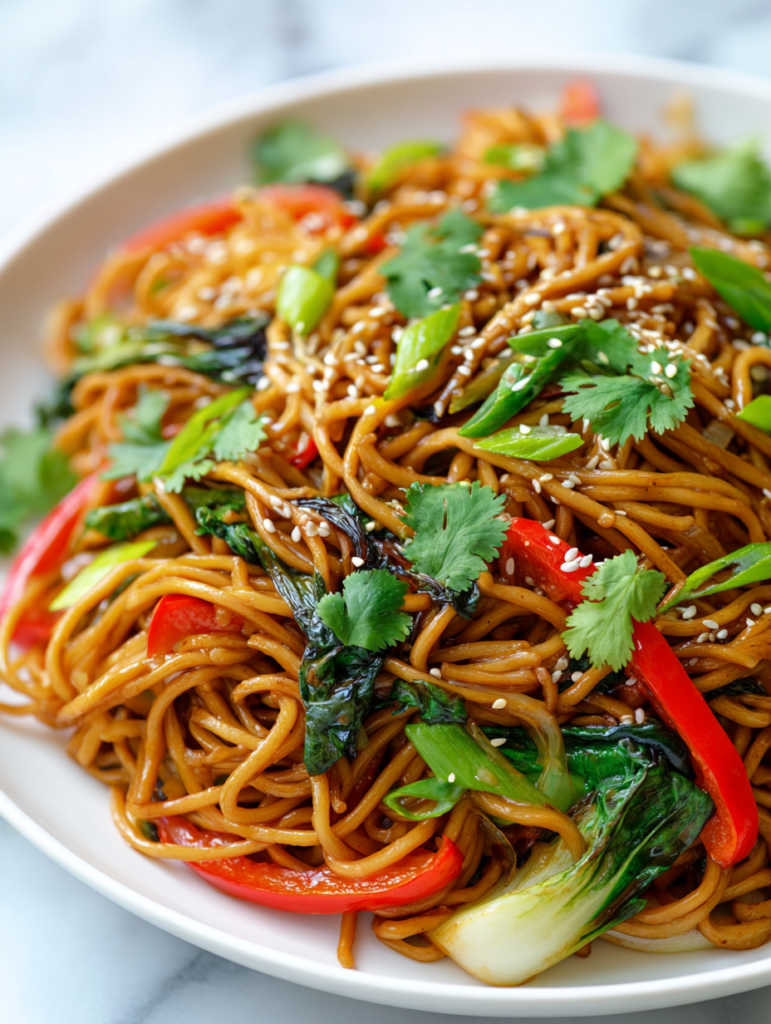
Recreating that smoky, slightly charred flavor of takeout chow mein at home has always felt like a small culinary victory for me. I love the challenge of balancing authenticity with what’s lurking in my pantry—no need for specialty sauces or hard-to-find ingredients. It’s about coaxing those familiar, nostalgic flavors from everyday staples, making it accessible and satisfying.
This vegan version isn’t just a meatless swap; it’s a deliberate attempt to capture the essence of crispy noodles, caramelized veggies, and that umami kick—all without relying on fish sauce or chicken broth. It’s a testament to how simple ingredients, when handled with care, can evoke complex, cozy memories. Plus, it’s quick enough for a weeknight but rich enough to feel like an occasion.
Focusing on how to recreate the nostalgic, smoky flavors of takeout chow mein using only plant-based ingredients, emphasizing the art of balancing authenticity with simple, everyday kitchen staples.
The story behind this recipe
This recipe came together after a late-night craving for the smoky, savory depths of takeout chow mein, but with a desire to keep everything entirely plant-based and simple. I remember the first time I tried to mimic that charred edge on the noodles without a proper wok—it was a happy mess of burnt bits and smoky smells that still made me smile. Since then, I’ve been obsessed with recreating that flavor at home, tweaking ingredients and techniques until it feels just right. It’s a dish born from curiosity, a bit of chaos, and a lot of tasting along the way.
Ingredient breakdown: key components
- Wheat noodles: I love using fresh, slightly chewy noodles that soak up the sauce, but you can swap for rice noodles if you prefer a lighter bite.
- Soy sauce: It’s the backbone of that savory umami punch—go for a good-quality, naturally brewed variety, or try coconut aminos for a sweeter, milder flavor.
- Vegetable oil: I use a neutral oil like grapeseed or canola for high heat, but sesame oil adds a lovely toasted aroma—just a splash at the end for depth.
- Veggies: Crunchy bell peppers and carrots are my go-to, but feel free to toss in bok choy or snap peas for extra freshness and color.
- Tofu: I prefer firm tofu, pressed well, then pan-fried until crispy—if you want a smoky note, a quick char in a hot pan works wonders.
- Garlic & ginger: These are the flavor punch—make sure to mince finely so they cook quickly, releasing that fragrant, spicy aroma.
- Optional extras: A dash of sriracha or a sprinkle of toasted sesame seeds can elevate the dish—use sparingly, taste and adjust!
Spotlight on key ingredients
Wheat noodles:
- I love using fresh, slightly chewy noodles that soak up the sauce, but you can swap for rice noodles if you prefer a lighter bite.
- Soy sauce: It’s the backbone of that savory umami punch—go for a good-quality, naturally brewed variety, or try coconut aminos for a sweeter, milder flavor.
- Vegetable oil: I use a neutral oil like grapeseed or canola for high heat, but sesame oil adds a lovely toasted aroma—just a splash at the end for depth.
Garlic & ginger:
- Garlic and ginger: Minced finely, they release a fragrant, spicy aroma and cook quickly, infusing the dish with warmth and depth.
- Veggies: Crunchy bell peppers and carrots retain their vibrant color and crispness, adding freshness and a slight sweetness as they fry.
Notes for ingredient swaps
- Wheat noodles: I love using fresh, slightly chewy noodles that soak up the sauce, but you can swap for rice noodles if you prefer a lighter bite.
- Soy sauce: It’s the backbone of that savory umami punch—go for a good-quality, naturally brewed variety, or try coconut aminos for a sweeter, milder flavor.
- Vegetable oil: I use a neutral oil like grapeseed or canola for high heat, but sesame oil adds a lovely toasted aroma—just a splash at the end for depth.
- Veggies: Crunchy bell peppers and carrots are my go-to, but feel free to toss in bok choy or snap peas for extra freshness and color.
- Tofu: I prefer firm tofu, pressed well, then pan-fried until crispy—if you want a smoky note, a quick char in a hot pan works wonders.
- Garlic & ginger: These are the flavor punch—make sure to mince finely so they cook quickly, releasing that fragrant, spicy aroma.
- Optional extras: A dash of sriracha or a sprinkle of toasted sesame seeds can elevate the dish—use sparingly, taste and adjust!
Equipment & Tools
- Large wok or deep skillet: Provides high-heat environment for stir-frying and charring.
- Slotted spoon: Helps toss ingredients and remove fried tofu easily.
- Small bowl: Mixes sauces and holds prepped ingredients.
- Tongs: Turns noodles and vegetables without breaking them.
Step-by-step guide to vegan chow mein
- Gather your equipment: a large wok or deep skillet, a slotted spoon, a small bowl for sauces, and tongs for tossing. Set everything within arm’s reach to keep the flow smooth.
- Prepare your noodles: cook wheat noodles in boiling water for 3-4 minutes until just al dente. Drain and rinse with cold water to stop cooking. Toss with a teaspoon of sesame oil to prevent sticking and set aside.
- Mix your sauce: in the small bowl, combine 3 tablespoons soy sauce, 1 tablespoon hoisin, 1 teaspoon rice vinegar, and a pinch of sugar. Stir until smooth. Set aside for easy access.
- Prep your veggies: julienne carrots, thinly slice bell peppers, and mince 3 cloves garlic and 1-inch piece of ginger. Keep separate in small bowls for quick assembly.
- Heat your wok: crank the heat to high (around 200°C/390°F). Add 1-2 tablespoons vegetable oil and let it shimmer. You want a hot surface for that smoky sear.
- Stir-fry the veggies: add garlic and ginger first, sauté until fragrant (about 30 seconds). Toss in carrots and peppers, stir-fry for 2-3 minutes until slightly softened but still crisp. Remove and set aside.
- Cook the tofu: if using, cut into small cubes, press out excess moisture, then pan-fry in the same hot wok until golden and crispy (about 4 minutes). Remove and set aside.
- Stir-fry the noodles: add a bit more oil if needed, then add noodles to the hot pan. Toss and fry for 2-3 minutes, allowing some edges to crisp up and develop a slight char.
- Combine everything: return veggies and tofu to the wok. Pour over the sauce, toss vigorously for 1-2 minutes, until everything is coated and heated through. The noodles should be slightly sticky with a smoky aroma.
- Final touches: sprinkle with chopped green onions or toasted sesame seeds if desired. Plate immediately, allowing the heat to keep the noodles slightly crispy.
Serve immediately straight from the wok onto warm plates. Garnish with fresh herbs or seeds if desired. Enjoy the fragrant, smoky aroma while still hot for best texture and flavor.
How to Know It’s Done
- Noodles are just tender, not mushy, with some crispy edges.
- Veggies retain their crunch and vibrant color.
- Sauce is glossy, coats ingredients evenly, with a smoky aroma.
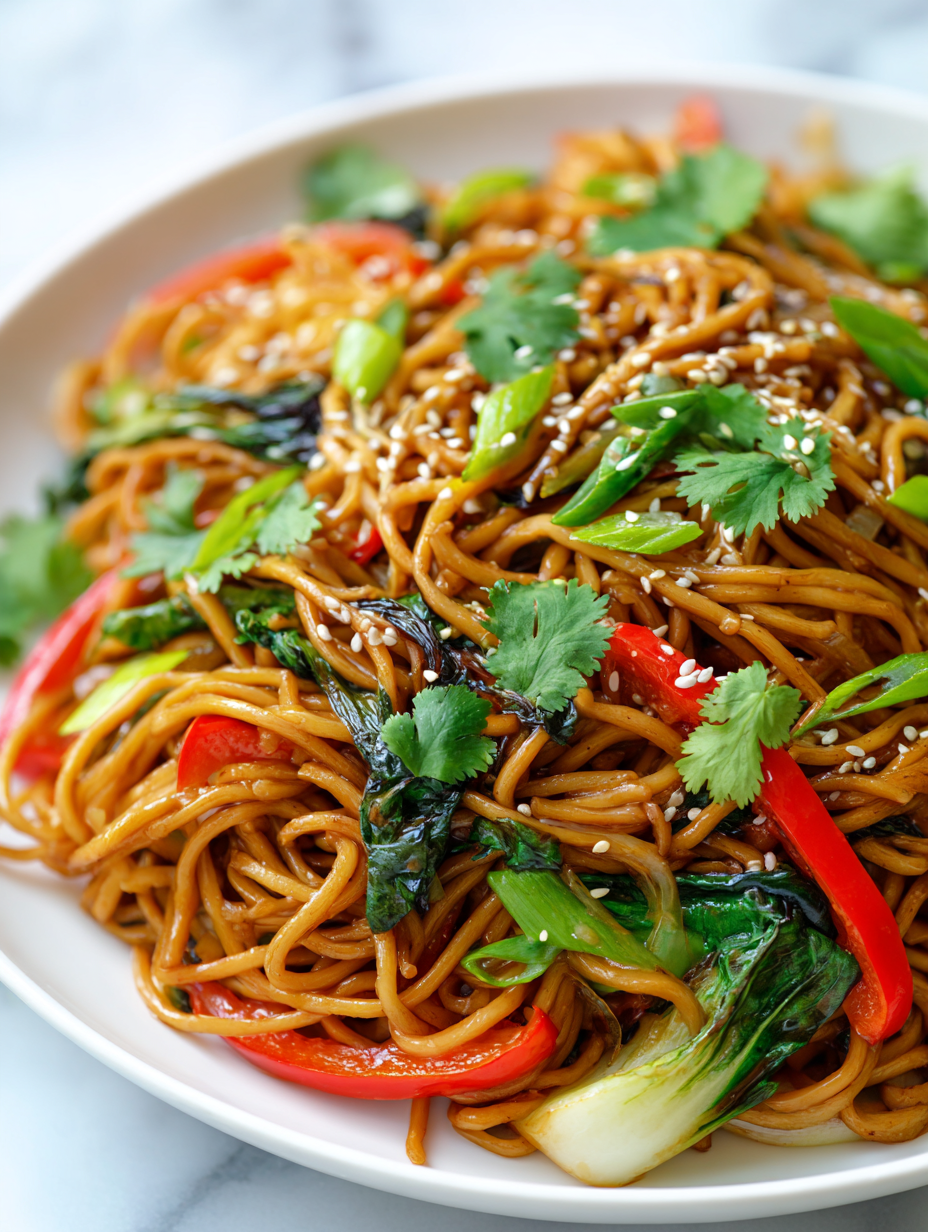
Vegan Smoky Chow Mein
Ingredients
Equipment
Method
- Cook the noodles in boiling water for 3-4 minutes until just al dente. Drain well, toss with a teaspoon of sesame oil to prevent sticking, and set aside.
- In a small bowl, whisk together soy sauce, hoisin, and rice vinegar to make your stir-fry sauce. Set aside within arm’s reach.
- Julienne the bell pepper and thinly slice the carrots. Mince the garlic and ginger finely, keeping each in separate small bowls.
- Heat your wok over high heat until shimmering. Add 1-2 tablespoons vegetable oil and let it heat until just starting to smoke.
- Add the minced garlic and ginger to the hot oil, sauté for about 30 seconds until fragrant and slightly sizzling.
- Toss in the sliced carrots and bell peppers, stir-frying for 2-3 minutes until they are vibrant, slightly softened, and still crisp. Remove and set aside.
- In the same hot wok, add the cubed tofu and fry for about 4 minutes, turning occasionally, until golden and crispy on the edges. Remove and set aside.
- Add a little more oil if needed, then add the cooked noodles to the hot wok. Toss and fry for 2-3 minutes, allowing some edges to crisp and develop a smoky aroma.
- Return the cooked vegetables and tofu to the wok. Pour over your prepared sauce and toss vigorously for 1-2 minutes, ensuring everything is coated and heated through. The noodles should be sticky and slightly charred in spots.
- Finish with a sprinkle of sliced green onions or toasted sesame seeds if desired. Serve immediately while hot, with an extra drizzle of sriracha or a squeeze of lime for added flavor.
Pro tips for perfect chow mein
- Use high heat to quickly sear ingredients, locking in flavor and creating smoky edges.
- Toss noodles constantly during stir-fry to prevent sticking and achieve even crispness.
- Add garlic and ginger at the right moment—just until fragrant, about 30 seconds—to avoid burning.
- For extra smoky flavor, let the noodles sit in the hot pan for a few seconds without stirring, then toss.
- Use a splash of sesame oil at the end to add depth and a toasted aroma, but don’t overpower the dish.
- Keep vegetables crunchy by adding them in stages—denser ones first, delicate last—to preserve texture.
- If noodles stick, sprinkle with a tiny bit of water and toss to loosen without over-saturating.
Common mistakes and how to fix them
- FORGOT to preheat wok → Ensure wok is hot before adding ingredients.
- DUMPED too much oil → Use just enough to coat pan, prevents greasy noodles.
- OVER-TORCHED noodles → Stir constantly to avoid burning, aim for a smoky aroma.
- MISSED sauce balance → Taste and adjust soy and vinegar for perfect flavor.
Quick fixes and pantry swaps
- If noodles are sticky, splash with a bit of water and toss to loosen.
- When noodles are overcooked, drain immediately and rinse with cold water.
- Splash a little soy sauce if dish lacks umami before serving.
- Patch burnt bits in the wok with a paper towel to prevent bitterness.
- Shield delicate veggies from overcooking by adding later in stir-fry.
Prep, store, and reheat tips
- Prep your vegetables and cook noodles ahead: store in airtight containers in the fridge for up to 2 days. The noodles might absorb some moisture, so toss with a tiny splash of oil before reheating to prevent sticking.
- Make the sauce in advance: keep it refrigerated for up to 3 days. Bright flavors may mellow slightly, so taste and adjust with a splash more soy or vinegar when reheating.
- Reheat in a hot skillet or wok: add a little oil, cook until sizzling, and smell the smoky aroma return—about 2-3 minutes. The noodles might lose some crispness, but stir-frying will revive it.
- Avoid freezing the cooked noodles and stir-fried veggies, as texture can become mushy. Instead, store the sauce separately and combine fresh for the best results.
- For a quick reheat, microwave in short bursts, stirring in between, until steaming hot. Add a splash of water or broth if the noodles seem dry or stiff.
Top questions about vegan chow mein
1. Can I use different protein sources?
Use firm tofu, pressed and pan-fried until crispy, to mimic the chewy texture and smoky flavor in the dish.
2. Can I substitute the noodles?
Yes, rice noodles work well for a lighter texture but soak up flavors differently—so adjust sauces accordingly.
3. How do I get the smoky flavor at home?
Preheat your wok until it’s shimmering hot before adding ingredients to achieve that smoky, charred flavor.
4. How do I keep the veggies crispy?
Cook the vegetables until just tender but still crisp—about 2-3 minutes on high heat—so they keep their vibrant color and crunch.
5. Can I prepare the sauce in advance?
Mix the sauce ahead of time and store in the fridge for up to 3 days; give it a quick stir before using.
6. How long should I stir-fry the noodles?
Stir-fry the noodles in the hot wok until edges are slightly crispy and they develop a slight smoky aroma, about 2-3 minutes.
7. What oil should I use for stir-frying?
Use a high smoke point oil like canola or grapeseed to prevent burning and ensure quick searing.
8. When do I add garlic and ginger?
Add garlic and ginger just until fragrant, about 30 seconds, to avoid burning and bitterness.
9. How should I reheat the dish?
Reheat leftovers in a hot skillet with a splash of oil and toss until sizzling and aromatic, about 2-3 minutes.
10. What if my noodles stick together?
If noodles stick together after cooking, toss with a tiny splash of water or oil to loosen before stir-frying.
This vegan chow mein isn’t just about mimicking takeout; it’s about capturing that smoky, crispy magic with simple ingredients. When you hear that crackle and smell the toasted noodles, it’s a small thrill that never gets old. Plus, it’s quick enough to throw together after a busy day but feels like a special treat.
Making this dish reminds me how much flavor can come from honest technique and fresh ingredients. It’s a reminder that good food doesn’t need to be complicated or fancy—just honest, well-handled, and a little daring with heat. Hope you enjoy your version as much as I do.