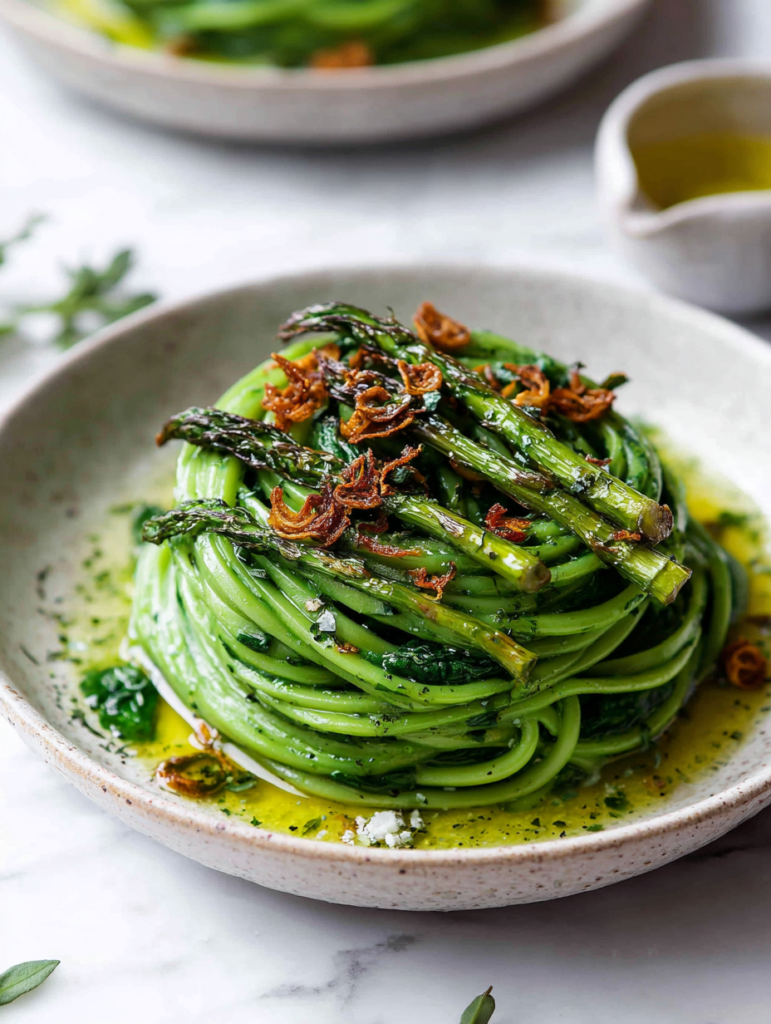
Many people toss out spinach stems without a second thought, but I’ve found they pack a surprising punch of flavor and texture. Turning those overlooked bits into a starring ingredient in pasta feels like reclaiming something discarded and elevating it to a new level.
This recipe is about more than just a quick meal; it’s a little act of respect for the humble, often ignored parts of our greens. The stems add a subtle earthiness and a slight crunch that contrast beautifully with tender pasta and wilted leaves, making every bite more interesting.
It’s the kind of dish that feels honest and unpretentious—an everyday reminder that flavor lives in the details, even in the overlooked, the discarded, and the everyday ingredients we often dismiss.
Focusing on the overlooked power of fresh spinach stems in creating a deeply flavorful, textured pasta dish that transforms simple ingredients into a vibrant, satisfying meal.
The story behind this recipe
- I first stumbled on this idea during a chaotic week when I had a bunch of fresh spinach and no real plan. I love turning what’s usually dismissed into something worth savoring. That moment of chopping stems and realizing they could add more than just crunch was a small revelation. It’s honest, it’s simple, and it’s about making the most of what’s in front of me.
- heading:
Ingredient breakdown: key components
- Fresh spinach: I love the bright, verdant aroma when I sauté the leaves; you might prefer a milder, wilted taste by cooking longer.
- Spinach stems: Crunchy and slightly earthy, I chop them finely to add texture; if you’re short on time, skip the stems or blend them into the sauce.
- Garlic: I crush and sauté until fragrant, about 30 seconds; for a milder flavor, add it later or use less if you’re sensitive to raw garlic’s bite.
- Olive oil: I drizzle generously to get that rich, fruity scent; if you want a lighter dish, cut back but don’t skip it, or try a neutral oil.
- Pasta: I prefer al dente, the way it offers a slight resistance; overcooked makes it mushy, so keep an eye on the clock—about 8 minutes in boiling water.
- Lemon juice: Brightens the whole dish with a zesty shimmer; add just before serving to keep that fresh, citrus punch alive.
- Nutritional yeast: It adds a cheesy, umami depth; sprinkle a little at the end — or skip if you’re avoiding yeasty flavors.
Spotlight on key ingredients
Fresh spinach:
- Spinach: I love the vibrant, grassy aroma when I sauté the leaves; they wilt quickly, releasing a subtle sweetness.
- Spinach stems: Crunchy and slightly earthy, I chop them finely to add texture; if you’re short on time, skip the stems or blend them into the sauce.
Garlic & Olive Oil:
- Garlic: I crush and sauté until fragrant, about 30 seconds; it releases a warm, pungent aroma that fills the kitchen.
- Olive oil: I drizzle generously to get that rich, fruity scent; it coats everything with a silky texture and brings out the garlic’s aroma.
Notes for ingredient swaps
- Dairy-Free: Nutritional yeast can be swapped for grated dairy-free cheese. It offers a cheesy flavor but less creaminess.
- Pasta: Use gluten-free or legume-based pasta to suit dietary needs. Keep in mind they may have a different texture or bite.
- Spinach: Swap with kale or Swiss chard for a heartier leaf; they add more bitterness and require longer cooking times.
- Olive Oil: Coconut or avocado oil can be used for a different flavor profile; they may add a subtle aroma or richer mouthfeel.
- Lemon Juice: Lime juice is a good substitute, providing a similar bright, zesty punch, but slightly different in aroma.
- Garlic: Shallots or leek can replace garlic for a milder, sweeter flavor; sauté longer to soften their sharper notes.
- Stems: If stems are too tough or you want a smoother sauce, blend them into the sauce for a velvety texture.
Equipment & Tools
- Large pot: Boil pasta quickly and evenly.
- Large skillet: Sauté greens and toss pasta for flavor.
- Sharp knife: Chop stems and mincing garlic.
- Tongs: Mix and serve pasta without breaking it.
- Measuring spoons: Measure lemon juice and seasonings precisely.
- Lemon zester: Add fresh zest for aroma and flavor.
Step-by-step guide to vegan spinach pasta
- Equipment & Tools: Boil-proof pot for pasta, large skillet for sautéing, sharp knife for chopping, tongs for tossing, measuring spoons, and a lemon zester for finishing.
- Bring a large pot of salted water to a rolling boil (about 100°C/212°F). Add pasta and cook until just al dente, about 8 minutes. Drain, reserving a cup of pasta water.
- While pasta cooks, heat a generous drizzle of olive oil in a large skillet over medium heat (around 160°C/320°F). Add chopped spinach stems first, sauté for 2 minutes until slightly tender.
- Add minced garlic to the skillet, cook until fragrant (about 30 seconds). Then toss in the spinach leaves, stirring until wilted and fragrant, about 2 more minutes. If the mixture looks dry, splash in some reserved pasta water.
- Combine the drained pasta with the sautéed greens in the skillet. Toss well over medium heat for 1-2 minutes, allowing flavors to meld. The pasta should shimmer with a light coating of oil and greens.
- Finish with a squeeze of fresh lemon juice, a sprinkle of nutritional yeast, and freshly ground black pepper. Toss again to evenly distribute.
- Rest the pasta for 1-2 minutes off the heat to let flavors settle. Plate immediately, garnished with extra lemon zest or a drizzle of olive oil if desired. Serve hot.
Allow the pasta to sit for a minute off heat to settle flavors. Serve immediately with optional extra lemon zest or olive oil for added brightness. Garnish with a sprinkle of nutritional yeast or black pepper for extra depth.
How to Know It’s Done
- Pasta is just tender but not mushy, with a slight bite.
- Spinach stems are tender but still have a slight crunch.
- The dish has a bright, fragrant aroma with lemon and garlic coming through.
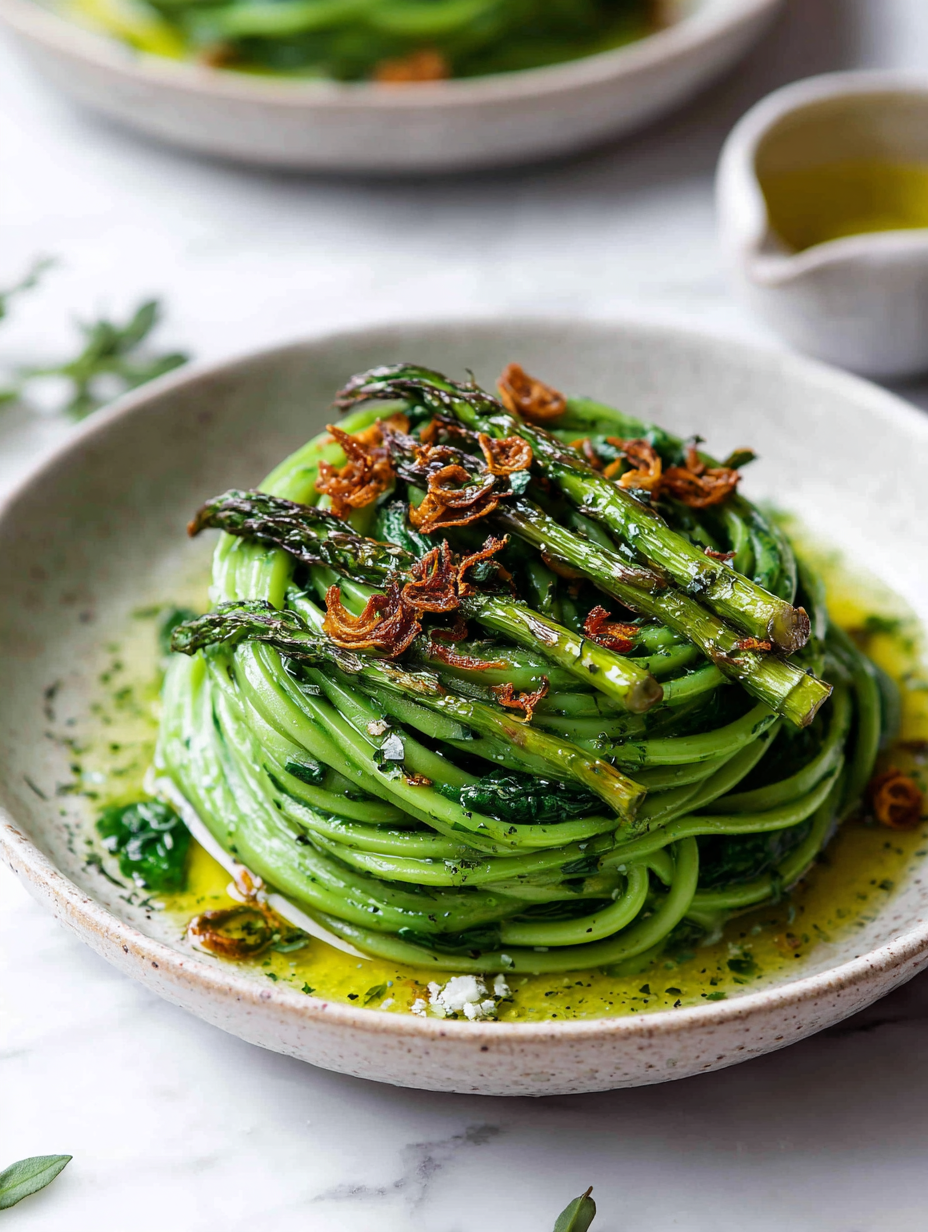
Vegan Spinach Pasta with Crunchy Stems
Ingredients
Equipment
Method
- Bring a large pot of salted water to a rolling boil. Add the pasta and cook until just al dente, about 8 minutes, until it has a slight resistance when bitten. Drain and set aside, reserving a small cup of pasta water.
- While the pasta cooks, heat olive oil in a large skillet over medium heat. Add the finely chopped spinach stems and sauté for about 2 minutes until they start to soften and release a faint earthy aroma.
- Add the minced garlic to the skillet and cook for about 30 seconds until fragrant, stirring constantly to prevent burning. You should smell a warm, pungent aroma filling the kitchen.
- Next, add the fresh spinach leaves to the skillet and stir until they wilt down, about 2 minutes. If the mixture looks dry, splash in a little of the reserved pasta water to keep everything moist and shiny.
- Pour the drained pasta into the skillet with the greens, tossing gently with tongs to combine everything evenly. Cook together for another 1-2 minutes until the flavors meld and the pasta is coated with the greens and oil.
- Squeeze the fresh lemon juice over the pasta and add the nutritional yeast, stirring well to distribute the flavors. Season with salt and black pepper to taste, then give everything a final toss.
- Remove the skillet from heat and let the pasta sit for a minute to settle the flavors. Serve immediately, garnished with extra lemon zest or a drizzle of olive oil if desired, and enjoy the vibrant, crunchy-tender bite.
Pro tips for vibrant vegan pasta
- Use fresh spinach stems chopped finely for added crunch and earthiness.
- Sauté stems first until slightly tender, then add greens for vibrant color and flavor.
- Crush garlic just before adding to release maximum aroma and prevent bitterness.
- Cook pasta al dente, tasting for slight resistance, to keep texture lively and not mushy.
- Splash reserved pasta water into the greens for a silky sauce and to help ingredients meld.
- Finish with lemon juice off heat to preserve brightness and avoid dulling the fresh citrus flavor.
- Toss pasta and greens over medium heat briefly to meld flavors without overcooking.
Common mistakes and how to fix them
- FORGOT to check pasta doneness → Taste test for slight bite.
- DUMPED spinach stems too early → Sauté stems longer for tenderness.
- OVER-TORCHED garlic → Reduce heat and stir constantly.
- MISSED flavor balance → Add lemon and salt gradually, tasting often.
Quick fixes and pantry swaps
- If sauce is too thick, splash in hot water to loosen it.
- When pasta sticks, toss with a little olive oil immediately.
- Splash lemon juice if greens turn bitter during sautéing.
- Patch over burnt garlic by removing the burnt bits quickly.
- Shield delicate greens with a lid if they start to crackle excessively.
Prep, store, and reheat tips
- Prepare the spinach stems and leaves by chopping and washing ahead of time; store in airtight container in the fridge for up to 2 days. The fresh aroma and bright green color will fade if stored longer.
- Cook the pasta al dente, drain, and toss with a little olive oil. Keep in an airtight container in the fridge for up to 24 hours. Reheat gently to avoid mushiness, expecting a slight loss of firmness.
- The sautéed greens and stems can be made a day in advance; reheat in a skillet over low heat, adding a splash of water or reserved pasta water to revive moisture and flavor.
- Leftovers can be stored in the fridge for up to 2 days. Reheat in a skillet over low heat, stirring frequently, until warmed through and fragrant, noticing the greens soften further and aroma intensifies.
- For best flavor retention, add lemon juice and fresh toppings just before serving. Cold pasta may clump slightly; freshen with a quick toss and a squeeze of lemon to brighten flavors.
Top questions about vegan spinach pasta
1. Can I omit the spinach stems?
Fresh spinach stems add a surprising crunch and earthy flavor that you won’t get from leaves alone. Skip them if you’re in a rush or prefer softer textures.
2. How long should I cook the stems?
Cooking the stems until just tender preserves their crunch and flavor. Overcooking makes them mushy and less flavorful.
3. What if I don’t have nutritional yeast?
Using nutritional yeast gives a cheesy umami note, but you can substitute with vegan cheese or skip altogether for a lighter taste.
4. Can I use lime instead of lemon?
Lemon juice brightens the dish with a zesty shimmer that balances the earthiness of the greens. Lime juice is a good alternative.
5. How do I know when the pasta is done?
Cook pasta al dente, about 8 minutes, to keep it firm and prevent mushiness after tossing with greens.
6. Can I use gluten-free pasta?
Yes, gluten-free or legume-based pastas work well but may have different textures. Adjust cooking time accordingly.
7. How long should I sauté the garlic?
Sauté the garlic just until fragrant, about 30 seconds, to avoid bitterness and maximize aroma.
8. Why add pasta water?
Stir reserved pasta water in to loosen the greens and create a silky, cohesive sauce that coats each strand.
9. How do I reheat the pasta?
Reheat leftovers gently in a skillet over low heat, adding a splash of water or lemon to refresh flavors without sogginess.
10. When should I add lemon juice?
Adding lemon juice after cooking preserves its bright, fresh flavor, preventing dullness from heat.
This dish feels like a little victory every time I make it—the way the earthy stems and tender leaves come together with that bright lemon zing. It’s honest, uncomplicated, and somehow makes me appreciate the humble green a little more.
In a world that moves so fast, reconnecting with simple ingredients and giving them a moment to shine keeps cooking fresh and real. No matter how often I make this, it reminds me that the best flavors come from respecting what’s in front of me, with a little patience and attention.