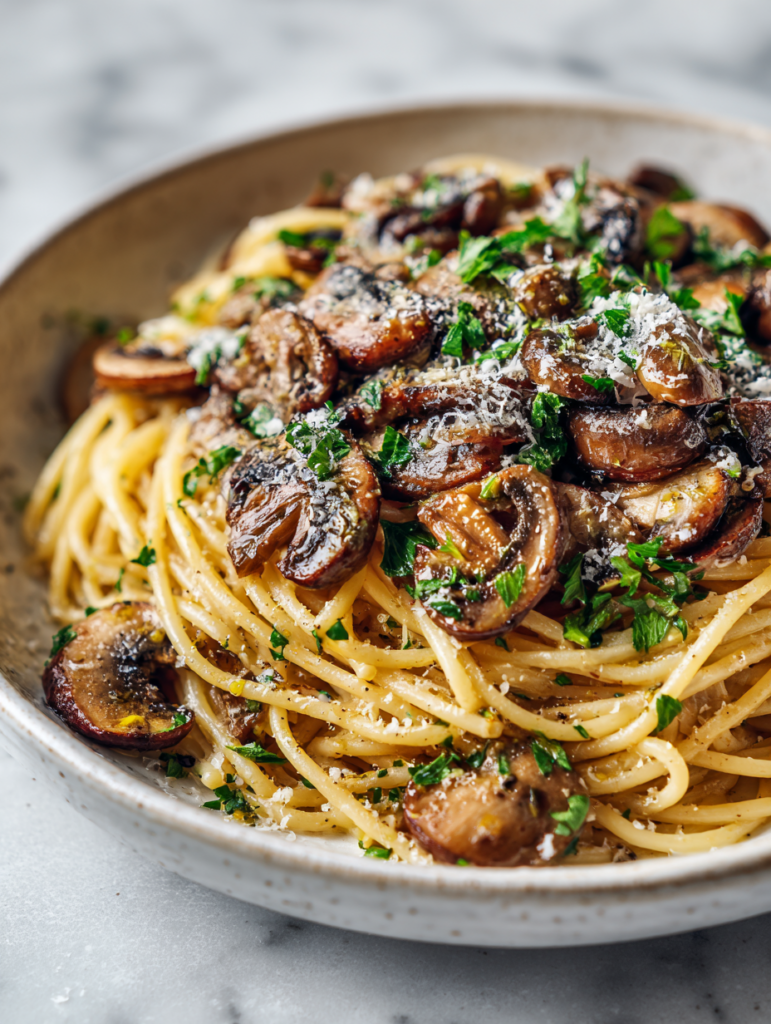
This vegan mushroom pasta is my go-to when I need something warm and satisfying, but I want to keep it simple and honest. Mushrooms, with their meaty texture and rich, earthy aroma, really carry the dish. I love how a good splash of soy sauce or a dash of smoked paprika can turn humble ingredients into something deeply flavorful.
Making this dish feels like a small act of rebellion against the overly processed, flavorless vegan options out there. It’s all about respecting the ingredients, letting the mushrooms shine, and embracing that umami punch. Plus, it’s quick enough to throw together after a busy day but hearty enough to feel like a proper meal.
Focusing on the earthy, umami-rich qualities of mushrooms to create a comforting, deeply flavored vegan pasta that feels like a warm hug after a long day.
The story behind this recipe
- I remember the first time I cooked this dish after a long day at work. The earthy smell of mushrooms filling the kitchen felt like a little reward, a moment of calm amid chaos. It’s become my go-to comfort food, especially when I want something honest, filling, and easy.
- This recipe was born from a craving for simplicity but with a deep flavor punch. I wanted a dish that captures the richness of umami without relying on cheese or cream, just pure, natural ingredients. Over time, I’ve tweaked it to balance the textures and bring out that smoky, meaty essence of the mushrooms.
- heading
- story_type
Key Ingredients Breakdown
- Cremini mushrooms: I love their deep, meaty flavor that adds richness. If you can’t find them, shiitake work well for a smoky twist.
- Garlic: The aroma when garlic hits the hot pan is unbeatable. Skip it if you’re sensitive, but it really amps up the earthy notes.
- Olive oil: I use good-quality extra virgin for that fruity, pungent kick. A neutral oil can dull the flavor, so choose carefully.
- Lemon zest: Brightens the dish with a zingy contrast to the earthiness. If lemon isn’t handy, a splash of vinegar can work as a quick substitute.
- Nutritional yeast: Offers a cheesy, umami punch without dairy. If you’re out, a dash of miso adds depth, but it’s not quite the same.
- Pasta: I prefer a hearty, rustic shape like pappardelle or rigatoni. Thin spaghetti can get lost in the sauce, so pick something with a bit of bite.
- Soy sauce: Adds salt and a smoky depth that complements the mushrooms perfectly. Tamari is a good gluten-free alternative, but reduce the quantity slightly.
Spotlight on key ingredients
Cremini mushrooms:
- I love their deep, meaty flavor that adds richness. If you can’t find them, shiitake work well for a smoky twist.
- Garlic: The aroma when garlic hits the hot pan is unbeatable. Skip it if you’re sensitive, but it really amps up the earthy notes.
Olive oil & Lemon zest:
- Olive oil: I use good-quality extra virgin for that fruity, pungent kick. A neutral oil can dull the flavor, so choose carefully.
- Lemon zest: Brightens the dish with a zingy contrast to the earthiness. If lemon isn’t handy, a splash of vinegar can work as a quick substitute.
Notes for ingredient swaps
- Mushrooms: Cremini are my favorite for their depth, but portobellos work if you want a meatier bite. Shiitake add a smoky edge, too.
- Olive Oil: Use good-quality extra virgin for richness, but a neutral oil like grapeseed won’t drown out the flavors.
- Garlic: Fresh is best, but roasted garlic can lend a sweeter, milder note if you’re out of fresh.
- Lemon Zest: Brightens everything up—if lemons are scarce, a splash of apple cider vinegar can mimic that tang.
- Nutritional Yeast: The cheesy umami is key, but miso paste can be a quick swap, just use a little less salt.
- Pasta: Thick shapes like rigatoni hold sauce better; if you want a lighter vibe, try whole wheat spaghetti.
- Soy Sauce: Adds salt and smoky depth; tamari is a gluten-free option, but cut back slightly on quantity to avoid overpowering.
Equipment & Tools
- Large frying pan: For even sautéing and browning mushrooms.
- Large pot: To cook the pasta efficiently.
- Colander: To drain pasta without losing bits.
- Wooden spoon: For stirring without damaging the pan.
- Chef’s knife: For slicing mushrooms and mincing garlic.
Step-by-step guide to vegan mushroom pasta
- Gather all equipment: a large frying pan (for even heat), a sharp knife (for clean slicing), and a wooden spoon (for stirring). Set water to boil for pasta—salty like the sea, about 1 tbsp per liter, and bring to a rolling boil.
- Slice mushrooms: Clean them gently with a damp cloth, then slice into thick pieces—about 1/2 inch—so they retain their meaty texture and cook evenly. Mince garlic finely while waiting.
- Cook pasta: Add pasta to boiling water, stir immediately to prevent sticking. Cook until al dente—about 8-10 minutes. Taste test a piece; it should have a slight bite but not be firm.
- Sauté mushrooms: Heat a generous glug of olive oil in the pan over medium-high—about 180°C/356°F—until shimmering. Add mushrooms in an even layer. Cook without stirring for 2-3 minutes until edges turn golden, then stir and cook another 3-4 minutes until they release their juices and become tender.
- Add garlic and seasonings: Toss in minced garlic, a pinch of smoked paprika, and a splash of soy sauce. Cook for 30 seconds until fragrant. Watch for the garlic to turn golden; if it burns, lower the heat immediately.
- Make the sauce: Deglaze the pan with a splash of vegetable broth or pasta water (about 1/4 cup). Scrape up any browned bits. Stir in nutritional yeast and lemon zest—oozy and bright—then simmer until slightly thickened, about 2 minutes.
- Combine pasta and sauce: Drain the pasta, reserving a bit of pasta water. Toss pasta into the mushroom mixture, adding a splash of reserved water if needed to loosen. Mix well until the pasta is coated and glossy. Cook for another minute to marry flavors.
- Finish and plate: Taste for seasoning—add more soy or lemon if needed. Serve immediately, garnished with chopped parsley or extra lemon zest. Let rest for 2 minutes before serving to let flavors settle.
- Final touch: The sauce should cling to the pasta, mushrooms tender but not mushy, and the aroma rich with earthy, smoky notes. The dish should shimmer slightly from the oil and flavors, ready to enjoy.
Serve immediately on warm plates, topped with fresh herbs or lemon zest. Let sit for 2 minutes to allow flavors to meld before enjoying.
How to Know It’s Done
- Mushrooms are golden and slightly caramelized, not soggy.
- Pasta is al dente, with a slight bite, not mushy or undercooked.
- Sauce is glossy, flavorful, and clings to the noodles without excess liquid.
Vegan Mushroom Pasta
Ingredients
Equipment
Method
- Bring a large pot of salted water to a rolling boil, then add your pasta and cook until al dente, about 8-10 minutes. Drain and set aside, reserving a splash of pasta water.
- While the pasta cooks, heat a large frying pan over medium-high heat and add olive oil. Once shimmering, add the sliced cremini mushrooms in an even layer. Let them cook undisturbed for about 2-3 minutes until edges turn golden and crispy.
- Stir the mushrooms and cook for another 3-4 minutes until they release their juices and become tender, with a rich, caramelized aroma filling the kitchen.
- Add the minced garlic to the pan and cook for about 30 seconds until fragrant, making sure it doesn't burn. Then, splash in the soy sauce, stirring quickly to coat the mushrooms evenly.
- Pour in the vegetable broth or reserved pasta water to deglaze the pan, scraping up any browned bits from the bottom. Stir in the lemon zest and nutritional yeast, allowing the mixture to simmer gently and thicken slightly, about 2 minutes.
- Add the drained pasta to the pan, tossing well to coat every strand with the mushroom sauce. If the sauce seems too thick, add a splash of the reserved pasta water to loosen it up and create a glossy finish.
- Cook everything together for another minute, allowing the flavors to meld and the pasta to soak up the sauce. Taste and adjust seasoning if needed—perhaps a little more soy or lemon zest for brightness.
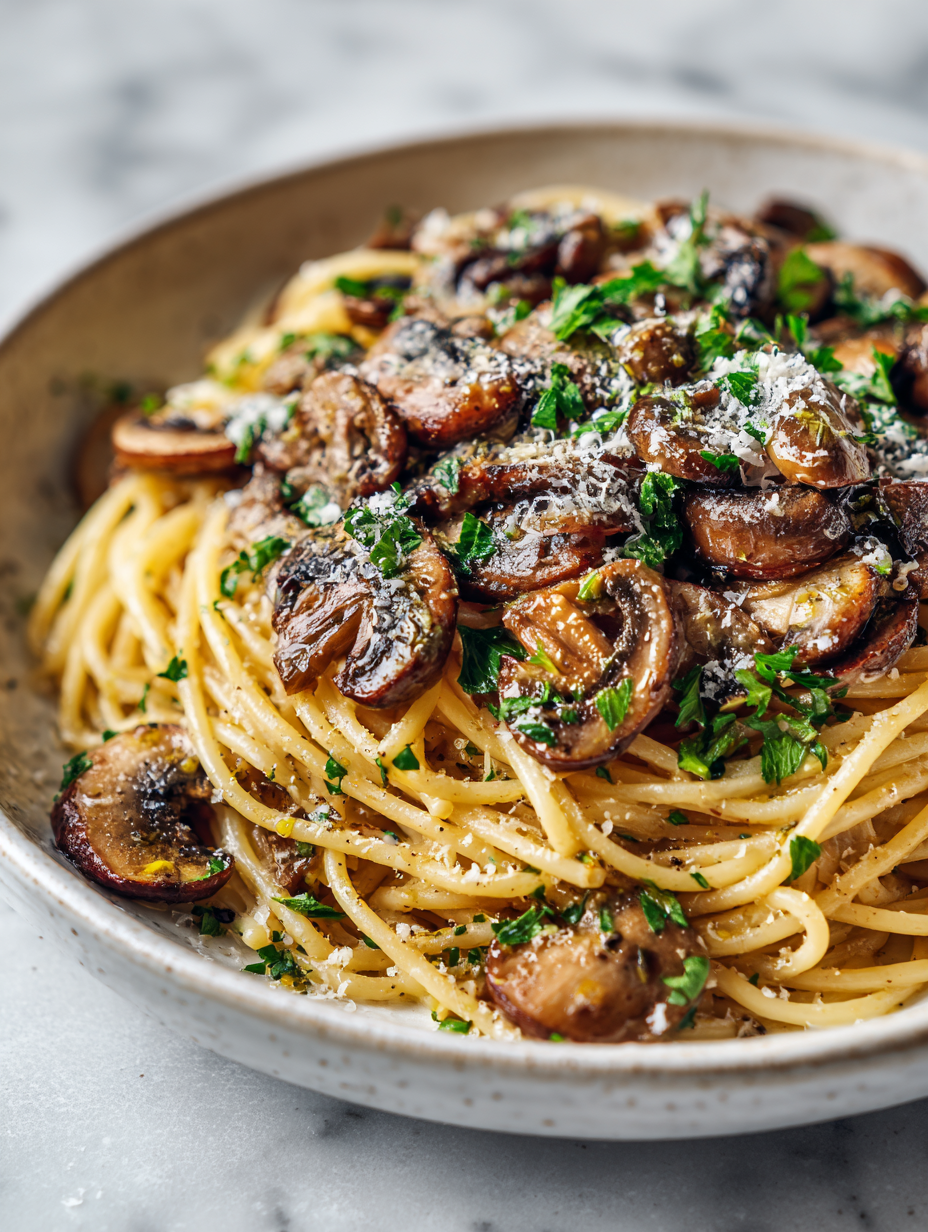
- Serve immediately on warm plates, garnished with extra lemon zest or fresh herbs if desired. Enjoy the rich, earthy aroma and the velvety, umami-packed texture of this hearty vegan mushroom pasta.
Pro tips for perfect vegan mushroom pasta
- Bolded mini-head: Use high heat for mushrooms → Achieves a deep, caramelized flavor with a slight crisp at the edges.
- Bolded mini-head: Don’t overcrowd the pan → Ensures mushrooms brown evenly, not steamed, for maximum umami.
- Bolded mini-head: Add garlic towards the end → Prevents burning, keeps aroma bright and pungent.
- Bolded mini-head: Reserve pasta water → Use it to loosen sauce, adding a starchy, silky finish.
- Bolded mini-head: Stir constantly when making sauce → Prevents sticking and ensures an even, glossy coating.
- Bolded mini-head: Finish with lemon zest → Adds a fresh, zesty contrast that brightens earthy mushroom flavors.
- Bolded mini-head: Rest pasta briefly before serving → Lets flavors settle and prevents clumping for a better texture.
Common mistakes and how to fix them
- FORGOT to adjust heat → Mushrooms burn or stay soggy, fix by controlling pan temperature.
- DUMPED ingredients too early → Wait until mushrooms are golden before adding liquids.
- OVER-TORCHED garlic → Burnt garlic turns bitter, add later or lower heat.
- SKIPPED seasoning at the end → Final taste can be flat, always taste and adjust.
Quick fixes and pantry swaps
- When sauce is too thick, splash in warm water to loosen it gently.
- If mushrooms release too much water, increase heat to caramelize and intensify flavor.
- Splash soy sauce when mushrooms seem dull—shimmers add depth and smoky aroma.
- Patch over burnt garlic with fresh minced garlic—quick lift in flavor and aroma.
- Shield the pasta with a quick stir if it clumps—rescue with a splash of reserved pasta water.
Prep, store, and reheat tips
- Prep mushrooms: Clean and slice the mushrooms the day before. Keep them in an airtight container in the fridge for up to 24 hours. They’ll stay firm and fresh, ready to sear.
- Cook pasta ahead: Boil the pasta until al dente, then drain and toss with a little olive oil to prevent sticking. Store in an airtight container in the fridge for up to 2 days. Reheat in boiling water or briefly in the microwave until hot and shiny.
- Make the sauce in advance: Prepare the mushroom sauce up to 1 day ahead. Let it cool completely, then store in a sealed jar or container in the fridge. Reheat gently on the stove over low heat, stirring often, until warmed through and fragrant.
- Flavor deepening: The flavors develop more overnight, especially the garlic and mushroom essence. Expect a richer, more concentrated aroma when reheated. The sauce might thicken slightly — stir in a splash of water or broth to loosen it before serving.
- Reheating tips: When reheating, do so slowly over low heat, tasting and adjusting seasoning. The sauce should shimmer and smell earthy and smoky, the pasta hot but not soggy, ready to serve without losing texture.
Top questions about vegan mushroom pasta
1. Can I use different mushrooms?
Use cremini or shiitake mushrooms for deeper flavor and smoky notes. They release earthy aromas as they cook, giving your dish that umami punch.
2. How should I cook the pasta?
Cook pasta until just al dente, then toss with the sauce. Overcooked pasta turns mushy and loses its bite.
3. How do I get the mushrooms browned?
Sauté mushrooms on high heat until golden and slightly crispy at the edges. This intensifies their flavor and prevents sogginess.
4. When should I add the garlic?
Add garlic at the end of sautéing to keep its aroma bright and sharp. Burning garlic makes it bitter—so watch the pan.
5. Can I substitute nutritional yeast?
Use nutritional yeast for cheesy flavor or miso for depth if you’re out. Both add umami without dairy.
6. What’s the best way to loosen the sauce?
Reserve a cup of pasta water to loosen the sauce if it gets too thick. Its starchy quality helps everything cling beautifully.
7. How do I add brightness to the dish?
Lemon zest brightens earthy mushroom flavors and adds a fresh note. A splash of vinegar can substitute if lemons aren’t available.
8. Can I use a different oil?
Use good-quality olive oil for richness and depth. A neutral oil won’t bring the same fruity pungency that complements mushrooms.
9. How do I reheat leftovers?
Reheat gently on the stove, stirring often, until hot and fragrant. The sauce should shimmer and smell earthy with smoky hints.
10. What common mistakes should I avoid?
Be careful not to overcook the pasta or burn the garlic. Adjust heat and timing, tasting frequently for best flavor and texture.
Cooking this vegan mushroom pasta feels like reconnecting with honest flavors that don’t need bells and whistles. The earthy aroma, the tender mushrooms, the glossy sauce—all simple, yet full of personality. It’s a reminder that good ingredients, treated well, truly shine.
Whenever I make this dish, I think about how comforting it is to keep things straightforward but layered. It’s perfect for busy nights or when I want something nourishing without fuss. Sometimes, the simplest meals leave the strongest impressions, and this one definitely does.