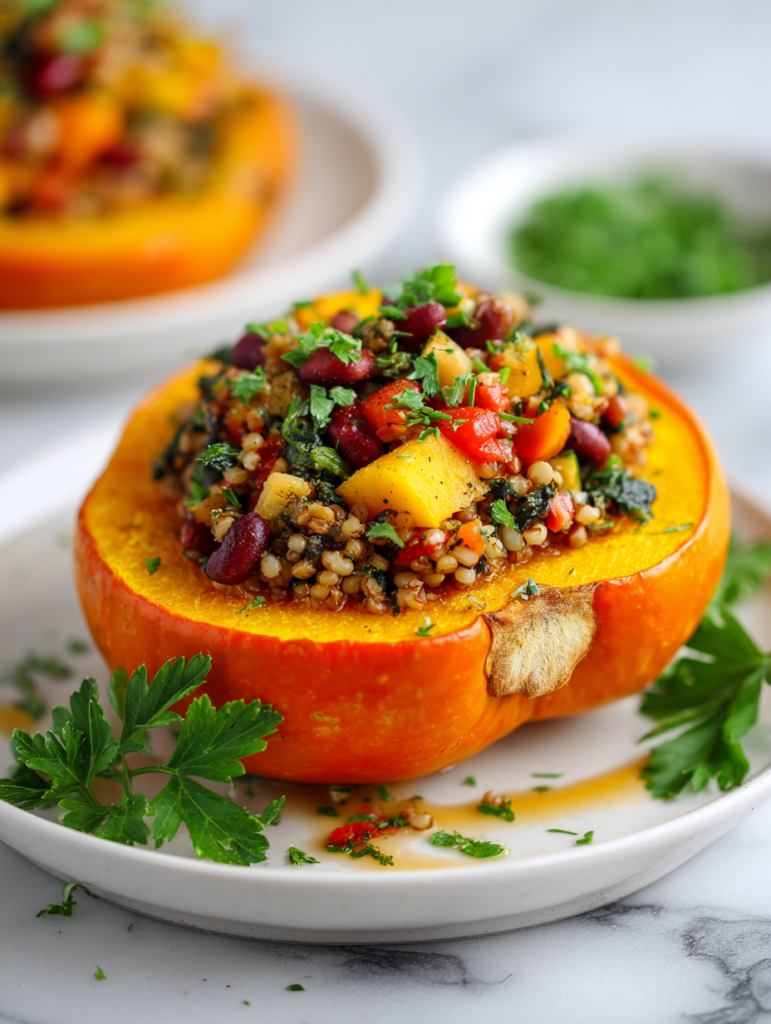
There’s something oddly satisfying about slicing into a roasted squash and revealing a warm, tender cavity filled with spicy, colorful stuffing. It’s like a little autumn treasure chest, bursting with flavors that celebrate the season’s harvest. I love how the sweet, caramelized notes of the squash complement the fiery kick of chili, the crunch of toasted nuts, and the freshness of herbs—all in one cozy bite.
This dish feels like an edible ode to fall, but it’s also wildly forgiving and adaptable. I’ve thrown in everything from cranberries to smoky paprika, depending on what’s lingering in my pantry. The best part? The whole thing comes together in one pan, which means less fuss and more time savoring that first forkful while the kitchen smells of roasting squash and toasted spices.
It’s a reminder that even simple ingredients can surprise you when paired thoughtfully. The unexpected joy of each bite, the way the flavors dance—there’s a quiet celebration in this dish that keeps me coming back to it every autumn. Plus, it’s vegan, so everyone can enjoy that warm, filling comfort without a second thought.
Focusing on the unexpected joy of combining seasonal autumn squash with vibrant, spicy stuffing ingredients that celebrate the harvest and warm your kitchen.
Unexpected Joy of Autumn Squash
- There’s a quiet thrill in stuffing those tiny squash halves, watching the oven turn them golden and fragrant.
- I remember the first time I tossed in pomegranate seeds—burst of tartness that felt like a little victory.
- Chopping fresh herbs at dawn, the aroma feels like a secret handshake with autumn’s air.
- Sometimes, I cheat and use pre-cooked grains; it’s a small act of rebellion that still tastes like a hug.
- That first bite, when the sweet squash meets spicy, crunchy filling—it’s pure, honest comfort in every forkful.
The inspiration behind this dish
- This recipe was born out of a kitchen experiment on a chilly Sunday afternoon. I had a butternut squash sitting on the counter, just waiting to be transformed into something cozy and filling. I wanted to create something that felt substantial but still bright and fresh—something I could really sink into after a long week. The stuffing idea came from wanting to pack in a mix of textures and flavors that would surprise each bite.
- I remember slicing into that squash for the first time—its sweet aroma filled the air, and I knew I’d stumbled onto something good. The combination of roasted, caramelized squash with a spicy, nutty stuffing turned out better than I’d hoped. It’s become a go-to for me when I want a dish that’s easy to prepare, makes the house smell like fall, and feels like a warm hug in a bowl.
- heading
- story_type
Historical & Cultural Tidbits
- Stuffed squash dishes date back centuries in Mediterranean and Middle Eastern cuisines, often filled with grains, nuts, and herbs.
- The practice of hollowing out squash and filling it with savory mixtures was a way to stretch ingredients and create hearty meals in pre-refrigeration eras.
- Vegan adaptations of stuffed squash gained popularity in the modern plant-based movement, emphasizing seasonal ingredients and simplicity.
Ingredient breakdown
- Butternut squash: I love how its sweet, nutty flavor caramelizes as it roasts, becoming tender and almost buttery—perfect for stuffing. If you prefer a milder taste, acorn squash works too, but watch the cooking time slightly.
- Quinoa: This fluffy grain adds a nutty bite and light texture that balances the richness of the squash. For a creamier filling, swap in cooked rice; just adjust the seasoning to keep the flavor vibrant.
- Chopped nuts: Toasted walnuts or pecans bring a warm, earthy crunch that contrasts with the soft filling. Feel free to substitute with sunflower seeds if you need a nut-free version, but you’ll lose some of that toasty aroma.
- Fresh herbs: Parsley, cilantro, or thyme brighten the filling with a fresh, herbal note. Basil can add a sweet, aromatic layer, but skip if you want a more subdued flavor—think about what best complements your spices.
- Spicy element: Chili flakes or smoked paprika add a fiery depth that wakes up the palate. If you prefer milder warmth, reduce the spice or use sweet paprika for smoky sweetness without heat.
- Vegan cheese (optional): Melty, savory, and a bit salty—if you want extra gooeyness, sprinkle some nutritional yeast or vegan mozzarella before baking. For a lighter touch, skip this and let the flavors shine through.
- Lemon zest: Adds a zingy brightness that cuts through the richness, making each bite feel lively. If you’re out, a splash of vinegar or a squeeze of lemon juice works well as a quick substitute.
Spotlight on key ingredients
Butternut squash:
- Its sweet, nutty flesh caramelizes beautifully when roasted, becoming tender and almost buttery—perfect for stuffing. If you prefer a milder taste, acorn squash works too, but keep an eye on the cooking time.
- Squash flesh: During roasting, it softens and develops deep caramel notes, offering a rich, slightly sticky texture that holds up well with filling. Avoid overcooking to prevent it from turning mushy and spilling out.
Quinoa:
- Its fluffy, slightly nutty grains add a light, airy texture that balances the richness of the squash. When cooked, it should be tender yet firm—if overcooked, it becomes mushy, so watch your timing.
- When toasted lightly before mixing, it develops a warm aroma and enhances its nutty flavor, making every bite more satisfying. Rinsing well before cooking prevents bitterness and ensures fluffiness.
Notes for ingredient swaps
- Dairy-Free: Use coconut yogurt or cashew cream instead of cheese—adds creaminess, but with a slightly coconut or nutty note.
- Grains: Swap quinoa for cooked bulgur or millet for different textures and flavors, still hearty and filling.
- Nuts: Almonds or pecans can replace walnuts; toast them for similar crunch and warmth, but note the flavor shift.
- Herbs: Basil or dill can replace parsley or cilantro, offering fresh brightness, though with a different aromatic profile.
- Spice Level: Adjust chili flakes or smoked paprika; use sweet paprika for smoky sweetness without heat or omit for milder taste.
- Squash Varieties: Acorn or kabocha squash can stand in—each offers unique sweetness and texture, just watch cooking times.
- Oil & Fats: Olive oil can be swapped with toasted sesame oil for a nutty aroma, or vegan butter for richer flavor.
Equipment & Tools
- Sharp knife: To halve and scoop out the squash.
- Baking sheet: To roast the squash halves.
- Parchment paper: To prevent sticking and easy cleanup.
- Large skillet: To toast nuts and sauté aromatics.
- Mixing bowl: To mash squash flesh and combine with filling.
Step-by-step guide to stuffed squash
- Preheat your oven to 200°C (390°F). Slice the squash in half lengthwise, scoop out seeds, and brush the flesh with olive oil. Place cut-side up on a baking sheet lined with parchment. Roast for 40-45 minutes until tender and caramelized around the edges. Check by piercing the flesh with a fork—should be soft but not falling apart. If edges burn or squash browns unevenly, cover loosely with foil for the last 10 minutes.
- While the squash roasts, prepare the filling. In a large skillet over medium heat, toast 1/2 cup chopped nuts (walnuts or pecans) until fragrant and lightly golden, about 3-4 minutes. Remove nuts and set aside. In the same skillet, add 1 tablespoon olive oil, then sauté 1 diced onion and 2 minced garlic cloves until translucent and aromatic, about 5 minutes. Sprinkle with chili flakes or smoked paprika, cook for 30 seconds to bloom the spice. Add 1 cup cooked quinoa, 1/2 cup chopped herbs, and the toasted nuts. Stir well, season with salt and pepper, and cook for another 2 minutes until heated through. The filling should be flavorful and slightly crunchy.
- Once the squash halves are roasted and cool enough to handle (about 5 minutes), gently scoop out most of the flesh into a mixing bowl, leaving a 1/4-inch border to keep the shell intact. Mash the flesh with a fork, then fold in the warm quinoa mixture. For extra richness, stir in a splash of lemon juice or zest. Taste and adjust salt, pepper, or spice if needed.
- Stuff each squash half generously with the filling, pressing down slightly to pack. Place them back on the baking sheet. Optionally, sprinkle with a little vegan cheese or nutritional yeast for a cheesy top. Bake for an additional 15 minutes at 200°C (390°F) until the filling is heated through and slightly golden on top.
- Remove from oven and let rest for 5 minutes. Garnish with extra herbs or a drizzle of olive oil. Serve warm, straight from the oven to your plate. The squash should be tender, the filling hot and slightly crispy on top, with aromas of roasted squash, toasted nuts, and warm spices filling the air.
Let the stuffed squash rest for 5 minutes before serving. Garnish with fresh herbs or a drizzle of olive oil for added flavor and presentation. Serve directly on the baking sheet or transfer to a platter.
How to Know It’s Done
- Squash flesh is tender and caramelized around edges.
- Filling is hot, slightly crispy on top, and well-seasoned.
- Nuts are toasted and fragrant, with no raw smell.
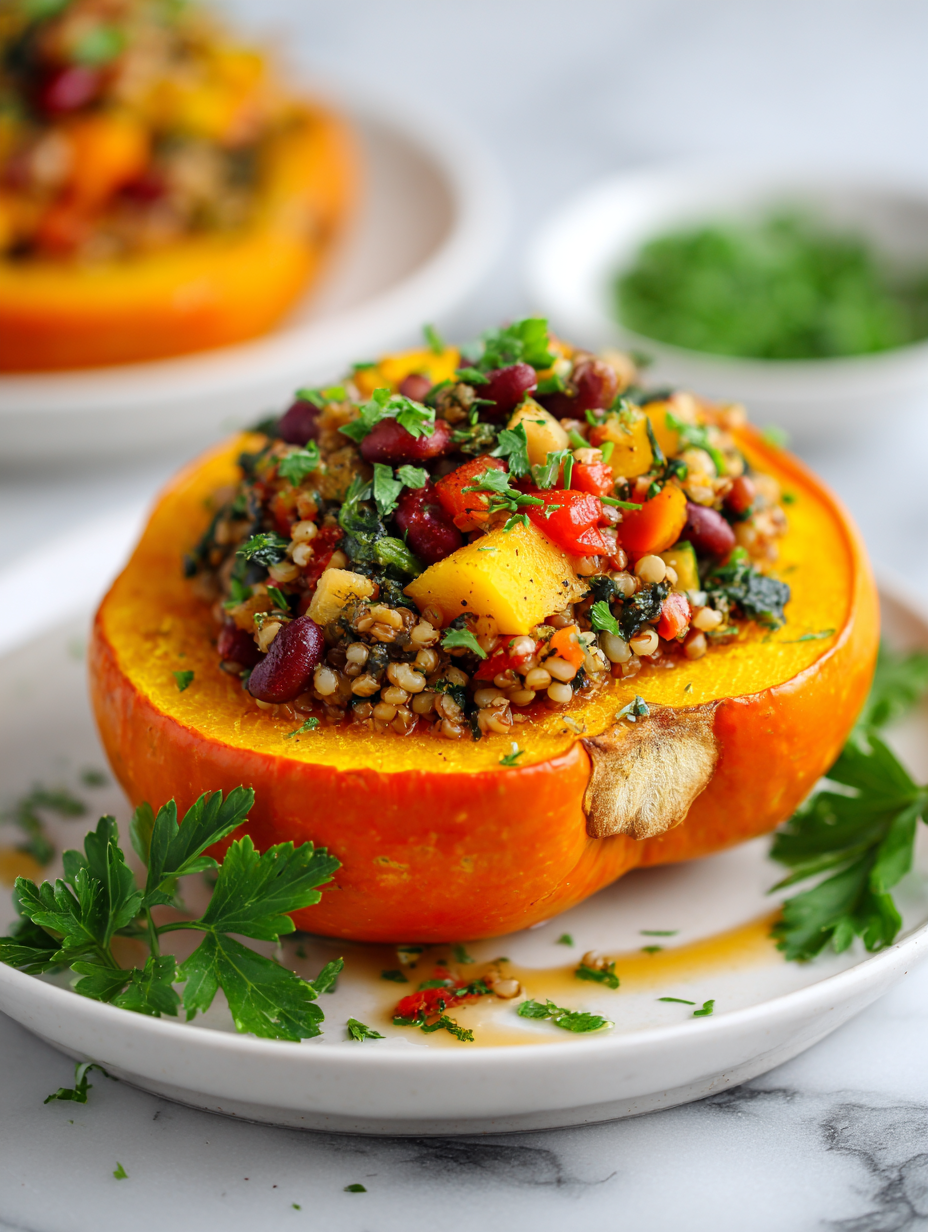
Vegan Stuffed Autumn Squash
Ingredients
Equipment
Method
- Preheat your oven to 200°C (390°F). Slice the butternut squash in half lengthwise, then scoop out the seeds with a spoon. Brush the cut sides with 1 tablespoon of olive oil and place them cut-side up on a parchment-lined baking sheet. Roast for about 40-45 minutes until the flesh is soft and caramelized around the edges, checking with a fork for tenderness.
- While the squash roasts, toast the chopped nuts in a large skillet over medium heat until fragrant and golden, about 3-4 minutes. Remove them from the skillet and set aside. In the same skillet, add the remaining 1 tablespoon of olive oil, then sauté the diced onion and minced garlic until translucent and aromatic, about 5 minutes. Stir in chili flakes and cook for 30 seconds to bloom the spice.
- Add the cooked grains to the skillet with the sautéed aromatics, then fold in the toasted nuts and chopped herbs. Season with salt, pepper, and lemon zest, mixing well until the filling is flavorful and fragrant. Remove from heat and set aside.
- Once the squash is tender and cool enough to handle, scoop out most of the flesh into a mixing bowl, leaving a small border to maintain the shell. Mash the flesh with a fork until smooth, then fold in the warm grain mixture. Taste and adjust seasoning as needed.
- Stuff each squash half generously with the prepared filling, pressing down lightly to pack it in. Place the stuffed squash back on the baking sheet. Bake for an additional 15 minutes until the filling is heated through and slightly crispy on top.
- Remove from the oven, let rest for about 5 minutes, then garnish with extra herbs if desired. Serve warm, enjoying the fragrant, tender squash topped with crunchy, flavorful filling that combines sweet, spicy, and herbal notes.
Notes
Essential Tips for Perfect Stuffed Squash
- Bolded mini-head: Use a hot pan → Toast nuts over medium-high heat until fragrant and golden—avoid smoking or burning.
- Bolded mini-head: Check squash tenderness → Pierce flesh with a fork; it should slide in easily but still hold shape.
- Bolded mini-head: Season the mash well → Taste and adjust salt and spice after mashing to ensure flavor pops.
- Bolded mini-head: Layer flavors in filling → Sauté aromatics until translucent and fragrant for a richer stuffing.
- Bolded mini-head: Rest before serving → Let baked stuffed squash sit for 5 minutes to allow flavors to meld.
Common mistakes and how to fix them
- FORGOT to preheat oven → Always heat oven before roasting squash.
- DUMPED filling too quickly → Fill squash gradually to prevent overflowing.
- OVER-TORCHED nuts → Toast nuts until fragrant, then remove promptly to avoid burning.
- MISSED resting time → Let stuffed squash rest 5 minutes before serving to settle flavors.
Quick fixes and pantry swaps
- If squash is unevenly cooked, cover with foil and roast 5 more minutes to prevent burning.
- When filling overflows, gently scoop out excess to keep presentation tidy.
- Splash cold water on burnt nuts to stop further charring and toast again carefully.
- Patch soggy filling with a sprinkle of breadcrumbs and bake until crispy on top.
- Shield delicate squash edges with foil if they brown too quickly during final baking.
Prep, store, and reheat tips
- You can prepare the stuffing mixture a day ahead; keep it in an airtight container in the fridge. When ready, fill and bake the squash fresh for best texture.
- Roasted squash can be stored in the fridge for up to 3 days. Reheat gently in the oven at 180°C (350°F) until warmed through, checking for tender and fragrant aroma.
- Leftovers will keep in the fridge for 2-3 days. Reheat until the filling is hot and the squash is tender again, with a slight shimmer of moisture on top.
- To freeze, assemble the stuffed squash, then wrap tightly in plastic wrap and foil. Freeze for up to 1 month. Thaw overnight in the fridge and reheat as above. Expect some texture change, but flavors should still shine.
Top questions about vegan stuffed squash
1. How do I prepare the squash for stuffing?
Use a sharp knife to halve the squash cleanly, then scoop out the seeds with a spoon. Roasting softens the flesh, making it easy to stuff and scoop out without mess.
2. What’s the best oven temperature and time for roasting squash?
Roast the squash at 200°C (390°F) for 40-45 minutes until tender and caramelized around the edges. Test with a fork—should slide in easily, but not fall apart.
3. What ingredients are essential for the stuffing?
Use cooked quinoa or rice, toasted nuts like walnuts or pecans, fresh herbs such as parsley or cilantro, and spices like chili flakes or smoked paprika for depth. A squeeze of lemon brightens everything up.
4. How can I fix a dry or bland filling?
If the filling seems dry, add a splash of vegetable broth or a drizzle of olive oil. For extra creaminess, stir in a bit of vegan yogurt or a sprinkle of nutritional yeast before filling the squash.
5. How do I assemble and finish the stuffed squash?
Stuff the squash generously, pressing down slightly. Bake again at 200°C (390°F) for 15 minutes until the filling is heated through and slightly crispy on top.
6. Can I make this dish ahead of time?
Yes, you can prepare the stuffing mixture a day ahead, store it in the fridge, then fill and bake just before serving. Roasted squash can be made 2-3 days in advance and reheated in the oven.
7. What tools do I need to make this recipe?
Use a sharp knife for cutting, a baking sheet lined with parchment for roasting, and a skillet for toasting nuts and cooking aromatics. A spoon helps scoop out the flesh easily.
8. How do I store and reheat leftovers?
When reheating, cover the squash with foil and warm at 180°C (350°F) until steaming hot. Check that the filling is hot and the squash is tender again, about 10-15 minutes.
9. What common mistakes happen and how do I fix them?
If the squash is unevenly cooked, cover it with foil and roast a few extra minutes. If nuts burn, quickly remove them, then toast again carefully. For overstuffed filling, scoop out excess and bake a few minutes longer.
10. What are some quick tips for perfect results?
Use a sharp knife to halve the squash, keep an eye on the oven temperature, and taste the filling before stuffing. Adjust spices and seasoning as needed to keep flavors vibrant.
This dish is a reminder that sometimes the simplest ingredients—like squash and nuts—can come together in a way that feels both comforting and celebratory. It’s perfect for this season, when the bounty of autumn inspires us to get a little creative with what’s on hand. Plus, the aroma of roasted squash and toasted spices makes the whole house smell like something special is happening.
Sharing this recipe feels like passing along a little piece of that cozy, chaotic kitchen magic I love. It’s honest, unpolished, and designed to give you a warm, satisfying meal without fuss. I hope you find as much joy in making it as I do—there’s really nothing quite like a plate of stuffed squash to mark the turn of fall.