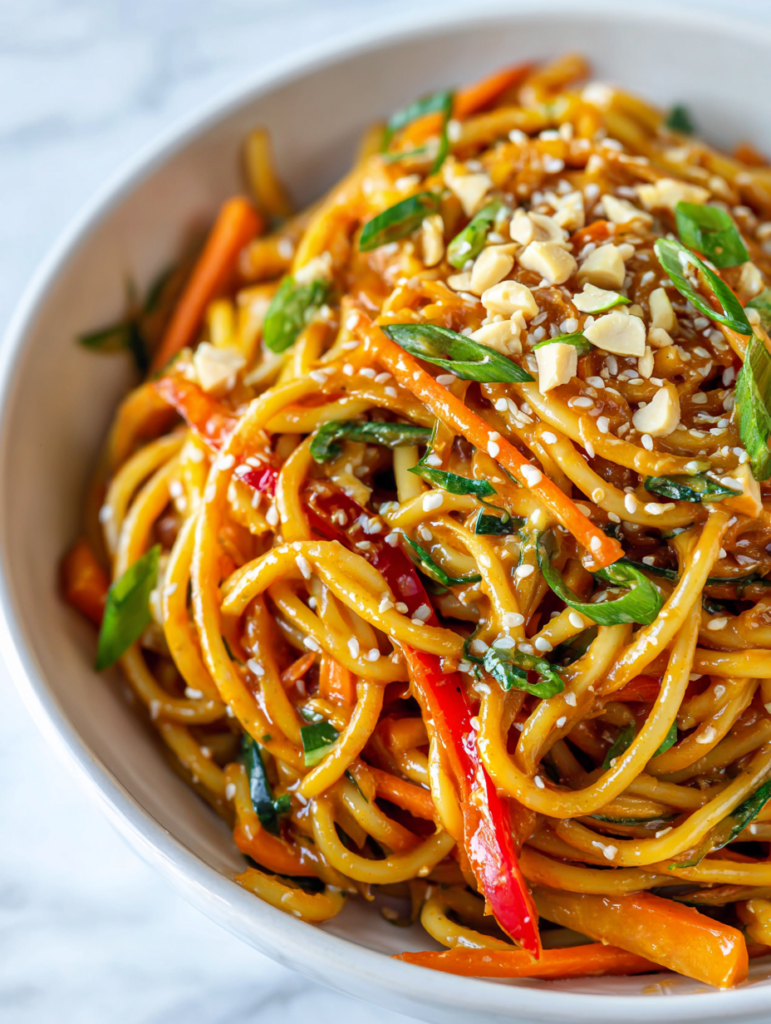
In the middle of a chaotic week, I find myself craving something simple yet grounding. This vegan peanut noodles recipe isn’t just about satisfying a hunger; it’s about carving out a moment to slow down and reconnect. As I stir the sauce, I focus on each ingredient, feeling the textures and smelling the rich, nutty aroma—it’s a small act of mindfulness amid the rush.
Making this dish has become my little ritual, a way to pause and center myself. The process of measuring, tasting, and adjusting the sauce offers a rare chance to be present. Plus, it’s surprisingly forgiving—no fancy ingredients needed, just honest, bold flavors that come together quickly, making it perfect for busy nights.
And honestly, the best part? It tastes like comfort, with a little kick of brightness from lime and a silky peanut coating that clings to every strand of noodle. It’s a reminder that even in the chaos, a simple, well-made meal can give a sense of calm and satisfaction.
Focusing on how making this dish during a hectic week can be a grounding ritual—taking the time to stir, taste, and adjust the sauce as a way to slow down and reconnect amid chaos.
The story behind this recipe
- One rainy afternoon, I was stuck in a rush and craving something warm and familiar. I remembered a bowl of peanut noodles I had at a tiny street stall years ago—it was sticky, spicy, and utterly comforting. That memory stayed with me, nudging me to recreate it with what I had at home, simple ingredients, no fuss.
- This dish became my go-to when I need a quick, satisfying meal that also feels like a small celebration of flavors. It’s a reminder that sometimes, the best recipes come from improvising with what’s in the pantry, trusting your instincts, and embracing the messy, imperfect process of cooking.
- heading: ‘The story behind this recipe’
Ingredient breakdown: key components
- Peanut butter: I prefer a creamy, natural variety with a rich, nutty aroma. It gives the sauce body and a velvety texture. Swap for almond or tahini if you want a different nutty twist, but expect a slightly different flavor profile.
- Soy sauce: I use a good-quality, low-sodium soy sauce for that umami punch and salty backbone. If you need gluten-free, coconut aminos work well but add a hint of sweetness instead of saltiness.
- Lime juice: Brightens everything up with its zesty, citrus sharpness. Use fresh lime for the most vibrant flavor—bottled lime juice feels dull and flat in comparison. Adjust amount to taste for extra zing.
- Sesame oil: Adds a toasted, nutty aroma that makes the sauce feel deep and rich. Use sparingly—it’s potent and can overpower if you go overboard. Toasted sesame seeds sprinkled on top amplify that smoky aroma.
- Maple syrup: I love the mellow sweetness it brings, balancing the salty and spicy notes. Honey can be a substitute if you’re not vegan, but maple keeps it plant-based and adds a subtle caramel note. Adjust to taste for sweetness.
- Garlic: Roasted garlic can add a mellow, sweet undertone, while raw gives a sharper bite. I prefer mincing it finely for even distribution—if you’re pressed, garlic powder works in a pinch but loses some punch.
- Chili flakes: I add just a pinch for a gentle heat that builds slowly. Use more if you like fiery, but start small—chili can quickly overpower the delicate balance of flavors. Toast them briefly in the pan for extra aroma.
Spotlight on key ingredients
Peanut butter:
- I prefer a creamy, natural variety with a rich, nutty aroma. It gives the sauce body and a velvety texture. Swap for almond or tahini if you want a different nutty twist, but expect a slightly different flavor profile.
- Sesame oil: Adds a toasted, nutty aroma that makes the sauce feel deep and rich. Use sparingly—it’s potent and can overpower if you go overboard. Toasted sesame seeds sprinkled on top amplify that smoky aroma.
Lime juice and soy sauce:
- Lime juice: Brightens everything up with its zesty, citrus sharpness. Use fresh lime for the most vibrant flavor—bottled lime juice feels dull and flat in comparison. Adjust amount to taste for extra zing.
- Soy sauce: I use a good-quality, low-sodium soy sauce for that umami punch and salty backbone. If you need gluten-free, coconut aminos work well but add a hint of sweetness instead of saltiness.
Notes for ingredient swaps
- Dairy-Free: Swap peanut butter for almond or tahini. Expect a slightly different nutty profile, but still creamy and rich.
- Soy Sauce: Use coconut aminos for a milder, sweeter flavor and gluten-free option—less salty, softer umami punch.
- Lime Juice: Replace with lemon juice if unavailable; keeps the bright, tangy kick but with a slightly different citrus note.
- Sesame Oil: Substitute toasted sesame oil with roasted walnut oil for a deep, nutty aroma—less smoky but still warm.
- Maple Syrup: Honey works as a substitute, adding a floral sweetness—expect a richer, more floral flavor overall.
- Garlic: Roasted garlic adds mellow sweetness; raw garlic provides sharpness—use according to your flavor preference.
- Chili Flakes: Swap with cayenne pepper for a cleaner heat, or skip entirely to keep it mild and focus on nutty sweetness.
Equipment & Tools
- Large pot: Boil noodles evenly and efficiently.
- Large skillet or wok: Toss and cook noodles with sauce, allowing quick heat transfer.
- Whisk: Blend sauce ingredients smoothly.
- Measuring spoons and cups: Ensure precise ingredient ratios.
- Tongs or pasta fork: Gently toss noodles without breaking them.
Step-by-step guide to peanut noodles
- Equip your large skillet or wok—something with a bit of a lip, so the sauce doesn’t slosh out. Fill a big pot with water, add a generous pinch of salt, and bring to a boil—about 100°C / 212°F, or just bubbling steadily.
- Cook the noodles according to package instructions—usually 8-10 minutes. Stir occasionally to prevent sticking. Test one; it should be al dente—firm but not hard in the center. Drain and rinse with cold water to stop cooking; set aside.
- While pasta cooks, prepare the sauce. In a small bowl, whisk together 3 tbsp peanut butter, 2 tbsp soy sauce, 1 tbsp maple syrup, 1 tbsp lime juice, 1 tsp toasted sesame oil, and 1 minced garlic clove. Add chili flakes to taste—start with ¼ tsp.
- Heat your skillet over medium heat—about 160°C / 320°F. Add a splash of sesame oil or neutral oil. When shimmering, pour in the sauce mixture. Stir continuously so it heats evenly, about 1-2 minutes. It should become fragrant and slightly thickened.
- Add the drained noodles into the skillet. Toss gently, coating every strand with sauce. Cook for another minute, allowing flavors to meld and the noodles to warm through. Watch for a glossy, slightly sticky appearance—if it feels dry, splash a little hot water or broth.
- Taste and adjust: add more lime juice for brightness, soy for saltiness, or chili for heat. If the sauce is too thick, thin with a splash of hot water or broth while stirring. It should cling to the noodles with a silky sheen.
- Remove from heat. Let sit for 1-2 minutes to allow flavors to settle. For the best texture, serve immediately with a sprinkle of chopped peanuts, scallions, or fresh herbs. If you need to wait, keep covered at room temperature, but don’t refrigerate—noodle texture can get gummy.
- To serve, plate the noodles directly from the skillet, ensuring each serving gets plenty of sauce. Garnish as desired—more lime, a squeeze of sriracha, or a sprinkle of sesame seeds.
Serve immediately for the best texture and flavor. Garnish with chopped peanuts, scallions, or fresh herbs. If not eating right away, cover loosely and keep at room temperature—avoid refrigeration to prevent the noodles from becoming gummy.
How to Know It’s Done
- Noodles are al dente—bite should be firm but not hard.
- Sauce is glossy, fragrant, and slightly thickened—coats noodles smoothly.
- Noodles are evenly coated without clumping—test by tossing gently.
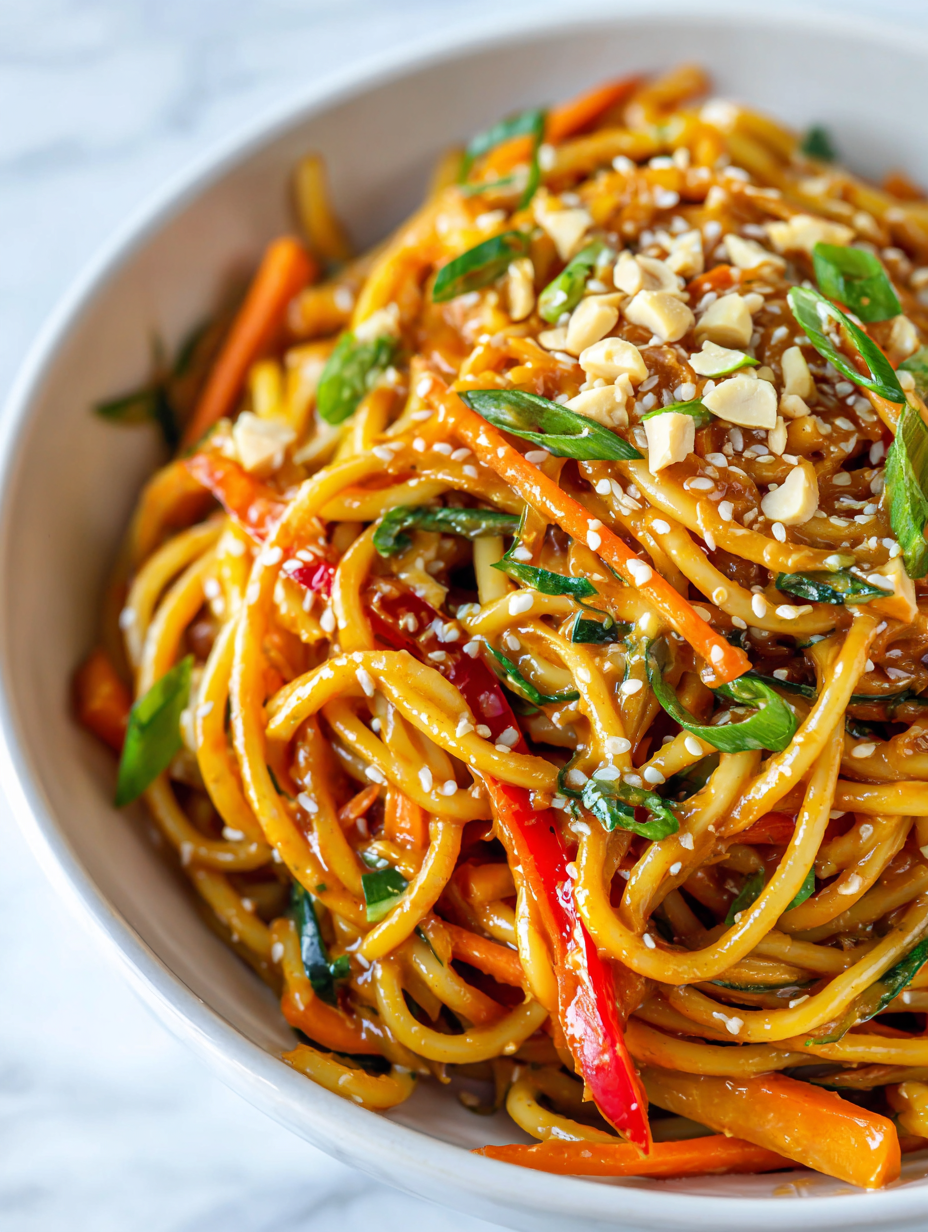
Vegan Peanut Noodles
Ingredients
Equipment
Method
- Bring a large pot of salted water to a boil and cook your noodles according to package instructions until they are al dente, then drain and rinse with cold water to stop the cooking. Set aside.
- In a small bowl, whisk together the peanut butter, soy sauce, lime juice, toasted sesame oil, maple syrup, minced garlic, and chili flakes until the sauce is smooth and fragrant. This mixture should be creamy with a hint of spice and citrus aroma.
- Heat your skillet or wok over medium heat. Once hot, pour in the prepared sauce and stir constantly for about 1-2 minutes until it becomes fragrant and slightly thickened, creating a glossy, rich coating.
- Add the drained noodles into the skillet with the sauce. Gently toss with tongs or a fork, ensuring each strand is coated evenly with the sauce. Continue tossing for another minute until the noodles are warmed through and glistening.
- Remove the skillet from heat. Taste the noodles and adjust the seasoning if needed—add more lime juice for brightness or chili flakes for extra heat. If the sauce feels too thick, stir in a splash of hot water to loosen it.
- Serve the noodles immediately, garnished with chopped peanuts, scallions, or fresh herbs if desired. The dish should be glossy, flavorful, and ready to enjoy with a vibrant citrus aroma and a slight kick of spice.
Pro tips for perfect peanut noodles
- Use warm water to loosen peanut butter if it’s too thick, ensuring a silky, smooth sauce.
- Toast chili flakes briefly in the pan before adding liquids to amplify their fiery aroma.
- When boiling noodles, stir occasionally to prevent sticking and ensure even cooking.
- Taste and adjust the sauce after mixing—balance acidity, saltiness, and spice for perfect harmony.
- Reserve a splash of pasta water to thin the sauce if it thickens or clings too tightly.
- Let the noodles sit for a minute after tossing to deepen flavor absorption and improve texture.
- Finish with a squeeze of lime or a sprinkle of crushed peanuts for added freshness and crunch.
Common mistakes and how to fix them
- FORGOT to taste as you go? Always sample sauce before adding noodles.
- DUMPED all ingredients at once? Add liquids gradually, stirring constantly.
- OVER-TORCHED the sauce? Lower heat and add a splash of water to loosen.
- MISSED the resting step? Let noodles sit 1 minute for better flavor absorption.
Quick fixes and pantry swaps
- When sauce is too thick, splash hot water and stir until silky.
- If noodles stick, toss with a drizzle of sesame oil before serving.
- Splash soy sauce if flavor is dull—boosts umami instantly.
- Patch overcooked noodles by tossing in a dash of cold water and stirring gently.
- Shield from burning by lowering heat immediately if sauce begins to crackle or smell burnt.
Prep, store, and reheat tips
- Prep the sauce ahead by mixing all ingredients—store in an airtight container in the fridge for up to 3 days. The flavors deepen overnight, making it richer and more integrated.
- Cook the noodles in advance, drain, and toss with a tiny bit of oil to prevent sticking. Keep in the fridge for up to 24 hours—they’ll absorb some moisture but remain usable.
- Refrigerate leftover noodles and sauce separately. Reheat the noodles briefly in hot water or microwave until steaming—look for a warm, tender texture with no stiffness.
- For best reheating, add a splash of hot water or a tiny drizzle of sesame oil when warming to restore silkiness and aroma—listen for a gentle crackle, smell toasted sesame again.
Top questions about vegan peanut noodles
1. Can I use different nut butters?
Use natural, unsweetened peanut butter for the richest, creamiest sauce. It melts smoothly and clings well to noodles.
2. Can I swap the peanut butter?
Yes, almond or cashew butters work, but expect a slightly different flavor and texture, maybe less sticky.
3. How important is lime juice?
Fresh lime juice gives the brightest, tangiest flavor. Bottled lime tends to be dull and less vibrant.
4. Can I skip soy sauce?
Use low-sodium soy or coconut aminos to control salt. Too much soy can overpower the delicate balance of flavors.
5. How spicy should the dish be?
Adjust chili flakes to your heat preference. Start small; you can always add more for a gentle, building warmth.
6. How do I avoid mushy noodles?
Overcooked noodles become mushy. Cook just until al dente, then rinse with cold water to stop cooking and keep texture firm.
7. How do I store leftovers?
Store sauce and noodles separately—sauce in a jar, noodles in an airtight container. Reheat noodles gently and toss with fresh sauce.
8. How do I reheat without losing flavor?
When reheating, add a splash of hot water or a drizzle of oil to loosen the sauce and restore silkiness.
9. What if the sauce thickens too much?
If the sauce gets too thick, stir in a little hot water or broth until it reaches your preferred consistency.
10. How can I enhance the sauce flavor?
For a richer flavor, toast the chili flakes briefly before adding liquids—they release more aroma and heat.
This dish isn’t just about quick comfort; it’s a reminder to slow down and enjoy the process. The aroma of peanut and toasted sesame fills the kitchen, making it hard to wait. When it’s done, each bite offers a perfect balance of savory, nutty, and bright flavors that feel grounding in a busy world.
In the end, it’s the small act of stirring and tasting that reconnects me to the moment. No matter how hectic the day, this recipe helps me find a bit of calm, one warm, flavorful bite at a time.